
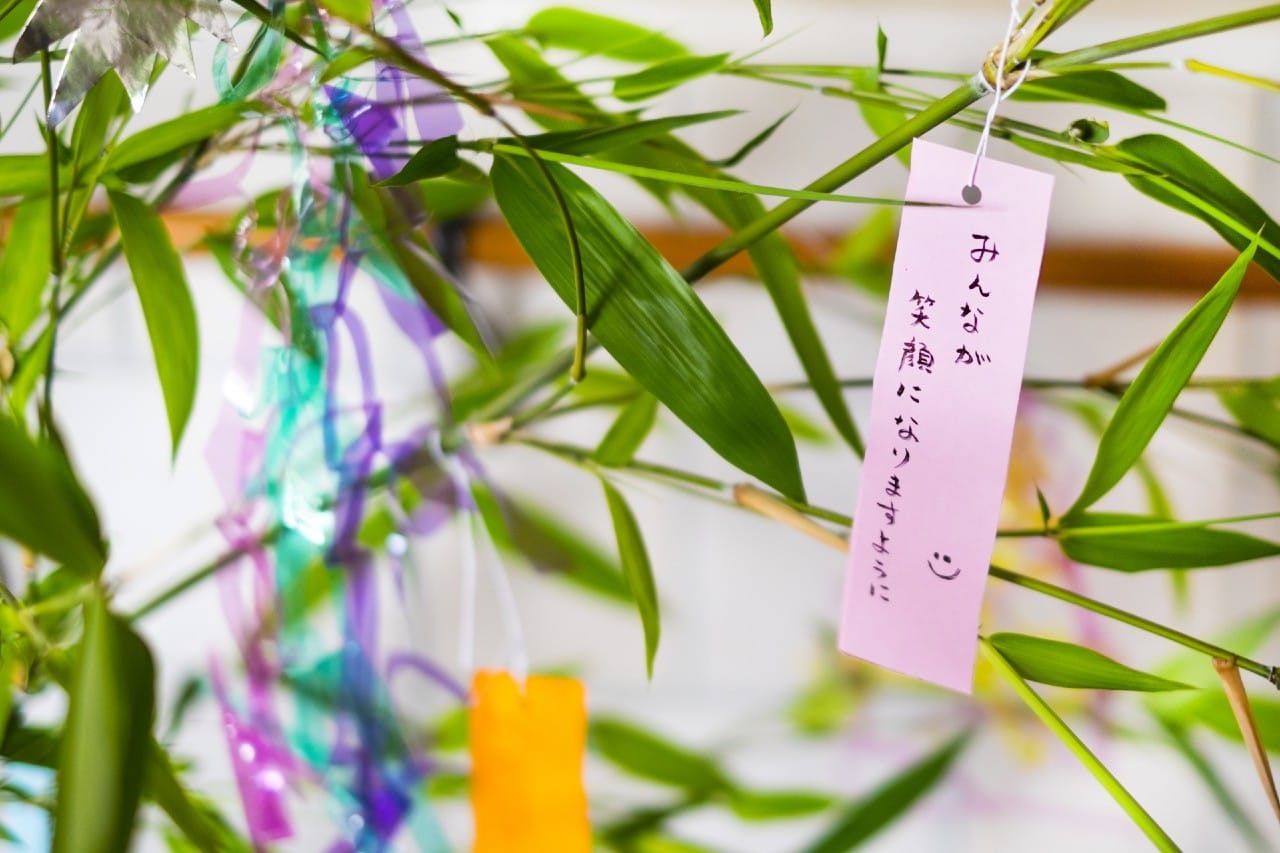
Sometime around late June, bamboo branches start showing up outside Tokyo’s convenience stores, and by the first week of July they’re heavy with strips of colored paper fluttering in the humidity.
That’s Tanabata, Japan’s summer Star Festival, and if you’re visiting in July or August you’ll run into it whether you plan for it or not. This guide skips the version of the story you can get anywhere and focuses on what actually matters if you’re in Tokyo: which events are worth the trip, what all those paper decorations mean, and why the timing is trickier than “July 7” makes it sound.

Why Is It Called Tanabata, Not Shichiseki?
The legend everyone knows involves Orihime, a weaver princess, and Hikoboshi, a cowherd. The two fell in love, neglected their work, and were separated by the Milky Way as punishment. They’re allowed to meet just once a year, on the seventh day of the seventh month, when a bridge of magpies is said to form across the stars.
That story arrived from China during the Nara period, but it isn’t where the Japanese name comes from. “July 7” in Japanese is normally read shichigatsu nanoka, so if the holiday were named literally after the date, it would be shichiseki. Instead it’s read tanabata, a word borrowed from an older Shinto practice called tanabata-tsume, in which a maiden wove cloth in a riverside hut to prepare an offering for the gods. Over time the two traditions merged, the reading stuck, and the character for “shelf” or “loom” (棚機) is still hiding inside the modern spelling.
Japan Pocket Wifi Rental
Japan eSIM : Fast & Easy & UNLIMTED
Japan Travel eSIM
Tanabata is also one of Japan’s gosekku, the five seasonal festivals that once marked the imperial court’s calendar, alongside occasions like the Doll Festival in spring. That’s part of why it carries more cultural weight than a simple couples’ holiday, even though the Orihime and Hikoboshi story gets most of the attention.
When Is Tanabata in 2026, and Why the Date Keeps Moving
Most cities celebrate on July 7 following the modern Gregorian calendar. But a handful of major festivals, including Sendai’s, still follow the old lunar calendar, which pushes their dates into early August. Neither version is “more correct,” they’re just different regional habits that stuck.
| Calendar Followed | Typical Timing | Example Cities |
|---|---|---|
| Gregorian (July 7) | Around July 7 | Tokyo, Osaka, Kyoto, Nagoya, Hiratsuka |
| Lunar-adjusted | Early August | Sendai, Asagaya, Sapporo |
Tanabata Events You Can Reach Without Leaving Tokyo
Tokyo doesn’t have one single defining Tanabata festival the way Sendai or Hiratsuka do. Instead it has several smaller events, most of them easy to fold into a day you’re already spending sightseeing.
Shitamachi Tanabata, Asakusa
This runs along Kappabashi Street, the kitchenware and restaurant-supply district between Asakusa and Ueno, and it’s one of the more atmospheric Tanabata events within Tokyo itself. Expect a Saturday-Sunday parade with taiko drumming and street performers, food stalls, and enough shops selling traditional crafts to make it worth wandering off the main strip.
Asakusa Shrine’s Natsumoude
Not technically a Tanabata festival, but it lines up with the same week and is worth combining with Sensoji Temple if you’re already in the area. Large straw rings called chinowa are set up on the shrine grounds; walking through one in a figure-eight pattern is a purification ritual meant to protect against illness for the second half of the year, a fitting custom for Japan’s muggiest season. At night, Tanabata decorations and Milky Way-themed installations light up the grounds. Keep your voice down; it’s still an active shrine.
Tokyo Tower’s Milky Way Illumination
This is the easiest option if your schedule doesn’t line up with a specific festival weekend. Roughly 30,000 LED lights transform the Main Deck into a stand-in Milky Way, complete with a red “Orihime” star and a white “Hikoboshi” star, and the color scheme cycles through a rainbow sequence every fifteen minutes. A separate Make a Wish tanzaku corner runs from late June into early July, and candlelight events pop up around the tower entrance in the same window.
Tokyo Skytree’s Solamachi Tanabata
The Solamachi shopping streets put up bamboo displays borrowed in spirit from Sendai’s decoration style, and there’s a wish-writing corner in the plaza. It’s less of a dedicated event than Asakusa’s festival and more of a seasonal backdrop, useful if Skytree is already on your itinerary.
Asagaya Tanabata Festival
This one follows the August calendar and is built around handmade papier-mâché characters strung above a covered shopping arcade, all made by local residents. It’s one of the longest-running Tanabata events in Tokyo, and 2026 marks its 70th year, so expect a genuinely local, unpolished atmosphere rather than a tourist-oriented production.
| Event | 2026 Dates | Nearest Station | Best For |
|---|---|---|---|
| Shitamachi Tanabata | Jul 3-7 (main Jul 4-5) | Tawaramachi | Parade, old-Tokyo streets |
| Asakusa Shrine Natsumoude | Jun 30-Jul 7 | Asakusa | Purification ritual, evening lights |
| Tokyo Tower Milky Way | Jun 12-Sept 27 | Akabanebashi | Flexible dates, skyline views |
| Skytree Solamachi Tanabata | Jul 1-7 | Tokyo Skytree | Combining with a Skytree visit |
| Asagaya Tanabata | Aug 7-11 | Asagaya | Local, handmade atmosphere |
Worth a Day Trip: Hiratsuka and Sendai
If you have a spare afternoon or a full day and want to see Tanabata at the scale it’s actually known for, these two are the ones locals point to.
Shonan Hiratsuka Tanabata Festival

This is the largest Tanabata festival in the Kanto region, and unlike Sendai it lines up with the standard July date, so it doesn’t require rearranging a Tohoku trip around it. Around 300 large decorations, some over 10 meters tall, line the shopping streets near Hiratsuka Station’s north exit, and the festival includes a parade and roughly 100 food stalls along the main strip. Bring cash; smaller stalls often don’t take cards.
Sendai Tanabata Festival

Sendai’s is the one that shows up in every “biggest festivals in Japan” list, and the reputation holds up. Over a thousand handmade fukinagashi streamers, some running several meters long, hang from the shopping arcades near Sendai Station, and each one is still made by local craftspeople rather than mass-produced. The night before the main festival, on August 5, a dedicated fireworks display kicks things off. If you’re booking Shinkansen tickets for the trip, it’s worth reserving seats in advance during the festival window since demand spikes.
| Festival | 2026 Dates | Access from Tokyo | Scale |
|---|---|---|---|
| Shonan Hiratsuka | Jul 3-5 | ~70 min by JR | ~1.7 million visitors |
| Sendai | Aug 6-8 | ~90 min by Shinkansen | ~2+ million visitors, Japan’s largest |
Two smaller festivals fill out the same August week if you’re basing yourself in the Kanto area longer: Irumagawa Tanabata in Saitama runs August 1-2 with fireworks over the river, and Mobara Tanabata in Chiba runs July 26-27 with an Awa Odori dance parade.
What the Decorations Actually Mean
The paper strips are called tanzaku, and writing a wish on one is the one piece of Tanabata almost every visitor can actually take part in. But tanzaku are only one of several decoration types you’ll see hanging from the bamboo, and each has its own meaning rooted in the Orihime and Hikoboshi story.
| Decoration | What It Represents |
|---|---|
| Tanzaku (paper strips) | Written wishes, the most common decoration |
| Orizuru (paper cranes) | Longevity and family health |
| Fukinagashi (streamers) | Orihime’s woven threads, a wish for skill and craftsmanship |
| Toami (net patterns) | A good harvest and abundance |
| Kuzukago (paper baskets) | Frugality and tidiness |
| Kinchaku (paper purses) | Prosperity and good fortune with money |
If you want to write your own wish, most stations, shopping centers, and shrines set up a bamboo display with tanzaku strips free for the taking, sometimes with a small donation box. You don’t need to write in Japanese, and you don’t need a big or clever wish, plenty of the ones already tied on will simply say things like “good health” or “pass my exam.” Just keep it printable in a public, family-oriented space.
Tanabata Food Worth Trying
Somen noodles are the traditional Tanabata dish, a custom that traces back to the Heian period, when eating them was believed to ward off illness. Their thin, pale strands are also meant to resemble the threads Orihime wove, which makes them feel appropriately on-theme for a hot July evening. You’ll see somen on seasonal menus and in supermarket displays throughout the festival window.
Convenience stores lean into the season too. Expect star-shaped wagashi sweets, blue “night sky” drinks marketed around the Milky Way theme, and limited-run Orihime-and-Hikoboshi character snacks at chains like FamilyMart and Lawson. None of it is essential eating, but it’s an easy way to notice the season shift if you’re wandering a Tokyo neighborhood in early July.

Practical Tips for Visiting
Tanabata is a low-stakes festival to build a day around. Nothing requires advance tickets, most events are free, and you can drop in for twenty minutes or stay for hours. A few things are worth knowing before you go.
Food stalls at neighborhood festivals like Hiratsuka and Sendai are often cash-only, so it’s worth carrying enough small bills; if you’re new to Japan’s cash habits, our guide to how much cash to bring covers the basics. Crowds peak in the evening, so if you’d rather see the decorations without the density, mornings and early afternoons are noticeably calmer at every event on this list.
Tanabata events are scattered across different train lines, and schedules for stalls and stage performances can shift day to day, so having Google Maps and live updates on hand matters more than usual. CDJapan Rental’s Japan eSIM runs on the reliable docomo network, covering you from central Tokyo out to Hiratsuka or Sendai. Buy online, scan the QR code before you land, and skip the SIM-swap line entirely.
Frequently Asked Questions
When is Tanabata in 2026?
What’s the easiest Tanabata event to reach from central Tokyo?
Do I need to know Japanese to write a tanzaku wish?
Tanabata falls during Japan’s rainy season. Will it rain on the festival?
Is Tanabata the same as Chinese Valentine’s Day (Qixi)?
Short trip or long stay — we've got you covered
Best for Travelers
Japan eSIM
From ¥2,800 — activate before you land
- Cheaper than airport & convenience store SIMs
- 5-day to 135-day plans; unlimited or data-capped
- No SIM swap needed — ready in 2 minutes
Best for Long Stays
Monthly Pocket WiFi
From ¥5,500/mo — unlimited, no throttle
- Choose WiMAX 5G or SoftBank 4G coverage
- 3 to 12-month contracts — longer means cheaper
- Delivered to your hotel or airport post office


