
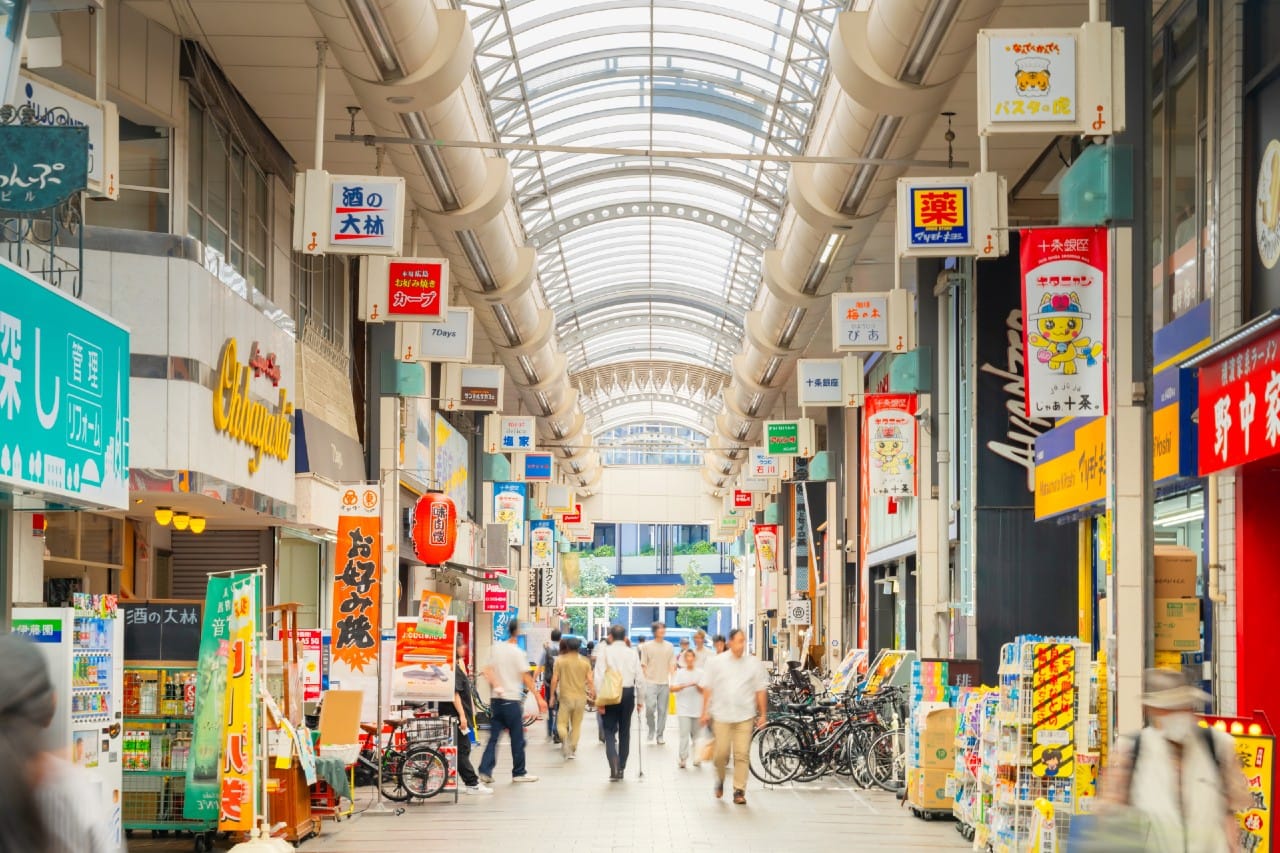
Do as the locals do
You’re standing at a ticket machine in Shinjuku Station. The screen is entirely in Japanese. A queue is forming behind you. The button you need might be any one of forty.
Every visitor to Japan has a moment like this — the sudden realization that the world’s most organized country runs on a set of unwritten rules nobody handed you at immigration. The good news: none of it is hard. The logic behind how Japanese daily life works is almost always rooted in one idea — consideration for the people around you. Once you see that pattern, the “rules” stop feeling like rules and start feeling like common sense.
This page is a field manual. Each section covers one part of everyday Japan — eating, riding trains, visiting shrines, paying for things — with the three or four things that matter most. Where we’ve written a deeper guide, you’ll find a link to it. Where we haven’t yet, the essentials are right here.

Japan Pocket Wifi Rental
Japan eSIM : Fast & Easy & UNLIMTED
Japan Travel eSIM
The unwritten rules
Why everyday Japan has a learning curve
Japan isn’t strict. It’s legible — once you know the code. The country runs on a deeply internalized sense of shared space: your umbrella goes in the rack, your phone goes on silent, your ramen gets slurped, and your trash comes home with you because there are almost no public bins. None of this is enforced by signs or fines. It’s maintained by everyone just… doing it.
For visitors, the gap isn’t manners — most travelers are already polite. It’s mechanics. You don’t know that the ticket machine has an English button in the top corner. You don’t know that the little dish of pickles at the izakaya is a seat charge, not a gift. You don’t know that standing on the left side of the escalator in Tokyo means you’re blocking the passing lane (and that Osaka does it the other way around). These aren’t moral failures. They’re information gaps — and this guide fills them.
Food & drink
Eating in Japan without the guesswork
Restaurant basics everyone gets wrong
There are a handful of things that catch nearly every first-time visitor off guard at Japanese restaurants. The small appetizer that appears without being ordered (otoshi, お通し) is not a mistake on your bill — it’s a seat charge, common at izakayas, usually ¥300–600. The server who never comes to your table is not ignoring you — in Japan, you call them by pressing the table button or saying sumimasen. And the warm towel (oshibori) is for your hands, not your face — at least at nicer places. We cover all five of the most common surprises in our Japan restaurant etiquette guide.
Ramen
Ramen shops are the single most intimidating restaurant format for visitors — and the most rewarding once you crack the code. Most standalone ramen shops use a ticket machine (kenbaiki, 券売機) at the entrance: you pay before you sit down, hand your ticket to the cook, and wait. The machine usually has pictures, and the top-left button is almost always the house signature bowl. Slurping is not just accepted — it’s how the noodles are meant to be eaten, cooling them and pulling broth along for flavor. And when the shop is full and you’re eating at a counter with strangers, the etiquette is simple: eat, enjoy, leave. Lingering over an empty bowl is the one thing that’s actually rude.
Convenience stores
Japanese convenience stores — konbini — are not gas-station snack shops. They are possibly the most efficient retail spaces on the planet. The big three (7-Eleven, Lawson, FamilyMart) each have their own cult-favorite items: 7-Eleven’s onigiri rice balls, Lawson’s karaage fried chicken, FamilyMart’s famichiki. The checkout ritual has its own rhythm: the cashier will ask if you want your items warmed up, if you need chopsticks or a spoon, and if you want a bag (bags cost a few yen). Say daijoubu desu (大丈夫です, “I’m fine”) to decline anything. One important rule: eat your food outside or at the small eat-in counter, not while walking down the street.
Izakayas
An izakaya (居酒屋) is Japan’s version of a pub — but ordering works differently from what most visitors expect. Drinks come first, always. The table will usually start with a round of beer or highballs, and food orders happen in waves — a few small plates at a time, not one large entrée per person. The otoshi appetizer is standard and non-negotiable at most places. When the bill comes, it’s typically one check for the whole table, split evenly — not itemized by person. Saying sumimasen, okaikei onegaishimasu (excuse me, the check please) or simply making an “X” with your fingers will get the server’s attention.
Getting around
Trains, platforms, and the unspoken queue
Japan’s train system is famously precise — and it expects you to be, too. The most important thing to know is that trains are quiet zones. Phone calls are not made. Conversations happen at a murmur. Priority seats near the doors are genuinely reserved for elderly, pregnant, or disabled passengers — don’t sit there if the car is half-empty and someone more in need might board at the next stop.
On the platform, painted lines and arrows on the floor show exactly where to queue for each door. Stand behind the line, wait for passengers to exit, then board. This choreography is what makes the system work at rush hour, and breaking it earns genuine disapproval. If you’re riding the Shinkansen with a non-reserved ticket, check the electronic boards for which cars are non-reserved (jiyuuseki, 自由席) — our guide to finding your Shinkansen platform walks through this step by step. And if you bought the wrong ticket, here’s how to fix it without panic.
For payment, get an IC card — Welcome Suica if you’re arriving in Tokyo, ICOCA if you’re starting in Kansai. Tap in, tap out, and the fare is calculated automatically. These cards also work at convenience stores, vending machines, and coin lockers, which means less fumbling with coins everywhere you go.
Culture & entertainment
Shrines, hot springs, and singing rooms
Visiting a shrine or temple
Most visitors will walk through a torii gate at some point — and most will wing it. The actual ritual is simple and worth learning. At a Shinto shrine: bow slightly at the torii before entering, walk to the side of the path (the center is for the gods), wash your hands at the water basin (chozuya), then approach the offering box. Drop a coin, bow twice, clap twice, make your wish silently, bow once more. At a Buddhist temple the sequence is similar but quieter — no clapping, just a silent prayer with hands together. Our step-by-step shrine and temple etiquette guide covers the full ritual including the hand-washing sequence.
Onsen & bathing
The prospect of getting completely naked in a room full of strangers is the single biggest barrier for Western visitors to Japanese hot springs — and the one most worth getting past. The bathing sequence is non-negotiable: strip in the changing room, wash your entire body thoroughly at the shower stations before entering the pool, keep your small towel out of the water (fold it on your head or set it on the edge), and soak in silence. If you have tattoos, know that some facilities still enforce a ban — but the landscape has shifted significantly. Tattoo-cover patches work for small ink, private baths (kashikiri buro) are available at many ryokans, and a growing number of public bathhouses welcome all visitors. We break down the three strategies in our tattoo-friendly onsen guide.
Karaoke
Karaoke in Japan is nothing like karaoke in the West. There is no stage, no audience of strangers, no courage required. You rent a private room with friends — or alone — pick songs from a tablet, and sing behind a closed door. The system: walk in, tell the front desk how many people and how long, register for a membership card (takes 30 seconds), choose a drink plan (the all-you-can-drink soft drink bar is almost always the best value), and head to your room. The machines have English song libraries — look for the language button labeled 言語 (gengo). Sessions run by the half-hour but the “free time” (furii taimu) unlimited option is nearly always cheaper per hour. Chains like Manekineko even let you bring your own snacks. Our full karaoke guide compares prices across the five biggest chains.
Seasonal moments
Some of the best “like a local” experiences are tied to the calendar. Cherry blossom season (late March–mid April) brings hanami — the tradition of picnicking under the blossoms with food and drinks bought at (where else?) the nearest konbini. Summer means festivals (matsuri) with yukata, street food, and fireworks. New Year means hatsumode — the first shrine visit of the year. None of these require tickets or reservations. They just require showing up, and knowing the etiquette.
House rules
The universal do & avoid
These apply everywhere in Japan — trains, restaurants, shops, streets, temples. Memorize the left column and you’ll never have an awkward moment.
Say this
You don’t need to speak Japanese to travel in Japan. But these five phrases cover 90% of daily interactions and earn genuine warmth from the people you meet.
sumimasen
Excuse me / I’m sorry / Thank you (the Swiss Army knife of Japanese)
kore kudasai
This one, please (point at what you want)
okaikei onegaishimasu
The check, please
daijoubu desu
I’m fine / No thank you (decline a bag, receipt, anything)
arigatou gozaimasu
Thank you very much
Before you go
Money, phones, and the things to sort before you land
Japan’s cashless shift since 2020 means you can get through most days with just a credit card and an IC card. Visa and Mastercard are accepted at nearly all chain stores, restaurants, and convenience stores. Smaller shops, market stalls, and some temples remain cash-only — carrying ¥5,000–10,000 in cash as backup is a sensible habit. ATMs inside 7-Eleven and Japan Post accept most foreign cards.
Japanese addresses don’t use street names the way Western addresses do — they use area codes, block numbers, and building numbers. Google Maps handles this perfectly, which is one of many reasons having a working data connection matters more in Japan than almost anywhere else. You’ll use it to navigate train transfers, read menus via camera translation, look up opening hours, and figure out which exit of a 30-exit subway station you actually need.
Reading a ticket machine with Google Translate, finding the right Shinkansen platform on the fly, checking if that ramen shop around the corner still has a queue — it all needs a connection. CDJapan Rental’s eSIM runs on the docomo network, Japan’s largest. Buy online before you leave, scan a QR code when you land, no SIM swap needed.
FAQ
Frequently asked questions
What are the most common etiquette mistakes tourists make in Japan?
Can I get by in Japan without speaking Japanese?
How much cash should I bring to Japan?
Which IC card should I get — Suica or ICOCA?
What apps are most useful for traveling in Japan?
Short trip or long stay — we've got you covered
Best for Travelers
Japan eSIM
From ¥2,800 — activate before you land
- Cheaper than airport & convenience store SIMs
- 5-day to 135-day plans; unlimited or data-capped
- No SIM swap needed — ready in 2 minutes
Best for Long Stays
Monthly Pocket WiFi
From ¥5,500/mo — unlimited, no throttle
- Choose WiMAX 5G or SoftBank 4G coverage
- 3 to 12-month contracts — longer means cheaper
- Delivered to your hotel or airport post office


