
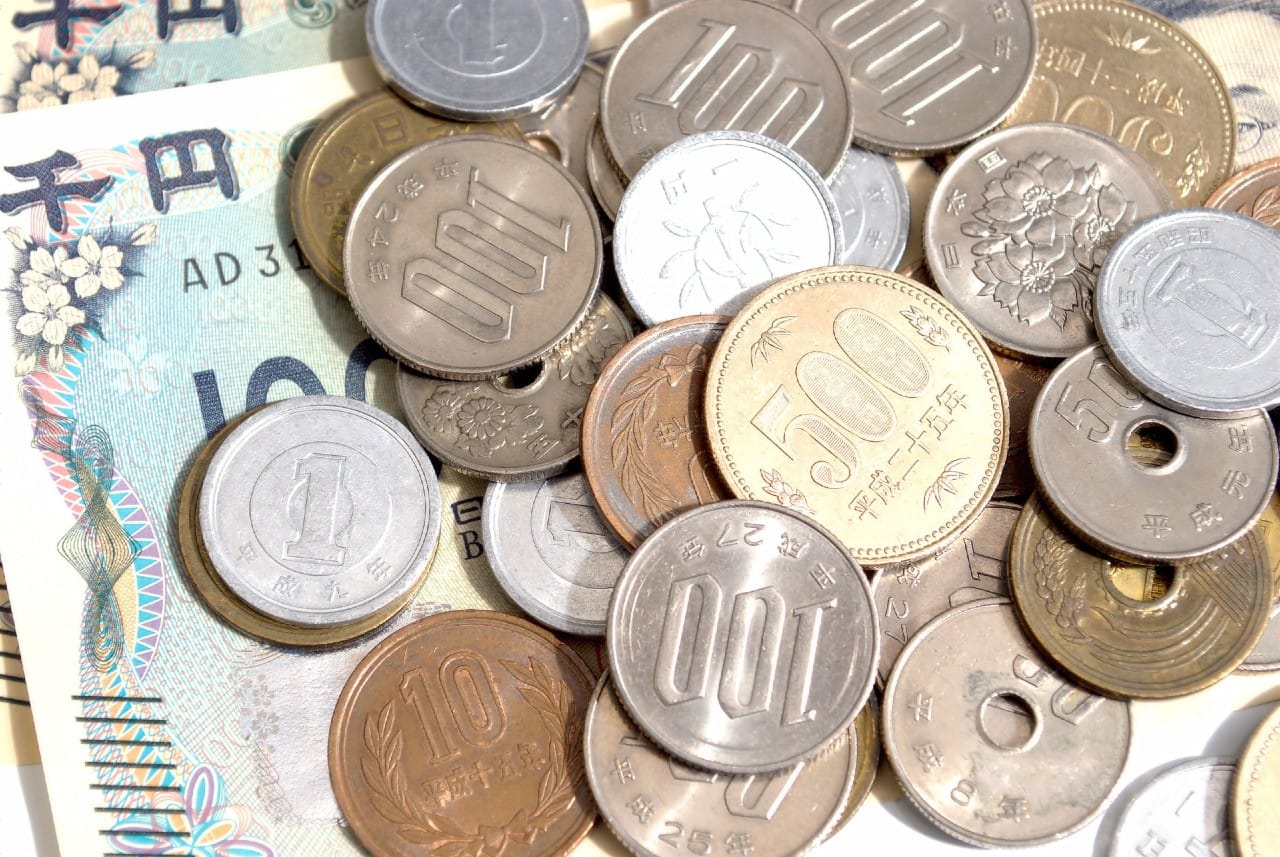
How much cash should you bring to Japan? Bottom line first: for a typical independent trip, ¥8,000 per day is the safest baseline. That comes to about ¥40,000 for 5 days, ¥55,000 for 7 days, and ¥80,000 for 10 days—cover the rest with credit cards and mobile payments. If you plan on doing serious shopping for cosmetics or souvenirs, add another ¥10,000 to ¥20,000.
Below, we breakdown Japan’s current actual prices item by item so you can recalculate based on your own itinerary.
Cashless payment options in Japan have improved rapidly in recent years. Restaurants, department stores, and chain shops in Tokyo and Osaka almost all accept credit cards or PayPay. However, as soon as you step outside city centers or visit local shopping streets, shrines, or regional buses, cash remains the only option. The key difference is how much cash you need, not whether you need it at all.
1. The Bottom Line: How Much Cash for Different Trip Lengths
This table serves as a quick lookup guide. Find your trip length horizontally and match it with your travel style vertically to find the recommended cash amount. TWD figures are rough estimates calculated at ¥1 ≈ NT$0.22; please refer to the prevailing rate on the day you exchange currency.
| Travel Style | Daily Cash | 3 Days | 5 Days | 7 Days | 10 Days |
|---|---|---|---|---|---|
| Urban Card-First Mainly downtown Tokyo/Osaka | ¥3,000–4,000 | ¥12,000~NT$2,600 | ¥20,000~NT$4,400 | ¥28,000~NT$6,200 | ¥40,000~NT$8,800 |
| Standard Independent Trip City center + suburbs, souvenir shopping | ¥7,000–9,000 | ¥25,000~NT$5,500 | ¥40,000~NT$8,800 | ¥55,000~NT$12,100 | ¥80,000~NT$17,600 |
| Regional Explorer Inter-prefecture travel, local buses | ¥10,000–12,000 | ¥35,000~NT$7,700 | ¥55,000~NT$12,100 | ¥75,000~NT$16,500 | ¥110,000~NT$24,200 |
| Heavy Shopper Cosmetics, electronics, luxury goods | ¥15,000+ | ¥50,000~NT$11,000 | ¥80,000~NT$17,600 | ¥110,000~NT$24,200 | ¥150,000~NT$33,000 |
Japan Pocket Wifi Rental
Japan eSIM : Fast & Easy & UNLIMTED
Japan Travel eSIM
※ Amounts above include cash expenses only; flights, accommodation, and tickets purchased online in advance are excluded.
※ Conversion baseline: ¥1 ≈ NT$0.22 (2026 range approximately NT$0.21–0.24).
Better to over-budget than under-budget. Japanese Yen is a widely held currency in Taiwan; if you bring back extra, you can easily save it for your next trip, with your only loss being the exchange spread and transaction fees. Exchanging money on short notice in Japan usually yields significantly worse rates than in Taiwan, and running short on cash on-site is much more hassle.

2. What Current Prices in Japan Look Like
The figures in the summary table above are derived from the individual costs listed below. You can swap these numbers directly into your own itinerary: calculate your meals per day, local bus trips, and shrine visits to customize your daily cash budget.
Food & Dining
Price points for dining out in Japan are quite distinct. Convenience stores and fast-food bowl chains (gyudon) sit at the lower end, where you can get a meal for around ¥500. Chain ramen and set-meal (teishoku) restaurants fall in the mid-range at ¥1,000–¥1,500. For izakayas or casual sit-down restaurants, budgeting ¥3,000–¥4,000 per person is safer.
| Item | Price | Notes |
|---|---|---|
| Convenience store rice balls | ¥150–280 | Triangle rice balls and large rice balls fall in this range |
| Convenience store coffee | ¥120–200 | Self-service machines, varying sizes |
| Beef bowl (Gyudon medium) | ¥450–550 | Chains like Yoshinoya, Sukiya, etc. |
| Chain ramen bowl | ¥900–1,300 | Extra toppings will push the price higher |
| Teishoku / Donburi specialty shop | ¥1,000–1,600 | Lunch set meals are typically cheaper |
| Conveyor belt sushi (per plate) | From ¥120 | Budget chains; premium plates cost more |
| Izakaya (per person) | ¥3,000–4,500 | Includes drinks; seating fee (Otoshi) of ¥300–500 extra |
| Vending machine drinks | ¥140–190 | 500ml PET bottles |
If you want to cut food costs, supermarket prepared foods (bento and hot items) are marked down continuously about two hours before closing, often by 30% to 50%. This is one of the easiest ways to save money when traveling in Japan, though many travelers only realize it after coming home.
Transportation
Getting around within city centers can almost always be done with an IC card. Cash is really only necessary for certain regional private railways and local bus routes. Budgeting ¥1,000 per day for local transit is a standard rule of thumb; inter-city transit should be budgeted separately.
| Item | Price | Notes |
|---|---|---|
| Tokyo Metro base fare | Approx. ¥180 | IC card fare is slightly cheaper than cash tickets |
| Toei Bus (Tokyo) | Flat ¥210 | Mostly flat rate within the 23 wards |
| Kyoto City Bus | Flat ¥230 | Some suburban routes carry extra fees |
| Taxi base fare (Tokyo) | Approx. ¥500 | Covers ~1 km, then metered |
| Coin lockers | ¥400–700 | Large lockers cost ¥800+; some take cash/coins only |
For city transport, it’s best to rely directly on IC cards (Suica, ICOCA, etc.). Topping up can be done with credit cards or via mobile phone, effectively removing transit costs from your cash budget altogether. If it’s your first time in Japan and you don’t have an IC card, consider the Welcome Suica designed for overseas visitors. If traveling between prefectures, Shinkansen tickets can almost always be bought online or with a credit card, eliminating the need for cash here as well.
Sightseeing & Admission Fees
Entrance to most Japanese shrine grounds is free; cash is required for amulets (Omamori), votive plaques (Ema), and temple seals (Goshuin)—almost all of which strictly accept cash only. Temple admission fees (Haikanryo) typically range from ¥300 to ¥800, while major art museums and observation decks cost around ¥1,000 to ¥2,000. Higher-priced tickets like theme parks and aquariums can usually be bought online in advance, so they don’t need to be included in cash estimates.
| Item | Price | Payment Method |
|---|---|---|
| Shrine amulets (Omamori) | ¥500–1,000 | Almost exclusively cash |
| Temple seals (Goshuin) | ¥300–500 | Cash only; small change often required |
| Temple admission fees | ¥300–800 | Mostly cash |
| Art museums & observation decks | ¥1,000–2,000 | Mostly accept credit cards or online booking |
| Sento / Day-trip Onsen | ¥500–1,200 | Traditional spots use cash or ticket machines |
| Gachapon (Capsule toys) | ¥300–500 per try | Requires ¥100 coins; some new machines accept e-payment |
Set aside a separate budget for Gachapon and claw machines. Both share a “just one more try” quality and mostly take ¥100 coins. If you enjoy these, setting an independent budget separate from daily meals will be much more practical than regretting it later.
Shopping
Shopping is the most variable part of the entire budget, but it is also the only category that can be handled entirely via credit card. Drugstores, electronics stores, and department stores all accept cards, and tax-free shopping is available for tax-exclusive purchases of ¥5,000 or more at the same store, saving you 8% to 10% in consumption tax. Therefore, you don’t need to carry shopping funds as cash—paying by card is actually more advantageous.
※ The prices above reflect market rates verified as of August 2026. Rates may vary by region and shop and are provided for estimation purposes only.
Checking exchange rates, finding the nearest ATM, or confirming whether a store takes credit cards all require a reliable connection—often in shopping streets or local stations where free Wi-Fi is spotty. CDJapan Rental’s eSIM operates on NTT docomo’s network with the widest coverage in Japan. Simply scan and set up before departure, and you’re good to go as soon as you land.
3. Real-World Case Studies: How Much Do Travelers Actually Bring?
The numbers above were calculated logically; this section looks at what travelers actually spent. Summarized below from public shares on travel forums, you’ll see that cash budgets for trips to Japan can vary up to twenty-fold. After reading, you’ll likely recognize which category you fall into.
Exchanged only ¥20,000 for a 6D5N Osaka trip and paid for everything else by card, still had cash left over upon returning.
Spent only ¥15,000 in cash during an 8D7N Fukuoka trip; cash was only needed when visiting rural areas.
Some people use a simple rule: budget ¥10,000 per day if using credit cards, or ¥20,000 per day if paying entirely in cash, then multiply by trip length.
For Tokyo trips, budget ¥6,000–7,000 for food daily and ¥1,000 for local transit. Bring ¥2,000/day for snacks if cards are accepted in city centers, but bring full cash if traveling to rural areas.
A single drugstore run can easily cost ¥50,000, so I consistently bring around ¥200,000 every trip.
A couple traveling together brought ¥500,000 and spent every yen over an 8D7N trip.
Looking at these together reveals two key insights.
First, the massive difference in cash relies almost entirely on shopping rather than trip length. Spending ¥15,000 vs. ¥500,000 on similar-length trips comes down to cosmetics, sake, and souvenirs rather than meals and transit. Instead of asking “how much cash for X days,” ask yourself “how much shopping do I plan to do?”
Second, low-cash strategies rely heavily on staying within urban centers. As soon as rural areas, regional spots, or countryside attractions enter the itinerary, cash needs jump significantly. As one traveler put it simply: cash is only needed in rural areas. Conversely, the more rural your itinerary, the higher your cash ratio needs to be.
A Noteworthy Case Study
The same traveler, the same year, two 5-day trips. In February, on an independent trip to Osaka, they brought ¥70,000–80,000, relied mainly on PayPay and Suica, and returned with over ¥20,000 unspent. In November, on a guided group tour to Fukuoka for autumn foliage, thinking they brought too much last time, they brought only ¥50,000. It wasn’t enough because many shops in tourist sights did not accept PayPay.
Same person, same 5-day duration, ¥20,000 less cash brought—yet one trip left a surplus while the other ran short. What made the difference? The payment environments in downtown Osaka vs. seasonal foliage tourist spots are completely different worlds.
This also highlights a counter-intuitive truth: group tours often lead people to underestimate cash needs because flights, hotels, and main meals are prepaid. However, group tours take you to tourist destinations, not downtown hubs, where local souvenir shops, teahouses, and street stalls mostly take cash only. Section 8 details this further.
4. Places Where Cash is Still Essential
Listing cash-only scenarios is much more helpful than just memorizing budget totals. The more these appear on your itinerary, the higher your cash reserve should be:
Old shops in shopping streets (Shotengai) and local eateries. Shops with red and white noren curtains managed by a single owner usually lack card terminals. Some chain ramen shops use ticket vending machines that only accept cash—running out of cash means missing out.
Shrines and temples. Amulets, Goshuin stamps, votive plaques, and coin offerings (saisen) are strictly cash-only. Goshuin stamps often require exact change, and handing over large bills can be awkward.
Regional buses and private railways. While city buses accept IC cards, routes outside metropolitan hubs frequently take cash only, requiring exact change or using the onboard coin exchange machine.
Vending machines, coin lockers, and coin laundromats. Hotel floor vending machines/laundry facilities and older station lockers remain dominated by cash and coins.
Taxis and small vendors. City taxis mostly accept credit cards, but regional taxis may not. Festival stalls and market vendors are almost exclusively cash-only.
A helpful pre-trip step: Spend 5 minutes checking if the specific restaurants or markets you plan to visit accept credit cards. Doing so can quickly clarify whether you need to exchange an extra ¥20,000.
5. How Much to Exchange & Where to Exchange
Calculate your budget from Section 1, exchange 70% in advance in your home country, and leave 30% as flexibility to withdraw or exchange locally in Japan if needed. While exchanging 100% before leaving works, you might still need extra if shopping heavily. Exchanging only half can leave you feeling restricted toward the end of your trip.
Exchanging in Taiwan
Major foreign exchange banks (like Bank of Taiwan or Mega Bank) usually offer the best posted rates. Booking online for branch or airport pickup often yields better rates with zero handling fees, though it requires ordering a few days ahead.
Airport currency desks offer slightly less favorable rates but provide ultimate convenience. For supplementing small amounts, the exchange rate difference is negligible. What you should avoid is rushing to exchange large sums at the airport the day before departure.
Exchanging in Japan
Local currency exchange rates in Japan are generally worse than in Taiwan, especially at airport exchange counters. Therefore, it’s not recommended to leave currency exchange for after arrival. If necessary, specialized exchange booths in city centers (e.g., currency exchange shops around major railway stations) offer better rates than airports.
Getting Small Denominations
Remember to ask the teller for small bills when exchanging currency. Carrying only ¥10,000 notes can lead to awkward moments at small shopping street stores, local buses, or vending machines. A recommended allocation for cash:
70% of total cash in ¥10,000 notes, 20% in ¥5,000 notes, and 10% in ¥1,000 notes. For example, for ¥80,000, take 6 × ¥10,000, 3 × ¥5,000, and 5 × ¥1,000. Buying a drink at a convenience store upon arrival is an easy way to break large bills into change.
6. Withdrawing Cash in Japan: Practical Tips
You can withdraw Japanese Yen using overseas debit/ATM cards in Japan, but you must complete two steps before traveling:
First, enable international ATM withdrawal features on your debit card and set a 4-digit magnetic stripe PIN. This is distinct from your local ATM PIN; without it, the card won’t work abroad. You can set this up at a bank branch or via online banking for most financial institutions.
Second, notify your credit/debit card issuers of your travel dates to prevent foreign transactions from being blocked by fraud protection—a situation frequently highlighted in traveler forums as a major inconvenience.
Which ATMs are Best?
7-Eleven ATMs (Seven Bank) and Japan Post Bank ATMs are the most foreign-card friendly, featuring English/multilingual interfaces and nationwide availability. Most 7-Eleven ATMs operate 24/7, which is especially handy late at night. Japan Post ATMs are subject to branch hours and are often closed on evenings and weekends.
Things to keep in mind: single withdrawal limits apply, and you will be charged two separate fees—one by the local Japanese ATM operator and another by your home issuing bank for international ATM withdrawal. Thus, local ATM withdrawals are best kept as a backup rather than your primary source of cash.
7. Customs Declaration Thresholds (Taiwan & Japan Regulations)
This covers two sets of customs rules: outbound regulations for Taiwan and inbound regulations for Japan. Typical tourists rarely hit these thresholds, but knowing the boundaries offers peace of mind.
| Checkpoint | Declaration Threshold | What to Do |
|---|---|---|
| Taiwan Departure (Foreign currency/Yen cash) | Total value exceeding US$10,000 equivalent | Declare at Customs service counter before departure; no quantitative limit after declaring |
| Taiwan Departure (NTD cash) | Exceeding NT$100,000 | Declaration required; amounts exceeding the threshold cannot be taken out |
| Japan Arrival (Cash & securities) | Total exceeding ¥1,000,000 equivalent | Declare on the customs form upon entry and use the Red (Goods to Declare) channel |
A quick conversion clarifies things: Japan’s ¥1,000,000 limit is approximately NT$220,000, while Taiwan’s US$10,000 limit is around ¥1.5 million. Japan’s 1 million yen threshold is reached first. Bringing a standard ¥200,000 for tourism remains well below both limits.
Customs declarations carry no taxes or service fees, nor do they imply illegal activity—simply fill out the form truthfully. What must be avoided is bringing over-the-limit amounts without declaring, which can lead to confiscation or fines. Additionally, these allowances are calculated per traveler individually regardless of age, meaning families can split amounts among members.
For details, refer to the Taiwan Customs FAQ or official announcements from Japan Customs.
8. How Much Cash for Group Tours to Japan?
Budgeting for guided group tours follows a completely different logic than independent travel. Flights, hotels, and most meals are included in tour fees, so cash is spent mainly on four things: self-funded optional tours, shopping, drinks/snacks, and minor costs at attractions.
However, there is a catch (as described in Section 3): group tours take you to tourist sights rather than urban hubs. Local souvenir shops, teahouses, and roadside stalls at tourist spots accept cash at much higher rates than downtown Tokyo or Osaka, and you won’t have time to search for ATMs.
Therefore, recommended cash amounts for group tours are not lower than independent trips: ¥60,000–80,000 for 5 days, or ¥80,000–100,000 for 7 days, with additional budget for heavy shopping. While this seems high, your free time is limited on tours; it’s better to carry unused cash than hesitate in front of souvenir stalls.
9. Three Payment Backups Beyond Cash
Once your cash is prepared, having these three backups ensures you’ll rarely face payment issues:
Credit Cards
Department stores, chain shops, drugstores, and major stations almost universally accept cards. Choose a card with low foreign transaction fees and notify your issuing bank before leaving. Carrying two cards from different card networks (e.g., one Visa and one JCB or Mastercard) kept in separate wallets is recommended.
IC Cards
In addition to transit, IC cards like Suica and ICOCA can be tapped directly at convenience stores, station shops, and select vending machines. Offloading transport and minor purchases to an IC card reduces cash burden substantially. For more use cases, see Japan’s Cashless Shift: How to Pay and What Travelers Need.
10. Cash Safety & Handling Tips
Japan is very safe, but losing a wallet remains troublesome, and recovering lost cash is far harder than cancelling credit cards. Following three simple practices is sufficient:
Split funds into three portions. Keep 1–2 days’ worth in your daily wallet, store the majority in your luggage or hotel safe, and tuck a small reserve in a hidden backpack pocket for emergencies.
Keep a small amount of home currency (EUR/USD). If you run short on Yen and cards fail, city exchange booths accept home currencies as a final fallback.
Use a dedicated coin purse. Japan uses many coin denominations that accumulate quickly, especially ¥500 and ¥100 coins. A dedicated coin purse makes using Gachapon machines and station lockers much easier.
Frequently Asked Questions (FAQ)
Should I hold onto leftover Japanese Yen or convert it back to home currency?
It is recommended to keep it. Converting currency back and forth incurs exchange spreads that consume around 1% to 3%. If you plan to visit Japan again in the short term, keeping the Yen for your next trip is the most cost-effective option.
If you don’t want to hold cash, spend remaining change at airport duty-free shops or food courts. Note that most banks only accept banknotes, not coins, when converting back to home currency.
Can the 2024 new Japanese banknotes and old banknotes be used together?
Yes, old banknotes remain valid and accepted everywhere. Japan issued new ¥10,000, ¥5,000, and ¥1,000 notes in July 2024, and both series circulate freely.
Note that older vending machines, ticket sellers, or coin lockers may not accept new notes yet, while some newer machines may not take old notes. Trying a different bill or using coins easily resolves this.
Will small shops struggle to give change for ¥10,000 notes?
Convenience stores, supermarkets, and chain eateries handle ¥10,000 bills without issue. Small shopping street stalls, independent cafes, or festival vendors may struggle with large bills, especially during early morning hours.
A smooth approach is buying a small item at a convenience store in the morning to break large bills into change. Also note that local bus exchange machines usually accept only ¥1,000 notes; ¥10,000 notes cannot be exchanged on board.
How much extra cash should I budget when traveling with children?
Budgeting an additional ¥2,000–3,000 in cash per child per day is reasonable. Children’s expenses center around non-meal items that require cash: Gachapon machines, claw games, shrine votive plaques, animal feeding experiences at zoos/aquariums, and vending drinks.
Transit and admission tickets require less extra cash, as elementary students get half-price transit and younger kids ride free.
Short trip or long stay — we've got you covered
Best for Travelers
Japan eSIM
From ¥2,800 — activate before you land
- Cheaper than airport & convenience store SIMs
- 5-day to 135-day plans; unlimited or data-capped
- No SIM swap needed — ready in 2 minutes
Best for Long Stays
Monthly Pocket WiFi
From ¥5,500/mo — unlimited, no throttle
- Choose WiMAX 5G or SoftBank 4G coverage
- 3 to 12-month contracts — longer means cheaper
- Delivered to your hotel or airport post office


