
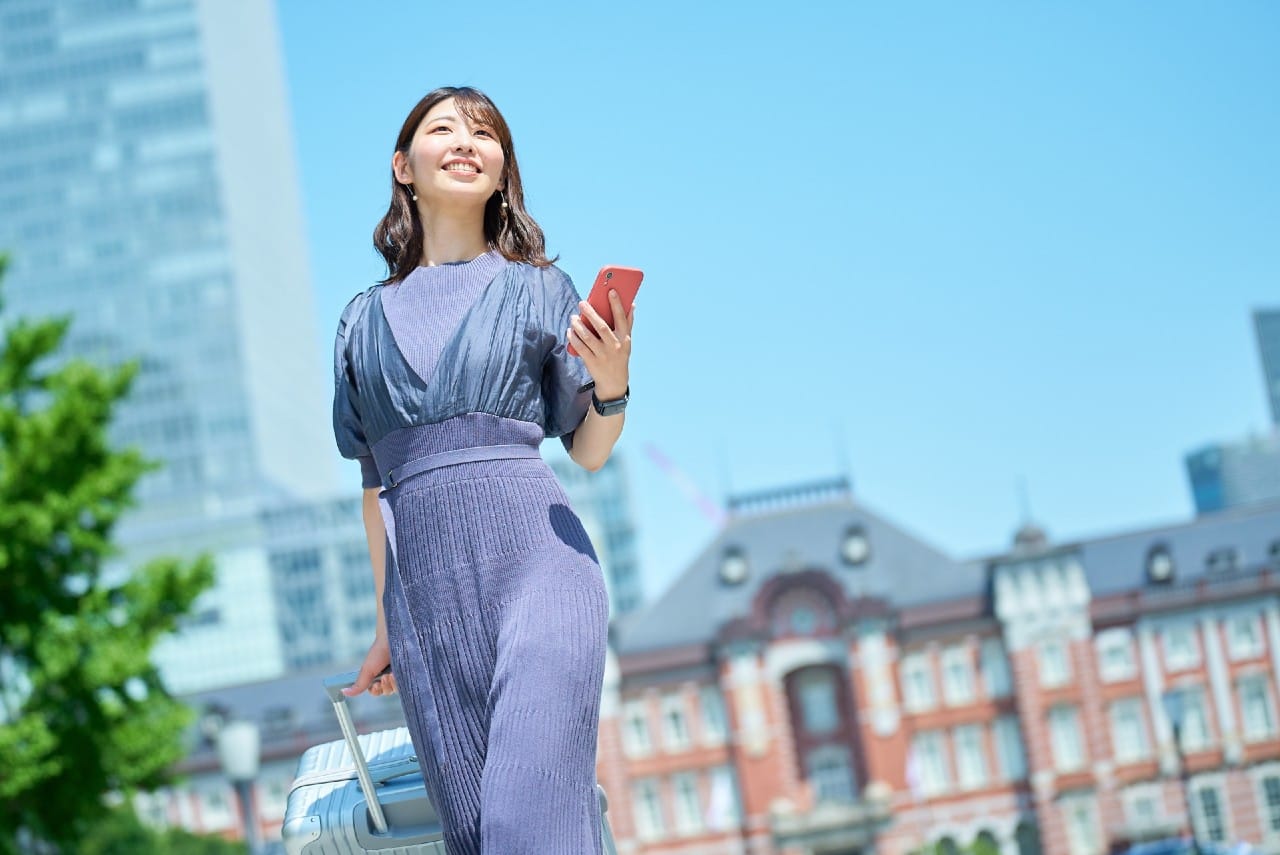
Japan consistently tops “best countries for solo female travel” lists — and after spending time here alone, you start to understand why. But a good guide tells you the full picture, not just the highlights.

Solo travel in Japan makes a very specific promise: you can walk through an unfamiliar city well past midnight, eat every meal at a counter without anyone raising an eyebrow, and cross the country on a rail network that runs to the second — all without speaking the language. For women traveling alone, that promise carries extra weight. In most other countries, at least some of those things would require a second thought.
This guide is not here to sell you a fairy tale. Japan is, by almost every measurable standard, one of the safest places in the world. But “safest” is not the same as “zero concerns,” and you deserve the complete picture — what is genuinely easier here than almost anywhere else, and the handful of things worth being aware of before you go.
Safety — The Honest Picture
Japan’s violent crime rate is among the lowest of any major country. Theft is rare. Pickpocketing, a constant concern in many European capitals, is nearly unheard of here. Bags get left on café tables, phones sit on train seats to reserve spots, and wallets returned to police boxes with the cash still inside. The infrastructure supports this: streets are well-lit, police boxes (koban) stand on almost every major intersection, and 24-hour convenience stores are never more than a few minutes’ walk away.
Japan Pocket Wifi Rental
Japan eSIM : Fast & Easy & UNLIMTED
Japan Travel eSIM
For solo female travelers specifically, the most commonly cited concern is groping on crowded rush-hour trains. This is a real and documented issue, and it is the reason women-only train cars exist. Using them during morning rush is a straightforward precaution, and there is no stigma attached — they exist specifically for this purpose. Outside rush hours and in less crowded situations, the concern drops substantially.
Nightlife areas like Kabukicho in Shinjuku or parts of Roppongi have touts who approach passersby to promote bars and clubs. This is more annoying than dangerous, and a firm “no thank you” or simply walking past works. The same drink-safety awareness you would exercise anywhere applies in bar settings — watch your glass, stick to reputable venues.
Walking alone at night is, in practice, remarkably safe in most areas. Residential neighborhoods and even major city centers stay calm and well-lit. There is no country where situational awareness stops being relevant, but the baseline here is far higher than most places you have likely traveled.
Getting Around on Your Own
Japan’s transit system is one of the strongest arguments for solo travel here. Trains are safe, run on precise schedules, and are nearly impossible to get lost on once you understand the basics. Google Maps provides accurate real-time transit directions in English, including platform numbers and transfer instructions.
Women-Only Train Cars
Most major rail lines in Tokyo, Osaka, Nagoya, and other large cities operate women-only cars during the morning rush — typically between 7:00 and 9:30 AM on weekdays. These are usually the first or last car of the train, and are clearly marked with pink signs on the platform and on the car doors. Using them is entirely optional: you can ride in any car you like. Outside rush hours, they revert to general seating.
Late Nights and Last Trains
Most train lines stop running between midnight and 1:00 AM. If you are out past the last train, your options are taxis, ride-hail apps, or a manga café or capsule hotel to wait until the first morning train around 5:00 AM. Taxis in Japan are metered, licensed, and consistently safe — drivers are professional and will not take detours. You can show the driver your destination on Google Maps if there is a language gap.
An IC card like Welcome Suica simplifies all train travel. Load it once, tap at every gate, and stop thinking about individual fares. It works on buses, convenience stores, and vending machines too.
Where to Stay
Japan’s accommodation landscape is unusually well suited to solo travelers. Single rooms are a standard category — not an afterthought — and several formats cater specifically to women. If you are spending most of your trip in Tokyo and want to compare neighborhoods by safety and convenience, our Tokyo safety guide by ward breaks down the practical differences.
Business Hotels
The default safe choice for any solo traveler. Chains like Toyoko Inn, Dormy Inn, APA, and Route Inn offer clean, compact single rooms with key-card access, consistently across the country. Front desks are staffed 24 hours. These are not glamorous, but they are predictable, affordable, and located near major stations. Some chains offer women-only floors with amenities like skincare sets, hair irons, and dedicated elevator access.
Capsule Hotels
Once a male-dominated format, capsule hotels increasingly offer women-only sections or entirely women-only locations — especially in Tokyo and Osaka. These tend to be cleaner and more design-forward than their mixed counterparts, with private curtains, individual lighting, and secure lockers. They are an excellent budget option for a night or two, particularly near nightlife areas when you might miss the last train.
Hostels
Female-only dorms are widely available in Japanese hostels and are typically well maintained. Many hostels also have private rooms if you prefer your own space. Common areas in Japanese hostels tend toward quiet and clean rather than the party-hostel atmosphere found elsewhere in Asia.
Ryokan
Traditional Japanese inns are a highlight of any trip, but solo bookings can be tricky — some ryokan set prices per room (not per person), making a solo stay expensive, and a few require a minimum of two guests. Booking platforms usually let you filter for solo-friendly listings. Smaller, family-run ryokan in rural areas are often more flexible and offer a deeply personal experience.
Eating Alone — It’s Normal Here
If there is one country where solo dining carries zero awkwardness, it is Japan. This is not a reassurance — it is a statement about the culture. A significant portion of Japanese dining is designed around the individual eater. You will not get sympathetic looks. No one will ask if you are waiting for someone.

Ramen shops are the obvious starting point. Most use ticket machines at the entrance: insert money, press the button for your order, hand the ticket to the cook, sit at a counter, eat. No conversation required. The same goes for gyudon (beef bowl) chains like Yoshinoya and Matsuya, curry houses like CoCo Ichibanya, and conveyor belt sushi (kaiten-zushi) restaurants where plates circle past you on a belt and you simply grab what looks good.
Izakaya — Japan’s pub-style restaurants — are more social by design, but solo customers are common, especially at counter seats. Pointing at the menu or using a translation app to order works perfectly. Department store basement food halls (depachika) are another solo-friendly format: buy prepared dishes from dozens of vendors and eat in the seating area or take them back to your hotel.
And then there are convenience stores. Japanese konbini — 7-Eleven, Lawson, FamilyMart — sell onigiri, bento boxes, salads, pastries, and decent coffee at any hour. A konbini dinner is not a compromise; it is a legitimate part of the Japan experience, and many travelers end up preferring it on exhausted evenings.
Onsen Etiquette for Women
Public bathing is one of Japan’s defining cultural experiences, and it is also the one that makes many first-time visitors most nervous. The process is simpler than it seems, and once you have done it once, the anxiety disappears.
Nearly all onsen and sento (public baths) are gender-separated. You will be in a room with other women only. The basic sequence: enter the changing room, undress completely, bring only a small towel into the bathing area, wash thoroughly at a seated shower station before entering any pool, then soak. The small towel goes on your head or the edge of the pool — not in the water. That is essentially it.
If you have tattoos, some onsen will refuse entry. This is not about you personally — it is a long-standing policy rooted in associations between tattoos and organized crime in Japan. Attitudes are slowly evolving, and many onsen now accept tattooed guests or offer cover-up stickers. Our guide to tattoo-friendly onsen covers your options in detail.
If communal bathing feels like too much for a first visit, look for kashikiri buro — private onsen rooms that you book by the hour. Many ryokan offer them, and some public onsen facilities have them as well. You get the full hot spring experience without sharing the space.
Cultural Notes and Practical Boundaries
Japan is a country where social norms are strong, boundaries are generally respected, and public confrontation is rare. This works in your favor as a solo female traveler — the social fabric discourages the kind of street harassment that is routine in many other destinations.
That said, entertainment districts in large cities (Kabukicho, Roppongi, parts of Namba) have touts — people who stand on the street promoting bars, clubs, and restaurants. They may approach you more persistently if you are alone. A clear “no” and continuing to walk works. You do not owe anyone a polite conversation. If someone is particularly persistent, stepping into a convenience store or toward a koban ends the interaction.
In everyday situations, unwanted attention from strangers is uncommon. Japanese social norms around personal space are strong, and most people will leave you alone. On the rare occasion that someone is overly friendly in a way that feels wrong, trust your instincts. The same strategies that work anywhere — moving to a more public area, speaking firmly, walking into a staffed establishment — work here too, with the added advantage that you are in a country with an extremely low crime rate and help is always nearby.
A Solo Itinerary Starting Point
Japan rewards solo travelers who mix big cities with quiet stops. The classic Tokyo–Kyoto–Osaka route works well as a spine, and adding one slower destination transforms the trip from a highlight reel into something more personal.
Tokyo (3–4 days)
Built for solo exploration. Every neighborhood has its own character — Shimokitazawa for vintage shops, Yanaka for old-town atmosphere, Asakusa for temples, Shibuya and Shinjuku for energy. The train network connects everything, and you can change your plans on a whim without coordinating with anyone. Day trips to Kamakura (temples and coastline, about an hour south) or Nikko (ornate shrines in mountain forest, about two hours north) are easy additions.
Kyoto (2–3 days)
Temples, gardens, and a pace that feels markedly different from Tokyo. Renting a bicycle is one of the best ways to explore solo — Kyoto is flat, the distances between sights are manageable, and cycling through residential neighborhoods gives you moments that a bus tour never would. Arashiyama’s bamboo grove, Fushimi Inari’s torii gates, and the quieter temples in the northern Higashiyama hills are all strong solo experiences.
Osaka (1–2 days)
Osaka is informal, loud, and food-obsessed — a sharp contrast to Kyoto, which is just 15 minutes away by bullet train. Dotonbori’s street food scene is ideal for solo grazers: takoyaki, okonomiyaki, kushikatsu, all served at counters or from stalls. The city has a friendly, approachable energy that often makes it travelers’ unexpected favorite.
Add One Quiet Stop
The trip deepens when you step off the main circuit. Kanazawa (a smaller, less-touristed city with a world-class garden and a preserved samurai district), Hakone (hot springs and mountain scenery, an easy side trip from Tokyo), or Naoshima (an art island in the Seto Inland Sea, reachable from Okayama) are all manageable solo additions with straightforward transit connections. For more ideas beyond the usual stops, our Hidden Gems Japan series covers under-visited destinations that are especially rewarding when you have the freedom to set your own pace.
Staying Connected and Staying Safe
A working phone with mobile data is the single most important safety tool for solo travel in Japan. Google Maps provides turn-by-turn transit directions, Google Translate handles menus and signs through its camera feature, and having the ability to share your location with someone back home adds a practical layer of reassurance.
Download offline maps for the areas you plan to visit before leaving your hotel each morning — signal can drop in subway tunnels and rural areas. Make sure someone at home knows your rough itinerary, and consider sharing your live location through a messaging app for the duration of your trip.
Japan’s public Wi-Fi is less reliable than you might expect for such a tech-forward country. Coffee shops and train stations sometimes offer it, but coverage is patchy and connections are slow. A dedicated data connection on your phone — via eSIM — is significantly more practical than hunting for hotspots.
Google Maps for navigation, Google Translate for menus, location sharing with home — all of it runs on mobile data. CDJapan Rental’s eSIM uses the docomo network (Japan’s largest carrier with the widest coverage, including rural areas). Buy online before your trip, scan the QR code when you land, and you are connected within minutes — no SIM swap, no pickup counter, no activation delay.
Frequently Asked Questions
Is Japan safe for solo female travelers?
How do women-only train cars work in Japan?
Is it awkward to eat alone in Japan?
Do I need to speak Japanese to travel solo in Japan?
What should I do if I feel unsafe in Japan?
Short trip or long stay — we've got you covered
Best for Travelers
Japan eSIM
From ¥2,800 — activate before you land
- Cheaper than airport & convenience store SIMs
- 5-day to 135-day plans; unlimited or data-capped
- No SIM swap needed — ready in 2 minutes
Best for Long Stays
Monthly Pocket WiFi
From ¥5,500/mo — unlimited, no throttle
- Choose WiMAX 5G or SoftBank 4G coverage
- 3 to 12-month contracts — longer means cheaper
- Delivered to your hotel or airport post office


