
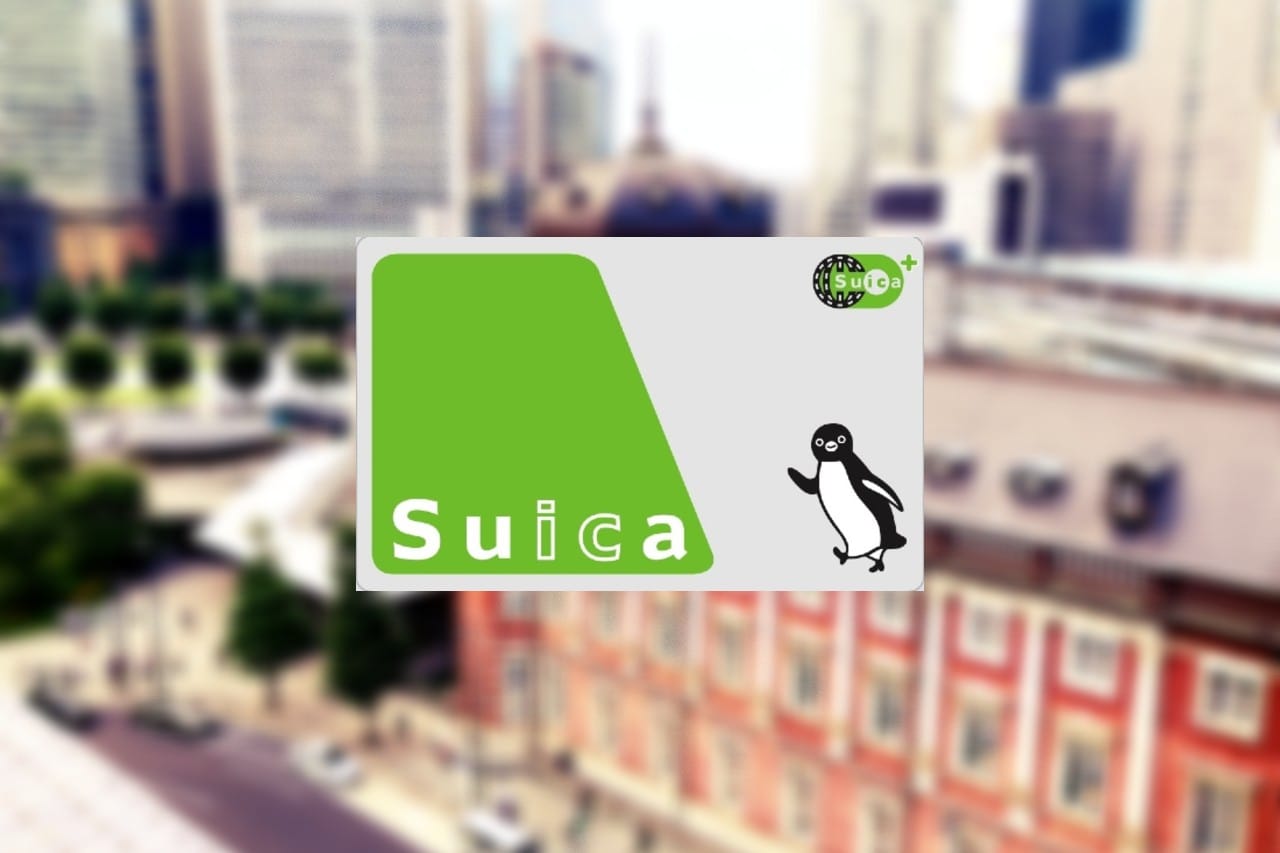
Where can you use a Suica card? Three places: trains and buses, shop counters, and coin lockers. On transport, it covers JR, subway and private railway lines across Tokyo, plus most of Japan’s major regions, from Osaka and Fukuoka to Hokkaido and Okinawa’s monorail. In shops, look for the IC card logo at the register. Convenience stores, Don Quijote, many taxis and the big bookstores all accept it.
There are two limits worth knowing before you go. First, a single train journey can’t cross from one IC card area into another, so you can’t tap in in Tokyo and tap out in Shizuoka or Osaka. Second, a Suica card holds a maximum of ¥20,000, which rules out anything pricier. The sections below go shop by shop, line by line and region by region.
What Can You Do With a Suica Card?
The first job is getting around. Suica is issued by JR East. You tap it on the gate when you enter a station and again when you leave, and the fare comes off your balance automatically. It works on trains, subways, local buses and monorails, so you never need to work out a fare or buy a paper ticket.
Japan Pocket Wifi Rental
Japan eSIM : Fast & Easy & UNLIMTED
Japan Travel eSIM
The second is paying in shops. The money on the card doubles as e-money: wherever a shop or machine shows the transport IC logo, say “Suica” at the register and tap. The third is coin lockers. Station lockers that support IC cards take payment by tap, and tapping the same card again unlocks your bag, so there’s no PIN to remember. Locker sizes and where to find them are covered in our guide to coin lockers in Japan.
If you don’t have a card yet, the standard unregistered Suica went back on sale in March 2025, and iPhone users can set one up in Apple Wallet before leaving home. See where to buy a Suica card for every option.

Which Shops Accept Suica?
There’s one rule: look for the logo. JR East says Suica can be used at any shop, vending machine or locker that shows the Suica logo, or the logo of Kitaca, PASMO, TOICA, manaca, ICOCA, SUGOCA, nimoca or Hayakaken.
Here’s how that plays out at the places visitors ask about most.
Can You Use Suica at Don Quijote?
Yes, but it depends on the store and even on the register. Don Quijote (ドン・キホーテ, often shortened to “Donki”) publishes an official list of stores that accept Suica, and notes that e-money other than its own majica card works only at some registers. In the same store, one till may take Suica while the next one doesn’t.
Coverage in Tokyo is wide. When Get Around Japan checked the official list in October 2026, it showed close to 60 stores inside Tokyo’s 23 wards, including all the branches visitors usually head to.
| Area | Stores on the official Suica list (October 2026) |
|---|---|
| Shibuya | MEGA Don Quijote Shibuya Main Store |
| Shinjuku | Shinjuku Kabukicho, Shinjuku Southeast Exit, Shin-Okubo Station |
| Ikebukuro | Ikebukuro East Exit Station, Ikebukuro Station West Exit |
| Ueno, Asakusa, Akihabara | Ueno, Okachimachi, Asakusa, Akihabara |
| Ginza, Roppongi | Ginza Main Building, Roppongi |
| Odaiba, Haneda | DiverCity Tokyo Plaza, Haneda Airport |
Before you pay, ask the staff “Suica tsukaemasu ka?” (Can I use Suica?) and they’ll point you to the right register. Outside Tokyo, check the store you’re visiting on Don Quijote’s official e-money store list.
A Suica card can’t hold more than ¥20,000. A Donki haul of cosmetics, snacks and electronics passes that quickly, so keep Suica for smaller purchases and bring a credit card or cash for the big one.
Can You Use Suica at FamilyMart, 7-Eleven and Lawson?
Yes. FamilyMart, 7-Eleven, Lawson and Ministop all take Suica, so onigiri, drinks and coffee are a quick tap. You may see older guides mention Sunkus, but that chain has since been merged into FamilyMart.
At FamilyMart, the payment guide at the register lists “交通系電子マネー” (transport e-money) as one option, printed with the Suica, PASMO, ICOCA, Kitaca, TOICA, manaca, SUGOCA, nimoca and Hayakaken logos. Tell the cashier you’re paying with Suica. The same sign warns that some registers are cashless-only (キャッシュレス専用レジ). Suica works fine there, but if you want to top up your card with cash, use a regular staffed register.
Some things at a convenience store can’t be paid for with Suica. 7-Eleven’s official list includes utility bills and other payments collected for third parties, stamps and postcards, revenue stamps, prepaid cards, designated garbage bags and disposal tickets, copy-machine services, and paying for online orders in store. Topping up e-money can’t be paid for with Suica either. For a wider look at what to buy, see our convenience store guide.

Can You Use Suica in a Japanese Taxi?
It depends on the company. Nihon Kotsu, Tokyo’s largest taxi operator, lists transport IC cards, including Suica and PASMO, among its official payment methods. Cars from the big fleets usually have a card reader, but smaller companies and owner-driver taxis vary.
Check the stickers on the rear passenger window. If there’s an IC logo, you can tap. If there’s no sticker, ask the driver as you get in. When you arrive, tell the driver you’ll pay by Suica and hold the card to the reader; if the fare is more than your balance, you’ll be asked to pay another way.
Bookstores: Kinokuniya and BOOKOFF
Kinokuniya’s flagship Shinjuku Main Store accepts Suica, and its official store page lists transport e-money among its payment methods. Other branches don’t all take the same methods, so check the “お支払い方法” (payment methods) section on the page for the branch you’re visiting.
Many branches of the secondhand chain BOOKOFF also accept transport IC cards. This again varies by store, so go by the logo at the register.
20+ Other Places You Can Use Suica
Beyond the categories above, there are plenty of everyday places in and around stations where Suica comes in handy. The table groups common brands by type. Even within a brand, the odd branch may not take it, so a quick look for the logo at the register is the safest check.
| Type | Common brands or places | Notes |
|---|---|---|
| Convenience stores | 7-Eleven, FamilyMart, Lawson, Ministop | Cash top-ups at the counter; bill payments, stamps etc. excluded |
| Coin lockers | Station lockers that support IC cards | Tap the same card to collect your bag |
| Vending machines | Machines with the IC logo | Choose your drink, then tap |
| Taxis | Nihon Kotsu and other large fleets | Check the rear window sticker |
| Discount stores | Don Quijote | Depends on store and register |
| Malls and station buildings | AEON MALL, LaLaport, atre | Depends on the individual shop |
| Electronics | BIC CAMERA, Sofmap | Items over ¥20,000 won’t go through |
| Drugstores | Cocokara Fine | Varies by store |
| Bookstores | Kinokuniya, BOOKOFF | Varies by store |
| Family restaurants | Gusto, Jonathan’s | Varies by store |
| Fast food and chains | KFC, CoCo Ichibanya, Matsuya, Tendon Tenya, Ringer Hut | At ticket-machine restaurants, tap on the machine |
| Takeaway sweets | Ginza Cozy Corner | Varies by store |
| On board | Trolley sales on JR trains | Only on trains with onboard sales |
To look up a specific brand, JR East keeps an official list of shops that accept Suica, sorted by business type.
When Suica Won’t Work, Even With the Logo
Most failed payments come down to the amount. Suica holds ¥20,000 at most, so anything that costs more can’t go on the card alone. It’s also prepaid, so if the balance is short, the payment simply fails.
The other cause is the item itself, like the convenience-store exclusions above. And some places don’t take IC cards at all, especially small shops and market stalls. For those you’ll need cash or another way to pay; our guide to paying cashless in Japan covers the options, and how much cash to bring to Japan helps you budget the rest.
Can You Use Suica on Tokyo’s Trains? JR, Subway and Private Lines
Can you use Suica on the Keio Line? Yes. The Ginza Line? Also yes. Suica works on JR, both subway networks and all the major private railways in the Tokyo area, and you can transfer between companies on the same card without buying anything extra.
| Operator | Main lines | Suica? | Notes |
|---|---|---|---|
| JR East | Yamanote, Chuo, Sobu, Keihin-Tohoku, Saikyo, Keiyo and more | Yes | Limited expresses such as N’EX need a limited express ticket; Green Cars on regular trains need a Green Car ticket |
| Tokyo Metro | Ginza, Marunouchi, Hibiya, Tozai, Chiyoda, Yurakucho, Hanzomon, Namboku, Fukutoshin | Yes | All lines |
| Toei | Asakusa, Mita, Shinjuku and Oedo lines, Toden Arakawa Line, Nippori-Toneri Liner, Toei buses | Yes | Tap when boarding buses |
| Keio | Keio Line, Inokashira Line | Yes | For Mt. Takao, Kichijoji, Shimokitazawa |
| Odakyu | Odawara Line, Enoshima Line | Yes | Romancecar needs a limited express ticket |
| Tokyu | Toyoko, Den-en-toshi, Meguro lines | Yes | For Yokohama, Jiyugaoka, Futako-Tamagawa |
| Seibu, Tobu | Ikebukuro and Shinjuku lines; Tojo, Skytree and Nikko lines | Yes | Laview, SPACIA and other limited expresses need a limited express ticket |
| Keisei | Keisei Main Line, Narita Sky Access Line | Yes | Skyliner needs a separate Liner ticket |
| Keikyu | Keikyu Main Line, Airport Line | Yes | For Haneda Airport, Yokohama |
| Others | Yurikamome, Tokyo Monorail, Rinkai Line, Tsukuba Express, Enoden, Hakone Tozan Railway, Fujikyu Line | Yes | Look for the IC logo at the gate |
Suica pays the base fare only. Trains that charge extra, like limited expresses and liners, need a limited express or reserved-seat ticket on top. For the airport trains specifically, see using Suica on the Skyliner and our Skyliner and N’EX guide.
One Get Around Japan editor, leaving Asakusa Station on the Tokyo Metro Ginza Line, found a long queue at the gates. Many travelers were holding paper tickets, and only a few gates accepted them. At JR and subway stations, almost every gate takes IC cards, so tapping a Suica usually means a much shorter wait.

Where Can You Use Suica Outside Tokyo?
Suica is part of Japan’s nationwide IC card interoperability scheme, so you can ride, shop and top up with it in other regions too. Here’s how each area works.
| Region | Where Suica works | Watch out for |
|---|---|---|
| Hokkaido | JR Hokkaido’s Kitaca area, Sapporo subway and streetcar, Hakodate streetcar | JR stations outside the Kitaca area |
| Sendai, Tohoku, Niigata | JR East’s regional Suica areas, Sendai subway | No travel between these areas yet |
| Nagoya, Shizuoka | JR Central’s TOICA area, Meitetsu, Nagoya subway | Can’t tap through from Tokyo |
| Osaka, Kyoto, Kobe | JR West, subways, major private lines, city buses | A few specific cases fail; see our Osaka guide |
| Hiroshima, Okayama, Hokuriku | Main stations in JR West’s ICOCA area | Streetcars and buses vary by operator |
| Fukuoka, Kyushu | JR Kyushu’s SUGOCA area, Fukuoka subway, Nishitetsu trains and buses | SUGOCA is split into sub-areas |
| Okinawa | The whole Okinawa Urban Monorail (Yui Rail) | Not on Okinawa Island’s local buses |
Okinawa: Yes on the Monorail, No on Local Buses
Can you use Suica in Okinawa? On the monorail, yes. The Okinawa Urban Monorail, Yui Rail (ゆいレール), has accepted Suica and the other nationwide IC cards since March 10, 2020, at every station from Naha Airport to the terminus at Tedako-Uranishi, and you can top up at any station. Stations don’t sell Suica or process refunds, though, so get your card before you fly in.
At the gates, note that there are two readers. The blue reader is for Suica and other IC cards plus QR tickets; the pink one in front is for contactless credit cards, and tapping the wrong one won’t open the gate. Since March 28, 2025, every Yui Rail station has accepted contactless Visa, Mastercard, JCB, American Express, Diners Club, Discover and UnionPay, which gives you an option if you don’t have Suica.
Okinawa Island’s local buses (Naha Bus, Ryukyu Bus Kotsu, Okinawa Bus and Toyo Bus) are another matter. They use the local OKICA card, which isn’t compatible with Suica, so Suica won’t work on these buses and you’ll need cash. OKICA also can’t be used on the mainland. According to Okinawa media reports in September 2026, the card’s issuer is aiming to make OKICA usable nationwide by 2029.
Hokkaido: Fine Around Sapporo and Hakodate
JR Hokkaido uses the Kitaca card, and Suica works anywhere in the Kitaca area: the Sapporo and Asahikawa area and the Hakodate area, which covers the New Chitose Airport, Sapporo and Otaru routes most visitors ride. In Sapporo, the subway, streetcar and JR Hokkaido Bus, Hokkaido Chuo Bus and Jotetsu Bus all accept it, as do Hakodate’s streetcar and city buses.
Kitaca only covers part of JR Hokkaido’s network, though. Many stations on long routes into eastern and northern Hokkaido are outside it, and if you tap in at Sapporo you won’t be able to tap out there. Before a long train trip, check that both your departure and arrival stations are in the Kitaca area. If they aren’t, buy a paper ticket.
Fukuoka and Kyushu: JR, Subway and Nishitetsu All Work
In Fukuoka you can stop worrying. JR Kyushu’s SUGOCA area, the Fukuoka City Subway (including the Airport Line from Fukuoka Airport), and Nishitetsu trains and buses all take Suica, and so do shops with the IC logo around Hakata and Tenjin.
The thing to watch is how JR Kyushu splits its area. SUGOCA is divided into the Fukuoka, Saga, Nagasaki, Oita and Kumamoto area, the Kagoshima area and the Miyazaki area, and you can’t travel between them on the card. For a long trip like Hakata to Kagoshima you’d take the Kyushu Shinkansen and buy a ticket anyway.
Can You Use Suica in Osaka and Kyoto?
Yes. Across Osaka, Kyoto, Kobe and Nara, Suica works on most JR, subway, major private railway and city bus services, and shops accept it and top it up as usual.
There are a few specific situations in Kansai where it won’t go through, and you can’t buy or refund a Suica there. We cover all of them in can you use Suica in Osaka?, which is worth reading before a Kansai trip.
Nagoya, Sendai, Hiroshima and Kanazawa
Around Nagoya, Suica works in JR Central’s TOICA area, on Meitetsu and on the Nagoya Municipal Subway. Sendai and Niigata are already JR East Suica areas, and the Sendai subway takes it too. Hiroshima, Okayama and Kanazawa sit in JR West’s ICOCA area, so you can use Suica at the main stations there.
Every region still has some rural lines and small bus companies without IC readers. When you head out of the city center onto a local railway or community bus, look for the IC logo at the station or on the bus, and keep some coins handy.
Buses and Limited Express Trains
Most local buses inside the nationwide scheme take Suica. On some routes you tap when you get on and again when you get off; on flat-fare routes you tap once. Just follow the signs on board. Highway buses usually need a reservation and ticket in advance, and you can’t always just tap on.
Limited express trains follow the same rule everywhere: Suica covers the base fare, and you buy the limited express ticket separately. If you already have Suica, you only need to buy the limited express ticket at a machine or online.
The Cross-Area Rule, and What Changes in Spring 2027
Suica works almost everywhere, but one rule matters: you have to enter and exit within the same IC card area. JR East’s own example is that you can’t tap in at Odawara (Suica area) and tap out at Numazu (TOICA area). In the same way, Tokyo to Atami works, but Tokyo to Shizuoka, Nagoya or Osaka doesn’t. We explain the boundaries in more detail in can I use Suica for long-distance travel?
If your trip crosses areas, JR East’s advice is to buy a paper ticket in advance. What if you tap in and ride too far by mistake? Tell the station staff when you try to exit and pay the fare in cash; your card and balance are fine. Most long cross-area trips are on the shinkansen, which needs a ticket anyway, so most visitors never run into this rule.
Right Now, Even JR East Has Six Separate Areas
JR East’s Suica network is currently split into six areas: Greater Tokyo, Sendai, Niigata, Aomori, Morioka and Akita. You can’t travel between them on the card, which means that today you can’t tap in at Ueno and tap out at Sendai, even though both are JR East stations.
That’s about to change. On September 8, 2026, JR East announced that once its new server-based gate system is complete, it will merge all six areas into one at the end of fiscal 2026 (spring 2027), letting you ride between any Suica stations on a single tap. It will also add 32 new Suica stations, including Echigo-Yuzawa on the Joetsu Line, Shin-Shirakawa on the Tohoku Main Line, and Tsuruoka and Sakata on the Uetsu Main Line. The start date hasn’t been announced yet; see JR East’s press release (in Japanese).
Routes That Still Won’t Work After 2027
The merger only covers JR East’s own areas. Tokyo to Shizuoka and Nagoya crosses into JR Central’s territory, and Osaka belongs to JR West, so those trips will still need a ticket.
The merger also only fixes cross-area travel on regular lines. You’ll still need separate tickets for the shinkansen and limited expresses.
Two Quick Answers
Can You Use Suica on the Shinkansen?
Normally, no. You need a separate shinkansen ticket; you can’t tap a Suica through the shinkansen gates the way you would on a local train.
There are two exceptions: unreserved seats on some JR East shinkansen sections, and Suica on a phone linked to an online booking service. The conditions are fiddly, and we explain them in can you use Suica on the shinkansen?
Does My Old Suica Card Still Work?
A standard green Suica stays valid for 10 years from the last time you used it, and JR East makes no distinction between registered and unregistered cards. A red Welcome Suica lasts only 28 days and can’t be used after that.
If a card has sat in a drawer for a long time, a gate may stop you. That doesn’t mean the card has expired. JR East’s advice is to see the station staff, who can sort it out so you can keep using it. Expiry rules for every card type are in does Suica expire?, and the Welcome Suica rules are in our Welcome Suica guide.
Suica at a Glance
| Question | Answer |
|---|---|
| Don Quijote? | Yes, depending on store and register |
| FamilyMart, 7-Eleven, Lawson? | Yes, except bill payments, stamps and similar |
| Taxis? | Depends on the company; check the window sticker |
| Keio Line, Ginza Line? | Yes |
| Osaka and Kyoto? | Yes, but you can’t buy or refund Suica there |
| Okinawa? | Yes on the monorail, no on Okinawa Island’s local buses |
| Hokkaido and Fukuoka? | Yes, within each IC card area |
| Tokyo to Osaka on one tap? | No, buy a ticket for cross-area trips |
| Shinkansen? | Normally needs a separate ticket |
| Top up outside Tokyo? | Yes, at station machines and convenience stores |
Outside Tokyo: Top Up Yes, Buy or Refund No
Take Suica to another region and riding, shopping, topping up and checking your balance all work just as they do in Tokyo. Station ticket machines and convenience store counters in Osaka, Fukuoka, Sapporo and elsewhere will top up your card with cash.
What you can’t do is buy or refund one. A JR East Suica can only be refunded at JR East stations, and you can’t buy or return one in Kansai, Kyushu, Hokkaido or Okinawa. If your trip never passes through Tokyo, it’s easier to buy that region’s own IC card, which does the same job. Our Suica vs ICOCA comparison helps if you’re deciding between the two.
If you’d rather skip the physical card, iPhone users can add Suica to Apple Wallet and set it up and top it up from anywhere; see how to add Suica to your iPhone and Welcome Suica Mobile. Android phones bought outside Japan can’t add Suica for now; the reasons and workarounds are in can you use Suica on Android?
How to Top Up Suica: Four Places to Add Money
Topping up is simple: insert the card, choose an amount and feed in yen notes. There are four kinds of place to do it.
Machines outside the gates at JR stations. The ticket machines and charge-only machines outside the ticket gates all top up Suica. This is the most common way.
Machines outside the gates at subway and private railway stations. Not every machine works, so look for one with the Suica logo on it. Some subway machines handle both PASMO and Suica, and private lines like the Keio Line have separate Suica-only charge machines.
Fare adjustment machines inside the gates. JR and subway stations have fare adjustment machines inside the gates. If you notice your balance is short before exiting, you can top up right there.
Convenience stores. Hand your card to the cashier, say you want to charge it (“chāji”) and how much, and pay in cash.
Suica is only sold in JR East’s region, but you can top it up anywhere in Japan. For step-by-step screens on JR’s charge machines, convenience store top-ups and the refund fee, see how to top up and refund Suica.
Looking up Don Quijote’s Suica store list, planning transfers and topping up Suica on your iPhone all happen on the spot, so you need to be online. CDJapan Rental’s eSIM runs on docomo, Japan’s largest network. Buy online, scan a QR code to activate, and there’s no physical SIM to swap, so you’re connected the moment you land.
FAQ
If my Suica balance is too low, can I pay the rest in cash?
It depends on the shop, but 7-Eleven allows it. 7-Eleven’s official list of payment methods that can’t be combined with transport IC cards covers nanaco, other e-money, credit cards and barcode payments, and cash isn’t on it. Tell the cashier you want to put part of the total on Suica and pay the rest in cash. Vending machines and lockers usually take the full amount from the card or nothing, so top up first.
Can I use two Suica cards to pay for one purchase?
No. Both 7-Eleven and BIC CAMERA state that only one transport IC card can be used per transaction. If two cards each have a little left on them, split your items into two separate purchases and pay for each with one card.
Do PASMO and ICOCA work in the same shops as Suica?
Yes. According to JR East, the e-money on Kitaca, PASMO, Suica, TOICA, manaca, ICOCA, SUGOCA, nimoca and Hayakaken is interchangeable, so a shop showing any one of those logos accepts the others too. PiTaPa is the exception and isn’t part of the e-money arrangement.
Can I top up Suica with a credit card at a convenience store?
No. Convenience store counters top up physical IC cards with cash only, and 7-Eleven lists cash top-ups as something you can’t pay for with e-money or credit cards. If you want to top up by credit card, use Suica on an iPhone instead.
On Okinawa’s monorail, is it cheaper to tap a credit card or Suica?
If you ride a lot in one day, a credit card works out cheaper. Under the rules announced when Yui Rail launched contactless payments in March 2025, fares on the same card above ¥800 in one day are discounted, so you never pay more than ¥800 a day. Suica is charged the normal fare for every ride, so for one or two trips the cap makes no difference.
Related reading
Short trip or long stay — we've got you covered
Best for Travelers
Japan eSIM
From ¥2,800 — activate before you land
- Cheaper than airport & convenience store SIMs
- 5-day to 135-day plans; unlimited or data-capped
- No SIM swap needed — ready in 2 minutes
Best for Long Stays
Monthly Pocket WiFi
From ¥5,500/mo — unlimited, no throttle
- Choose WiMAX 5G or SoftBank 4G coverage
- 3 to 12-month contracts — longer means cheaper
- Delivered to your hotel or airport post office


