
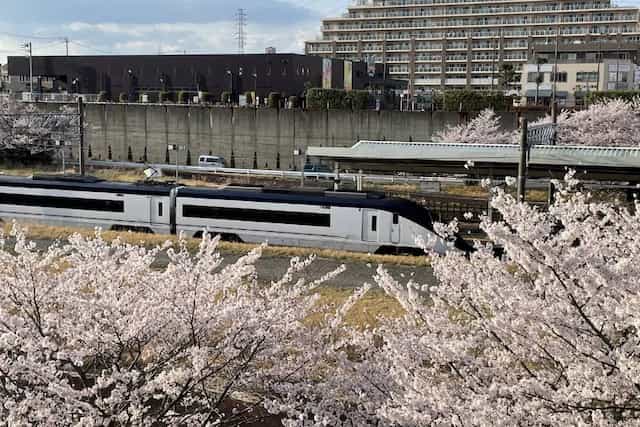
Fresh off the plane at Narita, with the crowd around the baggage carousel still hovering, you’ve got an immediate decision to make: is it worth dropping 2,580 yen to ride the Skyliner into Tokyo?
- On-Site Ticket Price (Adult One-Way)
- 2,580 yen = 1,280 yen base fare + 1,300 yen Skyliner express ticket
- Tapping In/Out with IC Card
- 2,567 yen = 1,267 yen IC fare + 1,300 yen Skyliner express ticket
- Online Discount Ticket
- One-Way: 2,310 yen / Round-Trip: 4,500 yen (Exclusive for foreign tourists)
- Travel Time
- Narita Airport Station → Approx. 36 min to Nippori, approx. 41 min to Keisei-Ueno
- Buy in Advance?
- Not necessary. The Skyliner rarely sells out, so you’ll easily catch a train buying on arrival. Buying ahead is purely to save money.

If you’re still weighing the Skyliner against other transport options, check out this overview first: First-Time in Japan? The Ultimate Narita Airport Transportation Guide.
At a Glance: Where Should You Buy Your Ticket?
| Booking Channel | One-Way Price | Payment Method | Select Train & Seat? | Best For |
|---|---|---|---|---|
| Official Web E-Ticket | 2,310 yen | Overseas Credit Card, Alipay, WeChat Pay | Yes, assigned upon redemption at station | Travelers with fixed itineraries looking to save money |
| Skyliner Ticket Counter | 2,580 yen | Cash, Credit Card | Yes | Travelers worried about flight delays who prefer deciding on arrival |
| Dedicated Skyliner Machine | 2,580 yen | Cash, Transit IC Card, Credit Card | Yes, includes live seat map selection | Travelers who want to skip the counter line |
| Klook / KKday, etc. | Varies by platform | Credit Card | Assigned upon station redemption | Travelers who like earning travel platform rewards |
| On-Board Purchase (Select LCCs) | Varies by deal | Airline policy | Assigned upon station redemption on arrival | Spontaneous travelers deciding mid-flight |
Prices verified as of August 2026. Subject to official updates from Keisei Electric Railway.
2026 Price Breakdown: How That 2,580 Yen Is Calculated
The total Skyliner fare consists of two components: the Keisei Line base fare of 1,280 yen, plus the reserved-seat Skyliner express ticket of 1,300 yen, totaling 2,580 yen.
If you tap through the automatic ticket gates using a transit IC card, the base fare is calculated as an IC fare (1,267 yen), bringing your total to 2,567 yen—a tiny savings of 13 yen.

| Payment Method | Adult | Child (Ages 6–11) | Fare Breakdown |
|---|---|---|---|
| Paper Base Ticket | 2,580 yen | 1,290 yen | 1,280 yen Base Fare + 1,300 yen Skyliner Ticket |
| IC Card Gate Tap | 2,567 yen | 1,283 yen | 1,267 yen IC Fare + 1,300 yen Skyliner Ticket |
| Official Online Booking | 2,310 yen | Per official website | Flat discounted rate |
Japan Pocket Wifi Rental
Japan eSIM : Fast & Easy & UNLIMTED
Japan Travel eSIM
There is a good reason for this split: the base fare can be covered using a transit IC card, while the Skyliner ticket is a separate reserved-seat fee. This distinction is precisely why so many travelers ask, “Can I use my Suica card on the Skyliner?”
| From Narita Airport To | Travel Time | Adult On-Site Fare |
|---|---|---|
| Keisei-Ueno | Approx. 41 min | 2,580 yen |
| Nippori | Approx. 36 min | 2,580 yen |
| Aoto | Approx. 32 min | 2,200 yen |
| Shin-Kamagaya | Approx. 25 min | 1,730 yen |
Aoto and Shin-Kamagaya are served only by select trains, mostly during evening hours.
Buying Tickets on Arrival: Counters & Machine Walkthrough
You cannot purchase Skyliner tickets at standard Keisei Line ticket machines. You must go to a Skyliner Ticket Counter or use the dedicated Skyliner ticket machines set up in the counter area. Both are located on B1F at Narita Airport—just follow the overhead “鉄道 / Train” signs downstairs.
Narita Airport Terminal 1

Once you clear customs, head down to B1F. The purple box highlights the ticketing area where you’ll find both staffed counters and dedicated machines.
To board, head down one more floor to B2F (Platforms 1, 4, and 5—check your ticket for the exact platform). Platforms 2 and 3 serve local trains only. Note that another airport train, the Access Express, also stops at Platforms 1, 4, and 5, so make sure you don’t hop on the wrong train!
Narita Airport Terminals 2 & 3

At Terminal 2, head down to B1F to purchase your tickets. Trains depart from Platform 1 on B2F. Platform 2 heads back toward Terminal 1 (not Tokyo), while Platforms 3 and 4 serve local trains only. The Access Express also uses Platform 1.
Terminal 3 has no train station or platform. If you land at Terminal 3, you must transfer to Terminal 2 first to catch a train into the city. You can either walk or take the free shuttle bus.
The sign at the passageway entrance reads “630m,” which indicates the distance to the center of Terminal 2. The walkway itself is around 500 meters. Standard travel guides usually suggest budgeting 15 minutes for walking, which conservatively accounts for airport navigation. In reality, if you’re wheeling a single 20-inch suitcase and walking briskly, you can breeze through the walkway in about six minutes. However, if you’re hauling two heavy bags or traveling with young kids or elderly family members, planning for 10 to 15 minutes will keep things stress-free.
If you’d rather not walk, catch the free shuttle bus. The ride from Terminal 3 to Terminal 2 takes roughly 3 minutes, running every 5 to 6 minutes during peak daytime hours. Note that early morning and late night service thins out to intervals of 20+ minutes, making waiting for the bus slower than walking. Buses from Terminal 2 operate roughly from 4:30 AM to 11:00 PM.
Ticket Machine Step-by-Step
The ticket machine interface lets you switch between English, Simplified Chinese, and Korean. Note that there is no Traditional Chinese option. If you dislike Simplified Chinese characters, matching the Japanese interface with the steps below is actually much faster!

- The next train is displayed at the top of the main screen. If you’re in a hurry, simply tap the big first button. To select a different time slot, tap “本日の上記以外のライナー券を時間帯から購入する” (Purchase other Liner tickets for today by time slot).
- Select your destination station. The screen displays the arrival time for each stop simultaneously, saving you a trip to look up the schedule.
- Select the number of passengers and seating preference. You can choose “Window Seat” or “Aisle Seat” directly, or tap “座席表から選ぶ” (Select from seat map) to pick specific seats yourself.
- If you choose to view the seat map, a real-time availability chart for all eight cars will appear. When buying tickets for multiple passengers, all seats must be booked within the same car.
- Select “Do you hold a basic fare ticket or IC card?” to determine whether you need a combined ticket or just a Skyliner express ticket.
- Confirm the train schedule, seat choices, and ticket type, then proceed to payment.


Two Payment Gotchas to Keep in Mind
Keisei’s official policy is clear: credit cards can only be used to purchase standalone Skyliner tickets or “Base Fare + Skyliner Ticket” combo passes. All other ticket types are strictly cash-only in Japanese yen. This means you can pay by card for your Skyliner ticket, but if you plan on picking up other passes at the same time, you’ll need local currency on hand.
The second trap is even trickier. Keisei specifically cautions that ticket floors (B1F) at Terminal 1 and Terminal 2/3 have virtually no currency exchange counters or ATMs. In other words, if you plan to pay with cash, make sure to withdraw or exchange your Japanese yen in the 1F Arrival Hall before heading downstairs—otherwise, you’ll be hauling your luggage back up a floor to wait in line.
Overseas credit cards don’t always work at ticket machines. While the payment screen offers a credit card option, many international travelers report that foreign-issued cards get declined by the machine, and mobile payments like Apple Pay aren’t supported either. If you only hold overseas credit cards, heading to a staffed counter is your safest bet.
Staffed counters and SKYLINER & KEISEI INFORMATION CENTERs at each terminal offer support in English, Chinese, and Korean, operating from roughly 7:00 AM to 9:00 PM. Wondering how much cash to bring for your arrival? Check out this post: How Much Cash (JPY) Should You Bring to Japan?
Can You Ride the Skyliner with a Suica Card?
Yes, but not only a Suica card. Your Suica covers the 1,267 yen base fare portion, but the 1,300 yen Skyliner reserved-seat ticket must be purchased separately. You can pay for the Skyliner ticket using your IC card balance, cash, or a credit card.
The ticket machine will prompt you about this automatically. After picking your seats, a message will pop up asking: “Riding the Skyliner requires a Skyliner ticket. Do you hold a basic fare ticket or IC card?” Put simply, it’s asking whether you need to buy a base fare ticket alongside your Skyliner pass.

| Your Selection | What the Machine Sells You | Amount Paid | Gate Entry / Exit |
|---|---|---|---|
| はい (Yes – Have IC Card) | Skyliner Ticket only | 1,300 yen | Tap IC card to enter/exit; 1,267 yen base fare deducted automatically at gates |
| いいえ (No – No IC Card) | Base Fare + Skyliner Ticket | 2,580 yen | Insert paper ticket directly into the automatic ticket gates |
Both paths lead to your seat; the only difference is 13 yen and whether you end up holding an extra paper ticket. Tapping “はい” (Yes) switches the machine to “Riner Ticket Only,” charging you just 1,300 yen.

Boarding the Skyliner with an IC card without purchasing a Skyliner ticket incurs a 300 yen surcharge. Official Keisei notices state that riding without a valid Skyliner ticket will result in a 300 yen penalty for adults (150 yen for children) on top of the express fee. Combined with the standard 1,300 yen express fare, purchasing your ticket onboard will cost 1,600 yen.
Understanding IC Card Rules Across 3 Keisei Train Options
| Train | IC Card Only? | Seating | Narita → Ueno Travel Time |
|---|---|---|---|
| Skyliner | No, separate Skyliner ticket required | All reserved seats | Approx. 41 min |
| Access Express | Yes, no express ticket needed | Unreserved, can get crowded at peak hours | Approx. 60 min |
| Keisei Main Line Ltd. Exp. | Yes, no express ticket needed | Unreserved, standard commuter cars | Approx. 75 min |
Seeing “Limited Express” in a train’s name doesn’t automatically mean you need an express ticket. The Access Express and Keisei Main Line Limited Express are regular trains you can board simply by tapping your IC card. Only the Skyliner requires a separate reservation ticket. Because all three trains share the same departure gates, getting on the wrong train is a very common mistake!
Don’t Have a Suica Card?
Sales of unregistered Suica and PASMO cards resumed on March 1, 2025, meaning you can easily buy one upon arrival in Japan. International travelers can also opt for the red Welcome Suica, activate Welcome Suica Mobile on their phones, or add a Mobile Suica directly via Apple Wallet on iPhone. Other Japanese IC cards like ICOCA work perfectly fine as well.
Online Booking: Save 270 Yen with Official Web E-Tickets
The official Keisei website offers Skyliner e-ticket sales in English and Traditional Chinese. Prices are 2,310 yen for a one-way ticket and 4,500 yen for a round-trip ticket (saving 660 yen off the standard 5,160 yen total). Tickets open for sale about one month prior to departure, with payments accepted via Visa, Mastercard, JCB, Alipay, or WeChat Pay.
- On the official website, select your ticket type, departure date, origin/destination stations, passenger count, and agree to the terms.
- Enter passenger details. Names must strictly match your passport. Double-check your email address, as your payment link and vouchers will be sent there.
- After submitting your order, check your email for the payment link and complete payment within 60 minutes; otherwise, the order is automatically canceled.
- Once payment succeeds, you’ll receive a confirmation email containing a QR code.
- Upon arriving at Narita Airport, scan your QR code at a Skyliner ticket counter or dedicated machine to exchange it for paper tickets and assign your departure time and seats.

Two major restrictions to keep in mind. First, e-tickets are exclusively available to overseas tourists visiting Japan. Japanese passport holders (including citizens living abroad) are ineligible, and you must present your passport during redemption.
Second, round-trip tickets can ONLY be redeemed at Narita Airport Terminal 1 Station and Terminal 2/3 Station. You cannot redeem round-trip vouchers at Keisei-Ueno or Nippori stations. This means you must redeem your return ticket on the very day you land.
Official Booking Portal: Skyliner e-ticket Official Booking Site
Facial Recognition Gates: How “Face Check in Go” Works
Launched on January 24, 2025, Keisei introduced “Skyliner e-ticket Face Check in Go.” By registering your facial data while purchasing your e-ticket online, you can breeze through station gates using facial recognition—bypassing ticket counter queues altogether while wheeling your luggage.
Participating stations include Keisei-Ueno, Nippori, Terminal 2, and Narita Airport. Note that at Nippori Station, this service is restricted to the North Gate (Gate A).
- Purchase your Skyliner e-ticket on the official website, complete payment, and register your face using your phone or computer camera.
- On your travel day, walk up to the designated ticket gate equipped with Face Check in Go tablet devices for facial scanning.
- Once verified, the ticket machine issues physical tickets based on your group size for the “earliest available departing train.”
- Upon arrival at your destination station, you must exit through the manned gate; automatic ticket gates will not open for facial check-out.
Skip facial recognition if you want to pick specific departure times or seats. The system automatically assigns seats on the next immediate train. While a group leader can scan in for multiple travelers, the number of people passing through must match the ticket count. Please check official site guidelines for round-trip or bundle ticket applicability.
Skyliner + Tokyo Subway Ticket Bundles
If you plan on getting around Tokyo via subway for the next few days, buying standalone Skyliner tickets isn’t your best deal. Combining a one-way or round-trip Skyliner ticket with an unlimited 24, 48, or 72-hour pass for Tokyo Metro and Toei Subway lines (13 routes total) is easily the most cost-effective combo.
| Package | 24-Hour | 48-Hour | 72-Hour |
|---|---|---|---|
| Skyliner One-Way | 2,900 yen | 3,300 yen | 3,600 yen |
| Skyliner Round-Trip | 4,900 yen | 5,300 yen | 5,600 yen |
Adult pricing verified as of August 2026. One-way combos save roughly 480 yen; round-trip combos save about 1,060 yen. Child tickets are roughly half price.
Keep in mind that Tokyo subway passes operate on a continuous hour-based timer starting from your first gate tap, not calendar days. A 48-hour ticket activated at 3:00 PM remains valid until 2:59 PM on the third day—a detail that trips up many itinerary planners.
Additionally, Keisei offers a Taiwan–Japan Combo Ticket that bundles Narita’s Skyliner with the Taoyuan Airport MRT and Taipei Metro. If you’re flying out of Taoyuan Airport and returning there, this bundle streamlines airport transit on both ends of your trip. Pricing and availability fluctuate, so double-check the Keisei Special Discount Tickets page before heading out.
While Skyliner trains feature free onboard Wi-Fi, navigating customs, finding counters, checking schedules, and transferring at Nippori requires reliable personal data. CDJapan Rental eSIM runs on docomo’s network, offering rock-solid coverage at Narita Airport and across Tokyo. Set it up in two minutes before takeoff, turn it on upon landing, and jump straight into your journey without waiting in airport SIM lines.
Timetable: First & Last Trains
Heading into Tokyo from Narita Airport, the first train departs at 7:23 AM on weekdays (7:30 AM on weekends/holidays), with the last train departing at 11:00 PM daily. Outbound from Tokyo to Narita Airport, the first Skyliner leaves Keisei-Ueno at 5:40 AM, and the last Skyliner leaves at 8:40 PM.
Narita Airport → Tokyo
| First Train (Departs T1) | Last Train (Departs T1) | |
|---|---|---|
| Weekdays | 7:23 AM | 11:00 PM |
| Weekends & Holidays | 7:30 AM | 11:00 PM |
Departures from Terminals 2 & 3 are approx. 3 minutes later. Verified August 2026.
During daytime hours, trains run roughly every 20 minutes (three per hour). Service is sparse early in the morning—between 7:00 AM and 9:00 AM, trains run only every 40 to 50 minutes. If you land on a red-eye flight around 5:00 or 6:00 AM, the first Skyliner won’t be running yet, so hop on an Access Express or Keisei Main Line train instead. Both accept IC card taps with no express ticket required.
The last train runs 7 minutes slower than daytime trains. The 11:00 PM departure from Terminal 1 makes additional stops at Shin-Kamagaya and Aoto, arriving at Nippori at 11:43 PM and Keisei-Ueno at 11:48 PM. Total travel time is 48 minutes instead of the daytime 41 minutes.
If you’re making a tight connection to the last subway or Yamanote Line train, those 7 extra minutes can make or break your night—factor in an 11:48 PM arrival when mapping your route.
Tokyo → Narita Airport
The earliest Skyliner from Keisei-Ueno departs at 5:40 AM on both weekdays and weekends. Aside from taxis or late-night buses, this is the earliest option for early morning flights.
The last Skyliner outbound from Keisei-Ueno leaves at 8:40 PM. Later schedules may list trains called “Liner,” but these are Evening Liners running along the Keisei Main Line geared toward local commuters. Most of these terminate at Keisei-Narita Station, NOT Narita Airport, and take over an hour from Ueno.
In short, if you need to reach Narita Airport after 8:40 PM, the Skyliner is no longer an option. You’ll need to rely on the Access Express, Keisei Main Line, or Limousine Buses. Night flight travelers should plan ahead accordingly.
Similarly, there is a morning commuter train heading toward Narita called the Morning Liner (departs 7:49 AM weekdays / 7:43 AM weekends). It runs on a different track, requires a different ticket, and costs differently than the Skyliner. Before purchasing tickets, ensure the screen lists “Narita Airport” (成田空港) and not “Keisei-Narita” (京成成田)—these destinations are two stops apart!
Schedules are subject to periodic timetable revisions. Check official updates prior to departure: Keisei Official Skyliner Timetable
Luggage Space & Onboard Amenities
Dedicated large luggage racks are situated at the end of every carriage, complemented by overhead racks above seats—easily fitting 29-inch suitcases. Legroom is generous enough that placing a bag at your feet won’t feel cramped.
Seats come equipped with power outlets, and free Wi-Fi is available throughout the train.

Arriving in Tokyo: Transferring at Nippori vs. Ueno
Entering Tokyo, the Skyliner stops only at Nippori and Keisei-Ueno. Picking where to get off shouldn’t be arbitrary: if you’re transferring to the JR Yamanote Line, get off at Nippori; if you’re transferring to the Tokyo Metro Ginza or Hibiya Lines, ride all the way to Keisei-Ueno. Get this backward, and you’ll waste valuable time lugging heavy bags through unnecessary pedestrian walkways.
The difference lies in station layout. Nippori features an integrated layout shared between JR and Keisei, complete with a dedicated transfer gate so you don’t have to exit the station complex. In contrast, Keisei-Ueno is an isolated terminal requiring a short outdoor walk to reach JR Ueno Station.
Exiting at Nippori: Direct Transfer Gates with Zero Street Walking
The Keisei platform at Nippori is elevated; walking down leads directly to the “Keisei Line Transfer Gate” (京成線のりかえ口). Passing through this gate puts you directly inside the JR station concourse. The entire path is stair-free and step-free, making it seamless to roll your luggage through. Walking from the gate to the furthest JR platforms (Platforms 11 & 12 for Yamanote Counterclockwise and Keihin-Tohoku Northbound) takes just over a minute.
How to pass through the gate depends on your ticket setup. If you hold a paper combo ticket (base fare + Skyliner ticket combined into one), simply insert the ticket into the gate slot, and the machine will retain it. If you tapped in with an IC card for base fare and bought a separate paper Skyliner ticket, touch your IC card at the transfer gate scanner. This single tap handles both your Keisei exit and JR entry, deducting the Keisei IC fare automatically. Your Skyliner ticket was verified prior to boarding and does not need to be re-inserted.
A common misconception is that you must “insert your Skyliner ticket first, then tap your Suica.” That’s unnecessary! Transfer gates process one action at a time—insert paper tickets OR tap IC cards. You don’t use both simultaneously.
Once through the gate, you’re on Yamanote Line territory. Keep your directions straight, as Inner Loop and Outer Loop trains run in opposite directions from Nippori:
| Destination | Yamanote Line Direction | Approx. Time |
|---|---|---|
| Ikebukuro | Inner Loop (Counterclockwise) | Approx. 11 min |
| Shinjuku | Inner Loop (Counterclockwise) | Approx. 21 min |
| Shibuya | Inner Loop (Counterclockwise) | Approx. 27 min |
| Akihabara | Outer Loop (Clockwise) | Approx. 7 min |
| Tokyo Station | Outer Loop (Clockwise) | Approx. 12 min |
| Shinagawa | Outer Loop (Clockwise) | Approx. 23 min |
Times are estimates and may take a few extra minutes during rush hour. Bound for Odaiba? Catch the Outer Loop Yamanote Line from Nippori to Shimbashi, then transfer to the Yurikamome Line—getting you to Odaiba in just over 30 minutes.
Exiting at Keisei-Ueno: Walk Required to Reach JR Ueno
Keisei-Ueno Station and JR Ueno Station are two completely separate structures. Exiting Keisei-Ueno’s ticket gates requires a 3 to 5-minute walk at street level to reach JR Ueno. So if your next connection is a JR line, getting off at Ueno is an unnecessary detour—stick to Nippori!
On the flip side, if you’re transferring to the Tokyo Metro, Keisei-Ueno is infinitely more convenient. Ueno Station on the Ginza and Hibiya Lines sits right next to Keisei-Ueno—just follow the underground overhead signs.
| Destination | Line & Direction | Approx. Time |
|---|---|---|
| Asakusa | Ginza Line (Toward Asakusa) | Approx. 5 min |
| Ginza | Ginza Line (Toward Shibuya) | Approx. 11 min |
| Roppongi | Hibiya Line (Toward Naka-meguro) | Approx. 18 min |
| Maihama (Tokyo Disneyland) | Hibiya Line to Hatchobori, transfer to JR Keiyo Line | Approx. 30 min |
Heading to Asakusa and Ginza both utilize the Ginza Line, but in opposite directions! Before boarding, check platform signage carefully for “Toward Asakusa” (浅草方面) vs. “Toward Shibuya” (渋谷方面)—this is the single most common mix-up at Ueno Station.
Taking the Hibiya Line to Hatchobori for a JR Keiyo Line transfer to Disneyland is vastly easier than the traditional “transfer at Tokyo Station” route. The Keiyo Line platforms at Tokyo Station sit exceptionally deep underground, requiring a 10 to 15-minute trek wheeling luggage, whereas Hatchobori offers a much shorter, low-stress transfer distance.
Staying in These Districts? The Skyliner Might Not Be Your Best Choice
While the Skyliner is the fastest train, it only services Nippori and Keisei-Ueno. If your hotel is located along the Toei Asakusa Line—such as Oshiage, Asakusa, Nihombashi, Higashi-ginza, Shimbashi, or Shinagawa—choosing a direct train is far simpler.
Select Access Express trains departing Narita Airport offer through-service directly onto the Keisei Oshiage Line and Toei Asakusa Line, running straight to Oshiage, Asakusa, Nihombashi, and Shimbashi with zero transfers or stair-climbing. While slower than the Skyliner (taking roughly 60 minutes), you can board simply by tapping your IC card without purchasing an express ticket, saving a chunk of cash. Travelers staying near Tokyo Skytree should strongly consider this train.
Pay attention to the Access Express destinations: one route heads toward Keisei-Ueno, while another provides through-service to Oshiage and the Toei Asakusa Line. Always verify the destination screens on the platform before stepping on board.
Staying in Shinjuku or Shibuya? Taking the Skyliner to Nippori requires hauling luggage through the Yamanote Line for a lengthy loop. The direct Narita Express (N’EX) is usually much more comfortable. Check out this guide for details: Riding the Narita Express (N’EX).
Frequently Asked Questions
Do I need to buy Skyliner tickets in advance?
No. Skyliner trains rarely sell out under normal circumstances. Buying tickets upon arrival gives you plenty of time and avoids ticket forfeiture if your flight is delayed. The primary reasons to buy online ahead of time are saving 270 yen and bypassing ticket counter queues.
Are seat reservations mandatory on the Skyliner?
Yes. The Skyliner is an all-reserved express train with no unreserved seating. Departure time and seat assignments are designated upon purchase. Whether you prefer a window or aisle seat, choices can be selected at counters or ticket machines, with machines offering a live seat map layout.
Can return tickets booked online be picked up early?
One-way tickets can be redeemed at Narita Airport, Keisei-Ueno, or Nippori stations. However, round-trip ticket vouchers can ONLY be redeemed at Narita Airport’s two stations, meaning you must redeem your return ticket on the day you land. If you don’t speak Japanese, redeeming at the Narita Airport Information Center is easiest, as multilingual staff are on site.
Can I cancel or refund my ticket after purchase?
Official web e-tickets can generally be canceled prior to physical redemption. Once redeemed for physical paper tickets, refunds are subject to Keisei rules and cancellation fees. If purchased via third-party platforms like Klook or KKday, cancellation policies are governed by the respective platform—read product terms carefully before ordering.
How do I take the Skyliner if I land at Narita Terminal 3?
Terminal 3 has no train station; you must head to Terminal 2 first. The pedestrian corridor is approx. 500 meters long (about 6 minutes fast walk, 10–15 minutes with heavy luggage). Alternatively, take the free shuttle bus (3-minute ride, running every 5–6 minutes during daytime). Once at Terminal 2, go down to B1F for tickets and board from Platform 1 on B2F.
Can you eat and drink on the Skyliner?
Yes! The Skyliner is an all-reserved limited express train equipped with seatback tray tables. Eating and drinking are totally fine, and locals frequently enjoy bento boxes on board.
However, there are no food carts or vending services on board the train. If you want snacks or drinks, purchase them at airport convenience stores in the 1F Arrival Hall before heading down to the B1F station counters.
Short trip or long stay — we've got you covered
Best for Travelers
Japan eSIM
From ¥2,800 — activate before you land
- Cheaper than airport & convenience store SIMs
- 5-day to 135-day plans; unlimited or data-capped
- No SIM swap needed — ready in 2 minutes
Best for Long Stays
Monthly Pocket WiFi
From ¥5,500/mo — unlimited, no throttle
- Choose WiMAX 5G or SoftBank 4G coverage
- 3 to 12-month contracts — longer means cheaper
- Delivered to your hotel or airport post office


