
Hidden Gems Japan · Series Guide
Gujo City, Gifu Prefecture
Summer (mid-July — early September, Gujo Odori)
1–2 days (including an evening at the festival)
~1 hr 45 min from Nagoya via Nagaragawa Railway
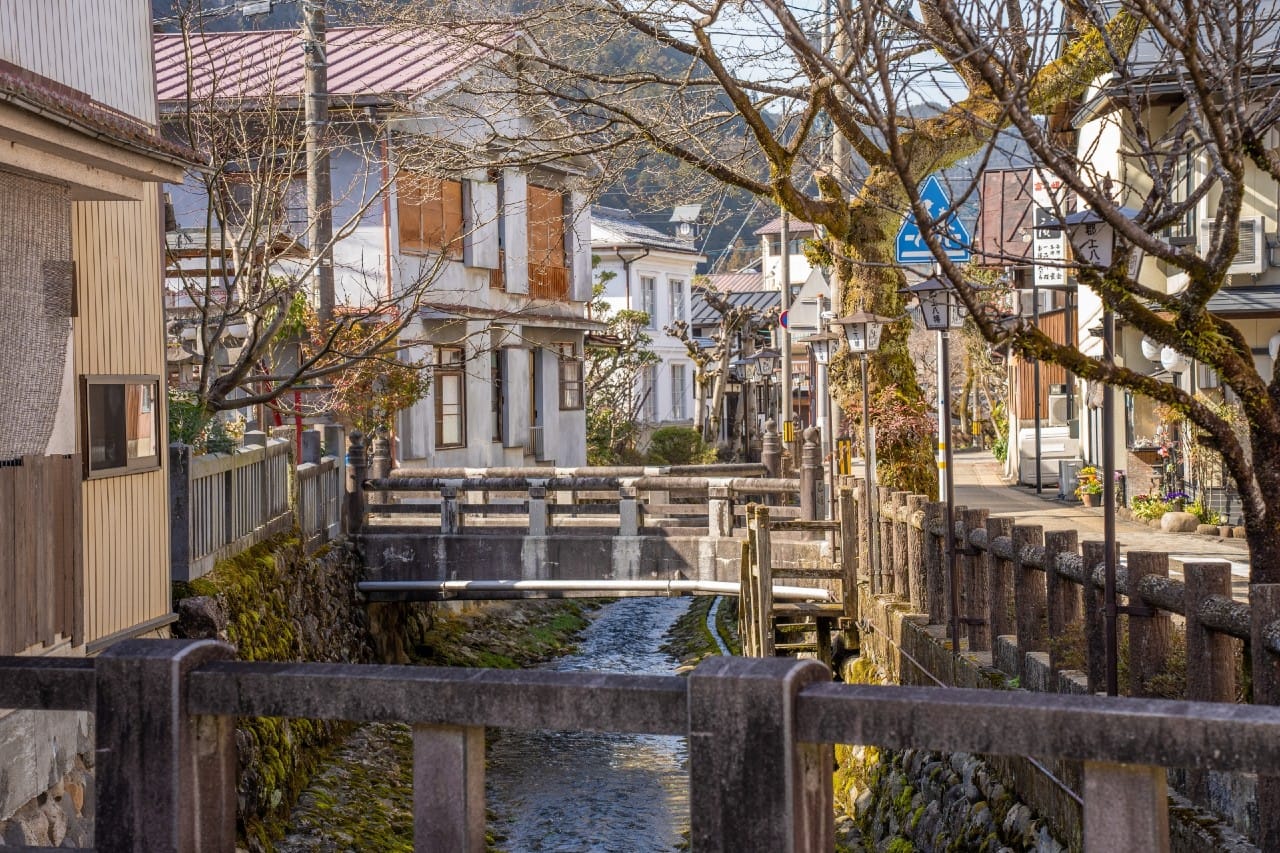
Deep in the mountains of Gifu Prefecture, a castle town is threaded through with spring-fed streams that residents still use for washing vegetables and cooling beer. Children jump off an old bridge into the crystalline river below on summer afternoons. Water runs audibly down every street. This is Gujo Hachiman — a place that Reddit travelers have called “almost tourist-free, though nobody seems to know why.”
The reason most people eventually make their way here, though, is a dance. Every summer for four centuries, the streets of this town have filled with the sound of shamisen and taiko for thirty-something consecutive nights — and every person in the dance circle, local or visitor, is moving in the same direction.
Gujo Odori: A Festival You Can Walk Into

Japan Pocket Wifi Rental
Japan eSIM : Fast & Easy & UNLIMTED
Japan Travel eSIM
Gujo Odori (郡上おどり) is Japan’s longest-running bon odori festival, held across roughly 32 nights each summer from mid-July to early September. In 2022 it was added to UNESCO’s Representative List of the Intangible Cultural Heritage of Humanity as part of the Furyu Odori group. The festival features seven distinct dances performed in rotation — Kawasaki and Harukoma are the most graceful, while Gengenbararabara has a rhythm irresistible enough that people start moving before they’ve consciously decided to join.
The defining feature of Gujo Odori is that there is no separation between performers and audience. Dancers form a large ring in the street or town square; anyone can walk in, find a spot in the circle, and follow the movement of whoever is alongside them. A few rotations are usually enough to get the basic footwork. No registration, no costume requirement — though renting a yukata from a shop near the dance site makes the experience feel complete.
The festival typically opens on the second Saturday of July and runs through early September. Dates shift slightly each year — check the Gujo Hachiman Tourism Association website for the current year’s full schedule before you travel.
Tetchya Odori (all-night sessions): Four nights during the Obon period — usually August 13 to 16 — dancing runs continuously from 10pm until 5am. These are the nights the festival is most famous for, and the nights accommodation books out fastest. If the Tetchya sessions are your goal, start looking for rooms three to four months ahead.
Best Time to Visit
| Season | Dates | Highlights | Notes |
|---|---|---|---|
| Summer ★ | Mid-July — early September | Gujo Odori festival (32 nights); river swimming; long evenings | Tetchya nights (Aug 13–16): book accommodation 3–4 months ahead |
| Spring | Late March — mid-April | Cherry blossoms around the castle; quiet town atmosphere | Mountain roads may still have snow patches in early spring |
| Autumn | October — November | Foliage along the Yoshida River; white-walled streets with red and gold above | Recommended; much quieter than summer |
| Winter | December — February | Snow-covered town; fewest visitors; completely different atmosphere | Mountain driving requires snow tyres; some businesses reduce hours |
Getting to Gujo Hachiman
Gujo Hachiman has no Shinkansen stop — part of why it’s stayed off the main tourist circuit. The standard approach from Nagoya involves two trains, while visitors from Osaka typically find the highway bus more convenient.
| From | Route | Journey Time | Notes |
|---|---|---|---|
| Nagoya | JR Takayama Line to Mino-Ota, then Nagaragawa Railway to Gujo-Hachiman | ~1 hr 45 min | Nagaragawa Railway does not accept IC cards — buy a cash ticket |
| Osaka / Kyoto | Highway bus (direct to Gujo Hachiman; multiple operators) | ~3–4 hours | Additional services run during festival season; book ahead |
| Nagoya (self-drive) | Tokai-Hokuriku Expressway, exit Gujo Hachiman IC | ~1 hr 30 min | Festival nights: park at the outskirts and walk in — central parking fills early |
| Hida Furukawa / Takayama | Self-drive or bus south along Route 156 | ~1 hr 15 min | Natural pairing for a Hida–Gujo mountain circuit |
What to See & Do in Gujo Hachiman
Water Town Walk

The label “water town” (水の城下町) isn’t tourism branding — it’s a physical description. The Yoshida River, the Kodara River, and the Miyagase River converge in the old town, sending dozens of smaller channels down every street. Stone water troughs called suifune sit at intervals along the lanes, fed by continuous spring water that residents still use for washing produce and cooling drinks. The sound of water is everywhere.
Walking the old town without a specific destination is the right approach. The white-walled storehousess, red-latticed windows, and stone-paved lanes are intact enough to give the streetscape a quiet coherence. The Sogi-sui spring (宗祇水) — designated one of Japan’s 100 finest water sources — sits near the edge of the old town, and stopping to drink from it is a small ritual most visitors end up doing.
Jumping into the Yoshida River
Every summer, local children do something that has become one of Gujo Hachiman’s most photographed sights: they climb onto the railing of the Shinkyo Bridge and jump — a drop of roughly 12 meters into the crystal-clear Yoshida River below. The water is snowmelt-fed and cold even in August, but the jumpers come back for another round within minutes.
You don’t need to jump to appreciate it. Sitting on the riverbank and watching the sequence — the climb, the hesitation, the decision, the leap — is one of those quietly perfect summer afternoons that stays with you. Photographers often wait here for the right shot.
Gujo Hachiman Castle

Gujo Hachiman Castle (郡上八幡城) was founded in 1559 and sits atop 354-meter Mount Hachiman above the town. The current wooden tenshu (main tower) was rebuilt in 1933 and is one of the oldest surviving wooden castle reconstructions in Japan. It’s a modest structure by castle standards, but the view from the summit is the reason to make the climb: the white rooftops of the old town, the Yoshida River threading through it, the surrounding Oku-Mino peaks — the layout makes clear in one glance why Gujo Hachiman is called a water town. The walk up takes about 30 minutes; there’s also a car park partway up if you prefer to drive.
Food Sample Workshops
Most visitors don’t immediately connect Gujo Hachiman with the food replica industry — but this is where it started. The hyper-realistic plastic and wax models of dishes that sit in restaurant windows across Japan were invented here in the 1920s, and Gujo Hachiman still produces a significant share of the country’s output. Several workshops in town offer sessions where visitors make their own replicas using hot wax — typically tempura prawns, leafy vegetables, or parfait desserts. Sessions run about 30 to 40 minutes and the finished piece is yours. Most require advance reservation; check availability before you arrive.
What to Eat in Gujo Hachiman

Ayu (鮎), or sweetfish, is the dish most closely linked to Gujo Hachiman. The Yoshida River’s exceptional clarity produces ayu with a clean, faintly herbal flavor — a result of their algae-rich diet — and the standard preparation is salt-grilling on a skewer over charcoal. Summer diners and riverside restaurants serve it throughout the festival season, and it’s one of those dishes that tastes exactly right in context.
Meiho Ham (明宝ハム) is a local processed pork product that has been made in the neighboring Meiho village since the 1950s — firm, mildly sweet, and enduringly popular as a regional souvenir. It’s sold at shops throughout the town and travels well.
Where to Stay
Accommodation in Gujo Hachiman is limited in both scale and quantity. The old town has a handful of traditional inns and guesthouses within walking distance of the main festival sites — these are the best option for fully experiencing the evening atmosphere, but they fill up far in advance for the Tetchya all-night sessions. Some ryokan offer dinner plans featuring ayu and local mountain vegetables, which adds meaningfully to the stay.
If you can’t find rooms in Gujo Hachiman for the festival nights, Nagoya or Gifu City are workable bases — both have late trains or overnight buses that get you into town for the evening dancing. Serious Tetchya attendees sometimes simply stay until the 5am finish and take the first morning train out.
Practical Tips
The single most important logistics note for Gujo Hachiman: the Nagaragawa Railway does not accept Suica or any IC card. You need cash to buy your ticket at Mino-Ota Station. Withdraw enough yen before leaving Nagoya — ATMs at smaller rural stations don’t always accept foreign cards.
In town, newer restaurants and shops accept PayPay, but many of the older diners, street food vendors during the festival, and temple admission points are cash-only. Keep a few thousand yen in cash on hand throughout your stay. IC cards work normally on JR lines getting you to and from Mino-Ota — just not on the final Nagaragawa Railway leg.
Self-driving to Gujo Hachiman is genuinely the most comfortable option for visiting outside festival season, and gives you easy access to the Hida region and Shirakawa-go on the same trip. On festival nights, however, the central streets are closed to traffic and parking fills quickly — use the outer car parks and walk in.
Gujo Hachiman sits in the Oku-Mino mountain basin, where signal quality depends heavily on your carrier. CDJapan Rental’s eSIM runs on the docomo network — the most reliable option for rural Gifu — keeping navigation working on the mountain roads and maps functional during the festival crowds.
Nearby Day Trips & Combinations
About 1 hour 15 minutes by self-drive north through the mountains. White-walled storehouses and clear streams in a town quieter than Takayama. A natural pairing for a two-day Gifu mountain circuit.
About 50 minutes north by car. The UNESCO-listed gassho-zukuri thatched farmhouse village. The most logical detour from Gujo if you’re heading toward the Hida region anyway.
About 1 hour 30 minutes north by car. The Hida region’s main town, with a well-preserved old merchant district and the Jinya morning market. Pairs naturally with Hida Furukawa into a two to three day Hida route.
About 1 hour 30 minutes south by Nagaragawa Railway. Gifu Castle and the summer Ukai cormorant fishing on the Nagara River make for a worthwhile extension at either end of the Gujo Hachiman trip.
Frequently Asked Questions
What is Gujo Odori and can foreigners join?
What are the Tetchya Odori all-night sessions?
How do you get to Gujo Hachiman from Nagoya or Osaka?
What is the food sample workshop in Gujo Hachiman?
Is Gujo Hachiman worth visiting outside summer?
Short trip or long stay — we've got you covered
Best for Travelers
Japan eSIM
From ¥2,800 — activate before you land
- Cheaper than airport & convenience store SIMs
- 5-day to 135-day plans; unlimited or data-capped
- No SIM swap needed — ready in 2 minutes
Best for Long Stays
Monthly Pocket WiFi
From ¥5,500/mo — unlimited, no throttle
- Choose WiMAX 5G or SoftBank 4G coverage
- 3 to 12-month contracts — longer means cheaper
- Delivered to your hotel or airport post office


