
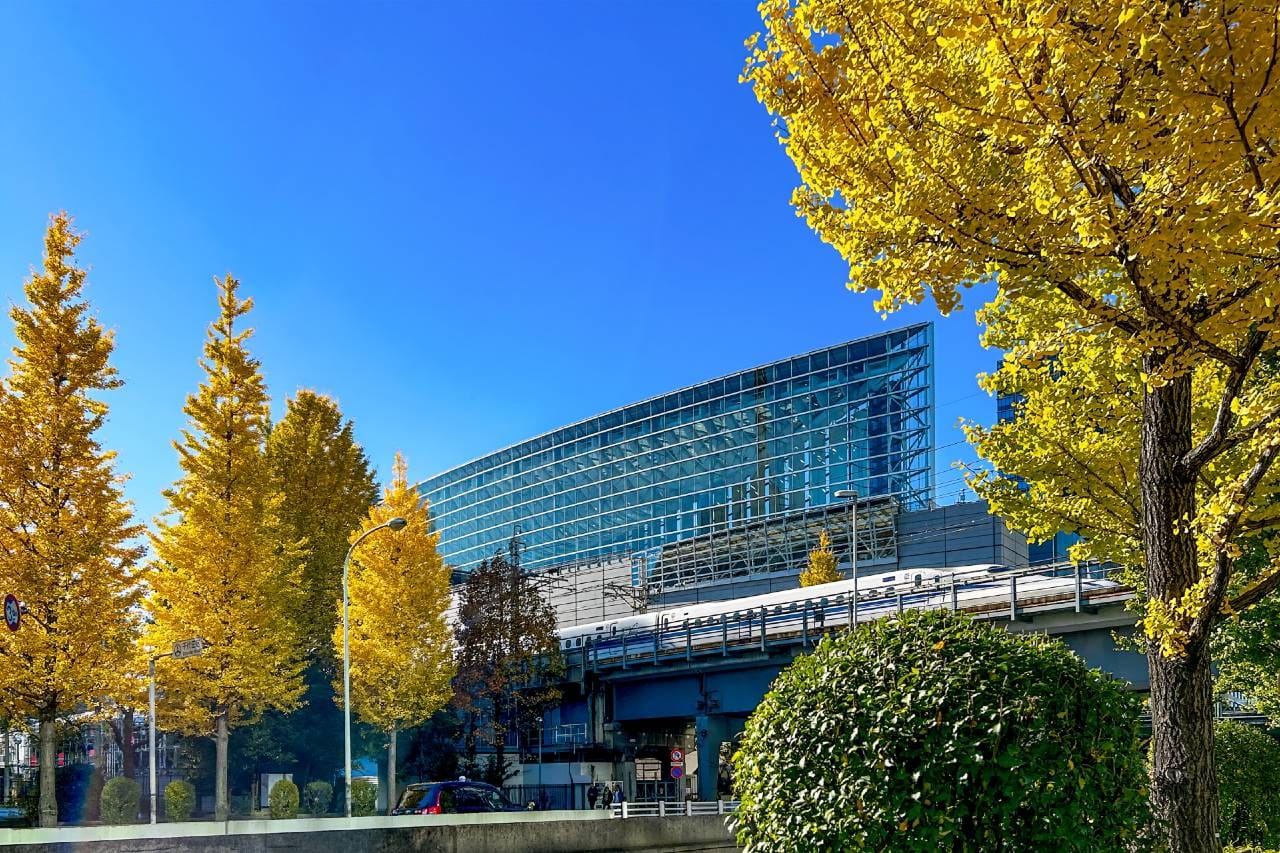
For many travelers taking the Shinkansen in Japan for the first time, the confusion often starts at the same point: it’s the same railway line, yet multiple train names appear on the timetable. The trains look similar, use the same platforms and tracks, but are labeled differently. What exactly is the difference? If you choose the wrong one, will it be slower? Are there trains you can’t even board?
In reality, Shinkansen train names aren’t just for show—they are part of a very practical system for choosing the right train. Once you understand how these names work, you can instantly tell whether a train is fast or slow, whether it stops at your station, and avoid buying a ticket only to realize you boarded the wrong service.
This guide starts from a simple question—why do Shinkansen trains need different names?—and walks you through the naming logic used across Japan’s Shinkansen network, so whether you’re traveling in Tokyo, Osaka, or connecting through regional cities, you can confidently pick the train that suits your itinerary.
A Shinkansen’s “Name” Represents Its Service Class

Japan Pocket Wifi Rental
Japan eSIM : Fast & Easy & UNLIMTED
Japan Travel eSIM
If you want to know how to choose the right Shinkansen, the first concept you absolutely need to understand is this: a Shinkansen’s name doesn’t describe its train model—it describes its service class.
Many first-time travelers assume that “Nozomi,” “Hikari,” and “Kodama” refer to different train types. But in reality, even if the trains look identical from the outside, once the name changes, the stopping pattern and operating style can be completely different.
In Japan, Shinkansen naming tells you three key things:
- Which stations the train will stop at
- How fast the train operates (fast vs. slow)
- Whether it is designed for long-distance or local/regional travel
A classic example—and also the one that confuses most travelers—is the Tokaido Shinkansen. Even though all trains on this line travel between Tokyo and Osaka, they are split into different service names.
Nozomi is the fastest service with the fewest stops, mainly targeting long-distance travel. Hikari sits in the middle with more stops, while Kodama stops at almost every station and serves short-distance or intermediate passengers.
In other words, what really affects your travel time isn’t the “train model” you board—it’s the name you choose.
If you want a simple analogy, Shinkansen naming is like having different lanes on a highway: some are express lanes for fast, long-distance travel; others stop frequently. The tracks are the same, but the travel time can change dramatically.
Once you grasp this naming logic, choosing a Shinkansen becomes much easier. Whether you’re in Tokyo, Osaka, or another region, just check the name on the timetable or departure board—you’ll immediately know what kind of service you’re boarding.
Fun Fact ①: Why are Shinkansen names mostly written in hiragana?It wasn’t a coincidence—it was a deliberate design choice. When Japan National Railways established naming standards, they wanted names that children, foreigners, and anyone unfamiliar with kanji could instantly read. Hiragana is more intuitive than kanji and avoids pronunciation confusion, so most Shinkansen names are written in hiragana.
How Are Shinkansen Names Chosen? They Hint at How the Train Runs

If you look closely, Shinkansen names are rarely random—most of them come from highly visual or symbolic imagery.
Common themes include light, speed, natural phenomena, and positive or forward-moving concepts:
- Hikari (Light)
- Nozomi (Hope)
- Hayabusa (Peregrine Falcon — extremely fast)
- Sakura (Cherry Blossom)
To foreigners, these names may appear poetic, but they were never chosen just for aesthetics. The core purpose of Shinkansen naming is simple: to let passengers quickly guess the train’s speed and service role without looking it up.
For example, Nozomi conveys hope and expectation—fitting for a fast, direct service. Hikari (“light”) implies clarity and smooth movement. Names like Hayabusa instantly evoke speed because they refer to fast birds. Japan’s system is very different from railways that rely solely on numbers or codes. Here, names function as an information design tool to reduce friction for passengers.
In other words, train names help pre-filter choices. When you look at a timetable or departure board, the name alone gives you enough data to eliminate trains that don’t suit your route or purpose.
This naming logic isn’t exclusive to the Tokaido Shinkansen—it appears across Japan’s entire Shinkansen network.
Fun Fact ②: The Most Popular Name Isn’t Always AdoptedSome Shinkansen names were selected through public voting, but the winning option wasn’t always the one ultimately used. Brand consistency, similarity to existing names, and coordination between JR companies sometimes led to different final decisions. In other words, Shinkansen naming involves strategy—not just popularity.
Different Regions Use Different Names — But the “Speed Ranking Logic” Is the Same
If you compare Shinkansen names across Japan, you’ll notice something interesting: each region has its own naming style. For example, the Tohoku Shinkansen prefers names that emphasize speed and power, such as Hayabusa and Komachi. Meanwhile, the Kyushu Shinkansen tends toward softer or symbolic names like Sakura and Tsubame, which reflect regional imagery.
These names don’t just differentiate trains—they help establish an identity for the region they serve.
However, despite stylistic differences, the naming logic across Japan is remarkably consistent: a Shinkansen’s name hints at its relative speed and stopping pattern within its route.
Below is a breakdown of major Shinkansen routes, showing their common train names along with “star ratings” that reflect how fast they operate within the same line.
Tokaido & Sanyo Shinkansen (Tokyo / Nagoya / Kyoto / Osaka / Hiroshima)

Source: JR Odekake Net
- Nozomi: ★★★★★ (Fastest / Fewer stops)
- Hikari: ★★★★☆ (Intermediate / Select stops)
- Kodama: ★★☆☆☆ (Slowest / Stops at almost every station)
This group is the most familiar to first-time travelers and serves as the “standard model” for other Shinkansen routes.
Nozomi (のぞみ / Hope)
Meaning: “Hope / Wish / Expectation.”
Naming intention: As the fastest service on the Tokaido–Sanyo line, the name conveys directness and anticipation, fitting its role as the premier express option.
Hikari (ひかり / Light)
Meaning: “Light.”
Naming intention: Suggests clarity, speed, and smooth movement—positioned between the fastest and the local-type trains.
Kodama (こだま / Echo)
Meaning: “Echo.”
Naming intention: Evokes the idea of sound traveling step-by-step, much like its stopping pattern.
Tohoku Shinkansen (Tokyo / Sendai / Morioka / Shin-Aomori) + Hokkaido Shinkansen (Shin-Aomori / Shin-Hakodate-Hokuto)

Source: JR East Railway Detail

Source: JR East Railway Detail
- Hayabusa: ★★★★★ (Fastest / Long-distance flagship)
- Komachi: ★★★★☆ (Mini-Shinkansen / Often coupled with Hayabusa)
- Yamabiko: ★★★☆☆ (Intermediate)
- Nasuno: ★★☆☆☆ (Local / More stops)
Tohoku Shinkansen names emphasize power and speed. Hayabusa is clearly positioned as the primary fast service.
The Hokkaido Shinkansen currently runs only Hayabusa as its main train type, making choices extremely simple for travelers.
Hayabusa (はやぶさ / Peregrine Falcon)
Meaning: Peregrine Falcon — one of the fastest birds.
Naming intention: Communicates high speed and long-distance performance, serving as the flagship express of both Tohoku and Hokkaido.
Yamabiko (やまびこ / Mountain Echo)
Meaning: “Echo in the mountains.”
Naming intention: Acts as Tohoku’s equivalent to Kodama, balanced between express and local roles.
Nasuno (なすの / Nasuno)
Meaning: Derived from the Nasunohara region north of Tokyo.
Naming intention: Highlights regional service, positioned as a local-type train.
As a side note, the Tohoku Shinkansen once operated a train named Hayate (はやて / “Gale / High wind”). As newer rolling stock increased top speeds, the positioning of Hayate was gradually replaced by the more powerful and speed-centric Hayabusa.
Today, Hayate still exists, but mainly as a scheduled service on the Hokkaido Shinkansen. However, southbound Hayate trains run only late at night, and northbound Hayate trains operate only at dawn, meaning most travelers will never encounter them during normal daytime travel.
Hokuriku Shinkansen (Tokyo / Nagano / Kanazawa / Tsuruga)

Source: JR Odekake Net
- Kagayaki: ★★★★★ (Fastest / Fewest stops)
- Hakutaka: ★★★★☆ (Intermediate)
- Tsurugi: ★★★☆☆ (Regional / Mainly Kanazawa–Tsuruga)
- Asama: ★★☆☆☆ (Local / Mainly Tokyo–Nagano)
While Hokuriku names evoke brilliance and stability, they clearly follow the same fast-to-local hierarchy.
Kagayaki (かがやき / Shine / Brilliance)
Meaning: “Shine / Radiance / Brilliance.”
Naming intention: Represents the main express service on the Hokuriku line and acts as the symbolic flagship.
Hakutaka (はくたか / White Hawk)
Meaning: The “white hawk,” a bird species.
Naming intention: Conveys speed imagery but with a more balanced role.
Tsurugi (つるぎ / Sword)
Meaning: “Sword” — a classical Japanese word for blades.
Naming intention: Symbolizes precision and directness. Positioned as a regional train between Kanazawa and Tsuruga.
Asama (あさま / Asama)
Meaning: Named after Mount Asama (Nagano–Gunma region).
Naming intention: Highlights local geography and serves local-to-medium distance travel on the Tokyo–Nagano sector.
Joetsu Shinkansen (Tokyo / Niigata)
- Toki: ★★★★☆ (Main express)
- Tanigawa: ★★☆☆☆ (Local)
Although fewer names are used here, the “fast vs. local” structure is still clear.
Toki (とき / Japanese Crested Ibis)
Meaning: Named after the Japanese Crested Ibis, a bird historically associated with Niigata.
Naming intention: Functions as the main express service and carries regional significance.
Tanigawa (たにがわ / Tanigawa)
Meaning: Derived from Mount Tanigawa, on the border of Kanto and Niigata.
Naming intention: Emphasizes regional accessibility and serves as a local-type train.
Kyushu Shinkansen (Hakata / Kumamoto / Kagoshima-Chuo)

Source: JR Odekake Net
- Mizuho: ★★★★★ (Fastest / Fewest stops)
- Sakura: ★★★★☆ (Main express)
- Tsubame: ★★☆☆☆ (Local / More stops)
Kyushu names are softer and more symbolic, yet speed-based ranking remains obvious.
Mizuho (みずほ / Abundance / “Japan”)
Meaning: Refers to abundant rice harvests; also historically poetic name for Japan.
Naming intention: Acts as Kyushu’s flagship express service—mature, steady, and national in symbolism.
Sakura (さくら / Cherry Blossom)
Meaning: The iconic cherry blossom.
Naming intention: Combines approachability with speed, serving as Kyushu’s main express.
Tsubame (つばめ / Swallow)
Meaning: The swallow, a well-known migratory bird.
Naming intention: Historically used for trains; now functions as a local-type service.
From this breakdown, it becomes clear that Japan’s Shinkansen naming revolves around three central themes: speed, nature, and regional identity. Whether in Tokyo, Osaka, or more rural regions, names help sort trains into simple categories: fast, medium, and slow.
Once you understand this rule, even unfamiliar names can be interpreted without research.
Fun Fact ③: A Non-Passenger Shinkansen Is Weirdly Popular?One of the most famous Shinkansen-related names is Doctor Yellow — not an official train name, and not a passenger service. It is a maintenance and inspection train used to monitor tracks and overhead equipment. Because it appears without a fixed schedule, it became a “lucky sighting” among rail fans and has achieved cult status—sometimes more famous than regular Shinkansen services.

If You’re Just a Traveler, Remember These Key Points
So, do Shinkansen names actually matter for travelers? The answer is: yes, very much.
A train’s name directly affects:
- whether it stops at your destination
- how long the journey takes
- whether your ticket or rail pass is valid
For example, some JR Pass types cannot be used on Nozomi. If you only check the route (Tokyo → Osaka) without checking the name, you might discover the issue only when standing on the platform.
That said, you don’t need to memorize every detail. For most travelers, only one core rule is necessary:
On the same Shinkansen route, different names always mean different speed and stopping patterns.
If you’re headed to a major station, choose a higher-rated express service (fewer stops). If you’re going to a smaller station, confirm whether that specific train stops there—precision matters more than speed.
Fortunately, Japanese station signs, timetables, and ticket machines all display train names clearly. When in doubt, simply ask: “Does this train stop at ___?”
Shinkansen Names Exist to Help You Choose

Shinkansen naming may seem like a cultural quirk, but it’s actually a well-designed communication system.
By using simple, intuitive names, Japan makes train selection faster and easier, letting travelers spend less time researching timetables and more time enjoying the trip.
Next time you look at a timetable or departure board, remember that those familiar or unfamiliar names are telling you how the train runs and where it stops. With that, choosing the right Shinkansen becomes much simpler than expected.
Recommended reading:
- How to Reserve Shinkansen Tickets in Japan: A Step-by-Step Smart EX Guide
- Japan Shinkansen Ticket Purchase & Riding Guide: A Must-Read for First-Time Visitors
Short trip or long stay — we've got you covered
Best for Travelers
Japan eSIM
From ¥2,800 — activate before you land
- Cheaper than airport & convenience store SIMs
- 5-day to 135-day plans; unlimited or data-capped
- No SIM swap needed — ready in 2 minutes
Best for Long Stays
Monthly Pocket WiFi
From ¥5,500/mo — unlimited, no throttle
- Choose WiMAX 5G or SoftBank 4G coverage
- 3 to 12-month contracts — longer means cheaper
- Delivered to your hotel or airport post office


