
Hidden Gems Japan · Series Guide
Onomichi, Hiroshima Prefecture
Spring (cherry blossoms) · Autumn (foliage)
1 day (town) / 2–3 days (with Shimanami)
~45 min by JR from Hiroshima
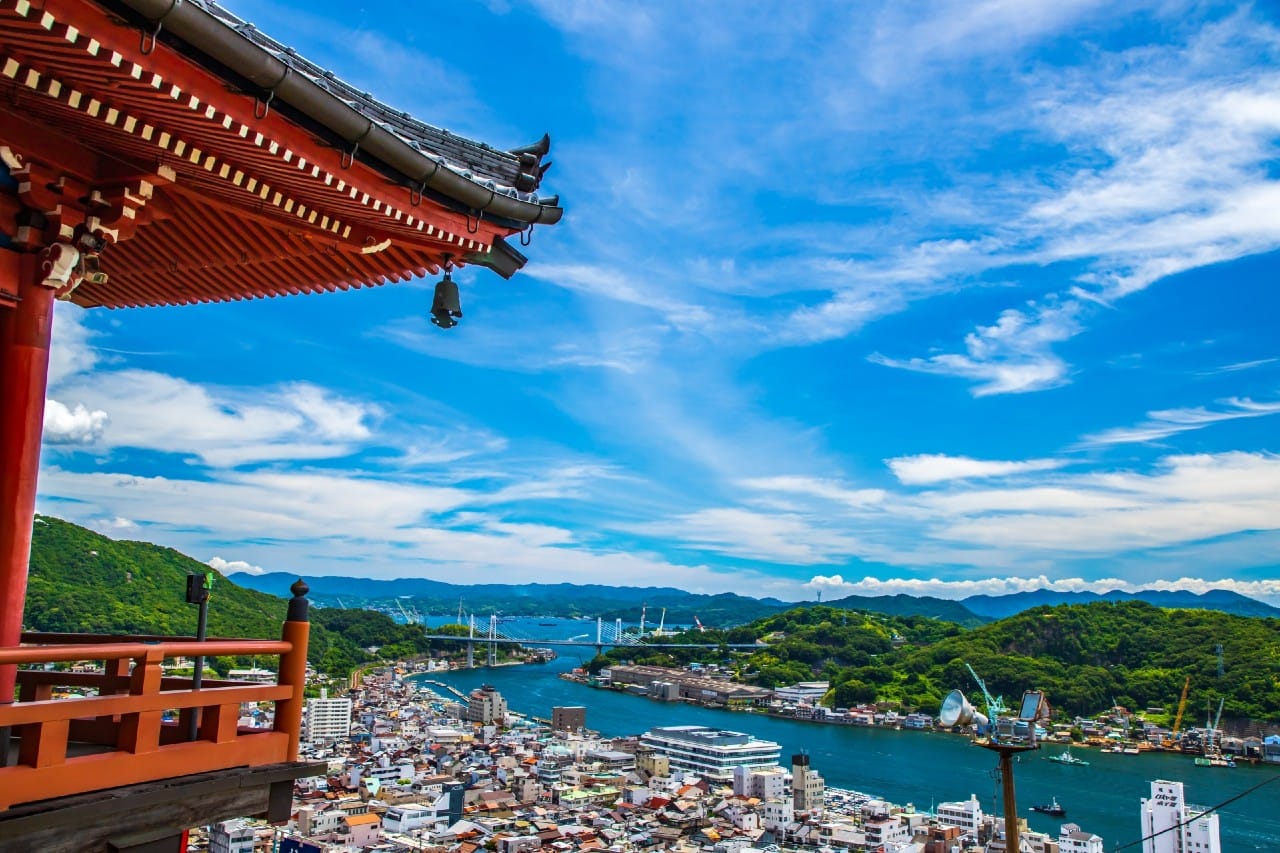
On the eastern edge of Hiroshima Prefecture, a small city faces the Seto Inland Sea and draws you in with a quality that’s hard to put into words. Onomichi has no UNESCO site, no theme park, no big-ticket landmark. What it has are stone lanes stacked up a hillside, cats sleeping on every other step, rock carvings of verses by literary giants, and a view from the top of Senkoji-yama where the sea between the islands looks like hammered silver.
What Western travelers keep returning to in Onomichi is precisely that it doesn’t try to please anyone. The alleys are barely wide enough for two people to pass. The temples are old enough that explanatory plaques feel unnecessary. The ramen shop owner probably didn’t say much when you walked in. But by the time you leave, you’ll have filed this town somewhere in memory that doesn’t fade easily.
Japan Pocket Wifi Rental
Japan eSIM : Fast & Easy & UNLIMTED
Japan Travel eSIM
Best Time to Visit
Onomichi rewards a visit in any season, but spring and autumn offer the most layered experience.
| Season | Dates | Highlights | Notes |
|---|---|---|---|
| Spring | Late March — mid-April | Cherry blossoms cover Senkoji-yama; the Literary Path at its most beautiful | Busy on weekends; weekday visits are quieter |
| Summer | June — August | Peak season for Shimanami Kaido cycling; long days and sea views | Hot and humid; start early if cycling |
| Autumn | October — November | Autumn foliage against old temple walls; the best light for photography | Recommended; crowds thinner than spring |
| Winter | December — February | Fewest visitors; soft winter light; ideal for unhurried photography | Some hillside cafés reduce hours or close |
Getting to Onomichi
Onomichi is well-connected by JR rail. The closest Shinkansen stop is Fukuyama, where both Nozomi and Hikari services call; from there the JR Sanyo Main Line runs directly to Onomichi in about 20 minutes. A handful of slower Kodama trains stop at Shin-Onomichi Station, but that station sits 3km from the town center — the Fukuyama transfer is usually the better option. Suica and other IC cards work throughout.
| From | Route | Journey Time | Approx. Fare |
|---|---|---|---|
| Hiroshima | JR Sanyo Main Line (direct) | ~45–50 min | ~¥1,130 |
| Osaka (Shin-Osaka) | Sanyo Shinkansen to Fukuyama, then JR Sanyo Main Line | ~1 hr 30 min | ~¥7,000–8,500 |
| Kyoto | Sanyo Shinkansen to Fukuyama, then JR Sanyo Main Line | ~1 hr 20 min | ~¥6,500–8,000 |
| Tokyo | Sanyo Shinkansen to Fukuyama, then JR Sanyo Main Line | ~3 hr 50 min | ~¥18,000–20,000 |
What to See & Do in Onomichi
Senkoji-yama & the Literary Path

Senkoji-yama is where most people start, and the ropeway (千光寺山ロープウェイ) makes the ascent effortless — ¥500 one way, ¥900 return. The views on the way up are already worth the fare: the city’s terracotta rooftops, the dark green hillside pressing down from above, and the sea stretching flat and silver toward the islands. The summit park is one of the finest cherry blossom spots in the region in spring, and turns a rich amber in autumn.
From the top, the Literary Path (文学のこみち) winds downhill past 25 stone monuments carved with verses by writers who lived in or drew inspiration from Onomichi — Naoya Shiga, Fumiko Hayashi, Masaoka Shiki among them. The walk takes about 40 minutes and is manageable in ordinary shoes. Director Nobuhiko Obayashi filmed several of his most celebrated films in these lanes; walking them, you’ll occasionally feel less like a tourist and more like you’ve wandered into a long-running scene.
Cat Alley & the Hillside Lanes

Below the Literary Path, the old town begins in earnest. There’s no official “Cat Alley” on the map — it’s more of a collective understanding that if you duck into any lane narrow enough that the sun only comes through in a single strip, you will almost certainly encounter one or two of Onomichi’s unhurried resident cats.
The hillside is best explored without a plan. A detour into a back lane might turn up a coffee shop hiding inside a hundred-year-old house, or a sudden gap between two buildings that frames a perfect slice of sea. That sense of discovery is something no itinerary can manufacture.
Shimanami Kaido Cycling

Onomichi is the starting point of the Shimanami Kaido (しまなみ海道), a 70km cycling route that hops across six islands via a series of bridges to Imabari in Ehime Prefecture. Every bridge has a dedicated cycling lane fully separated from traffic, the sea is visible from nearly every section, and the route passes through fishing towns and mandarin orchards that feel untouched by tourism.
You don’t need to do the whole thing. Many cyclists ride one or two segments — out to Hakatajima or Oshima and back by ferry — adjusting the distance to their time and fitness. Bicycle rental is available at multiple points in Onomichi, and some operators allow one-way rental with a drop-off in Imabari (confirm in advance).
Temple Walking
Onomichi packs 25 temples into a remarkably compact hillside — a density that’s unusual even by Japanese standards. A few stand out. Jodo-ji (浄土寺), said to date to 616 CE, is one of the oldest temples in the city; its National Treasure–designated main hall sits in near-total quiet on a weekday afternoon. Tenneiji (天寧寺) has a three-tiered pagoda that rises above the roofline and has appeared on more Onomichi postcards than anything else in town.
For those who enjoy a structured walk, the local Seven Buddha Pilgrimage (七佛巡り) connects seven temples across the hillside and takes about two to three hours on foot — a relaxed half-day for anyone who prefers wandering with a loose framework to wandering entirely without one.
What to Eat in Onomichi

Onomichi ramen (尾道ラーメン) is the one dish you shouldn’t leave without trying. The broth is soy-based and made with pork bones, and the most recognizable feature is a thin layer of pork back fat floating on the surface — it looks heavier than it is, and the effect on the broth is sweetness and depth rather than grease. The noodles are flat and thin, different from most ramen styles you’ll have encountered elsewhere. Every shop calibrates the recipe slightly differently; trying two or three is entirely reasonable.
Onomichi Pudding (尾道プリン) has become one of the town’s best-known snacks — bottled custard puddings in a wide range of flavors, sold from small shopfronts along the shopping arcade and easy to carry. The Seto Inland Sea also puts fresh seafood within easy reach: sea bream (鯛), octopus (タコ), and oysters show up on the menus of most ordinary diners along the waterfront, without the markup of a tourist restaurant.
Where to Stay
Accommodation in Onomichi divides broadly into two styles. Business hotels near Onomichi Station are the most convenient if you’re carrying luggage or working around early trains; for the old town experience, a handful of guesthouses and small inns have opened inside renovated machiya townhouses on the hillside, which are atmospheric but occasionally modest in facilities — read recent reviews before booking.
If cycling the Shimanami Kaido is the reason you’re here, there’s a well-known cycling-themed design hotel in a converted warehouse right next to the starting point. It tends to fill up weeks in advance in peak season, so book early if that’s the plan.
Practical Tips
The slopes and stone steps are entirely walkable in comfortable, non-slip shoes — no hiking gear required. Anyone with knee or ankle concerns should make full use of the ropeway and stick to the flat shopping street level, which has its own rewards.
For payments, IC cards like Suica work at JR stations and most larger shops. PayPay is accepted at a growing number of cafes and restaurants in town. That said, many hillside coffee shops, older diners, and temple ticket counters are still cash-only — carrying 3,000 to 5,000 yen in cash is strongly recommended. ATMs are not difficult to find near the station, but harder to come by once you’re on the hillside.
English signage is limited away from the main tourist circuit. Download a Google Maps offline map before you arrive, or screenshot the Japanese names of the temples and landmarks you want to find — it takes five minutes and saves a lot of confusion once you’re in the lanes.
Stay connected across Onomichi and the ShimanamiNavigating Onomichi’s unmarked hillside lanes and following cycling directions across six islands both depend on reliable data. CDJapan Rental’s eSIM runs on the docomo network — Japan’s most extensive — covering the full length of the Shimanami Kaido from Onomichi to Imabari. Buy online before you leave, activate with a QR code on arrival, no SIM swap needed.
Nearby Day Trips & Combinations
Onomichi sits in an ideal position for extending a Sanyo itinerary in several directions.
Hiroshima & MiyajimaAbout 45 minutes by JR. Combine the Peace Memorial Museum with the torii gate at Itsukushima Shrine on Miyajima — a full day well spent and the most natural extension from Onomichi.
KurashikiAbout 1 hour by JR. The Edo-era merchant canal quarter of the Bikan district is a complete change of atmosphere — white walls instead of stone lanes, art museum instead of temples. Worth pairing into a two-day Sanyo trip.
Shimanami Kaido (extended)If you’ve only sampled one or two segments, the full 70km ride to Imabari is one of those experiences every cyclist in Japan eventually makes time for. Most people say it exceeded expectations.
Fukuyama20 minutes by train. A well-preserved castle town and the main Shinkansen hub for the area — a practical same-day add-on or a useful accommodation base if Onomichi is fully booked.
Frequently Asked Questions
How many days do you need in Onomichi?
How do you get to Onomichi from Hiroshima or Osaka?
What is Onomichi famous for?
Are the hillside slopes and steps difficult to walk?
Can I use IC cards and cashless payment in Onomichi?
Short trip or long stay — we've got you covered
Best for Travelers
Japan eSIM
From ¥2,800 — activate before you land
- Cheaper than airport & convenience store SIMs
- 5-day to 135-day plans; unlimited or data-capped
- No SIM swap needed — ready in 2 minutes
Best for Long Stays
Monthly Pocket WiFi
From ¥5,500/mo — unlimited, no throttle
- Choose WiMAX 5G or SoftBank 4G coverage
- 3 to 12-month contracts — longer means cheaper
- Delivered to your hotel or airport post office

