
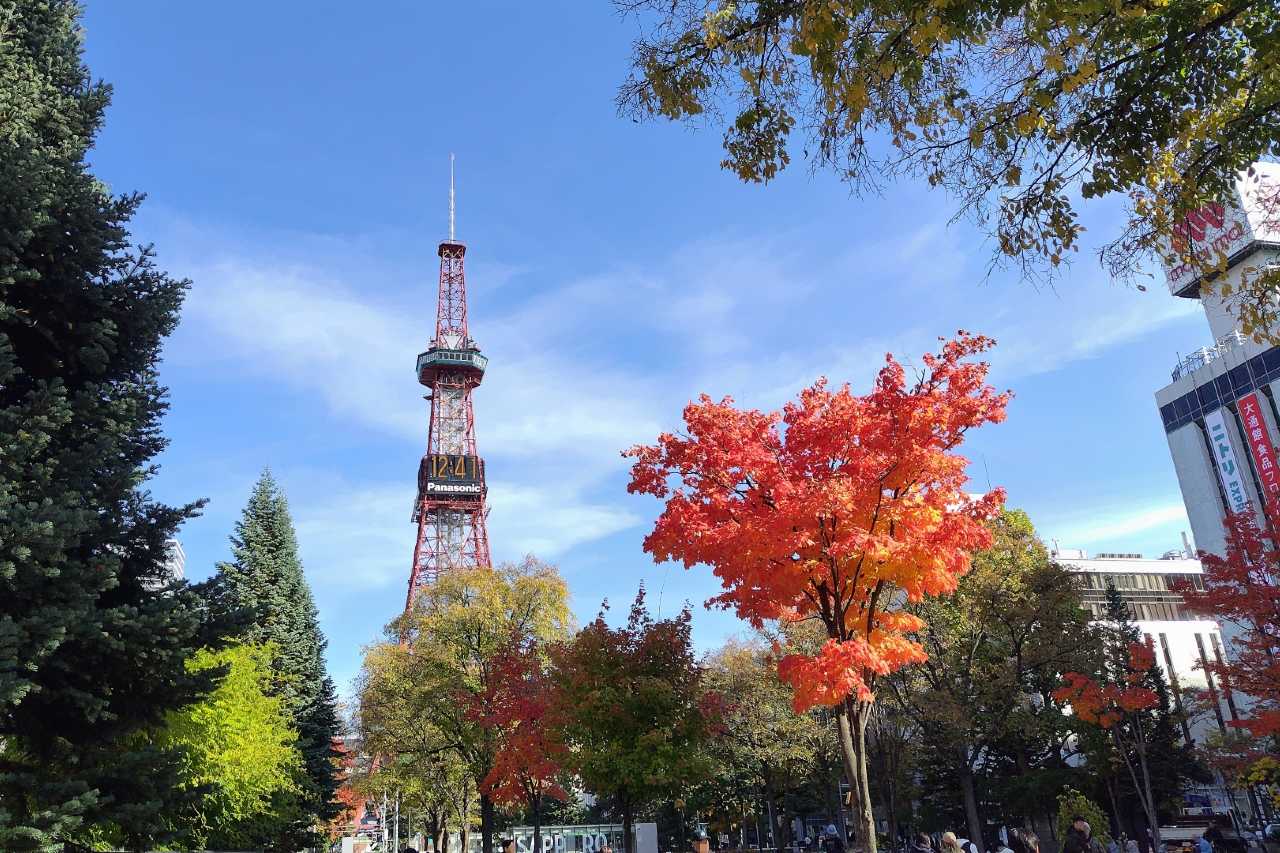
Yes, but only in early November, and only in the lowlands. In Sapporo and around Hakodate, maples and ginkgo usually peak from late October into the first week or so of November. Mountain areas such as Daisetsuzan and Jozankei are finished by mid-October. From mid-November, most of Hokkaido has moved on to bare branches and first snow.
So it comes down to your dates. If you land in early November and stay between Sapporo and Hakodate, you are still in time, and southern Hokkaido around Hakodate and Onuma is usually the last part of the island to turn. If you arrive after mid-November, plan around hot springs and early snow instead, or take the Shinkansen south and follow the colours down Honshu.
How Much Colour Is Left in Early, Mid and Late November?
The Japan Meteorological Agency (JMA) gives the clearest picture. Each year its local observatories watch the same “sample tree” and record two dates: the day most of its leaves have turned red, and the day most have fallen. For Sapporo’s maple, the normal turning date is October 28 and the leaf-fall date is November 5. In Hakodate, the tree turns on November 2 and drops its leaves by November 13 (1991–2020 normals).
Japan Pocket Wifi Rental
Japan eSIM : Fast & Easy & UNLIMTED
Japan Travel eSIM
In travel terms: in early November, Sapporo is at the tail end of its peak while Hakodate is at its best. By mid-November, most trees in central Sapporo are bare and Hakodate has a little left. By late November, the lowland foliage season across Hokkaido is essentially over.
One caveat: the season has been drifting later. According to the JMA Sapporo Regional Headquarters, the nationwide average maple turning date has moved about 3.1 days later per decade. In 2025, Sapporo’s maple turned on November 6, nine days behind normal. In a warm autumn, early November can land right in Sapporo’s peak, so check that year’s forecast about a week before you fly.

Hokkaido vs Tohoku, Tokyo and Kyoto: The Timing Gap
Compared on the same standard, the gap is easy to see. The table below uses JMA sample-tree normals. Famous viewing spots can run a week or two earlier or later depending on altitude and tree species, but the order between cities stays the same.
| Region | City | Leaves turn (normal) | Leaves fall (normal) | If you visit in early November |
|---|---|---|---|---|
| Hokkaido | Sapporo | Oct 28 | Nov 5 | End of peak, leaves dropping |
| Hokkaido | Hakodate | Nov 2 | Nov 13 | At peak |
| Tohoku | Aomori | Nov 13 | Nov 23 | Just starting |
| Tohoku | Sendai | Nov 21 | Dec 6 | Too early |
| Kanto | Tokyo | Nov 28 | Dec 13 | Too early |
| Kansai | Kyoto | Dec 5 | Dec 18 | Too early |
Source: JMA phenological observations (maple, 1991–2020 normals). Sapporo turns on October 28 and Tokyo on November 28, exactly one month apart. That is where the rule of thumb “Hokkaido is a month ahead of Honshu” comes from. It only holds for the lowlands, though, and the gap within Hokkaido itself is just as large.
Why Is Hokkaido a Month Earlier?
Leaves change colour as temperatures fall and days shorten. That gives Japan’s foliage season a simple pattern: it moves from north to south, and from the mountains down to the plains. Hokkaido sits further north and cools down earlier in autumn, so the whole schedule shifts forward.
Altitude matters just as much. Air temperature drops by roughly 0.6°C for every 100 m you climb. Sugatami Station on the Asahidake ropeway sits at about 1,600 m and peaks in mid-September, while central Sapporo waits until late October. Once you know this, a news story saying “the mountains are at peak” tells you the lowlands are still two weeks to over a month away.
Inside Hokkaido: From Daisetsuzan to Hakodate
The table below collects typical peak periods from local tourism associations and weather services. On the same island, the earliest and latest spots are almost two months apart.
| Area | Main spots | Typical peak | In November |
|---|---|---|---|
| Daisetsuzan | Asahidake (Sugatami), Kurodake | Mid – late Sep | Already winter |
| Sounkyo Gorge | Momiji-dani | Early – mid Oct | Over |
| Sapporo mountains | Jozankei Onsen | Early – mid Oct | Over |
| Central Sapporo | Hokkaido University ginkgo avenue, Nakajima Park | Late Oct – early Nov | Possible in early Nov |
| Southern Hokkaido | Onuma Park | Late Oct – start of Nov | Possible in early Nov |
| Southern Hokkaido | Koseien Garden and Goryokaku Park, Hakodate | Late Oct – early Nov | Best chance in early Nov |
Daisetsuzan and Sounkyo: Japan’s First Autumn Colours
Mount Asahidake in the Daisetsuzan range is the first place in Japan to see autumn leaves. Around Sugatami Station at the top of the ropeway, the colours usually peak in mid-September, and Asahidake Onsen at the foot of the mountain follows one to two weeks later. East of the range, Momiji-dani in Sounkyo Gorge peaks in early to mid-October.
By November, Daisetsuzan is in winter. The JMA’s normal date for the first snow on the summit of Asahidake is September 25, and nearby Asahikawa city sees its first snowfall around October 19. To catch the foliage here, you need to come in September. In November, treat it as a snowy mountain view.
Central Sapporo and Jozankei: Two Weeks Apart in One City
Jozankei Onsen sits in Sapporo’s Minami Ward, about an hour from the city centre and ringed by mountains. It usually peaks in early to mid-October. The ginkgo avenue at Hokkaido University and Nakajima Park in central Sapporo turn from late October to early November, more than two weeks later within the same city.
The Hokkaido University ginkgo avenue runs for about 380 m with around 70 trees on either side, and it is your best bet for autumn colour in Sapporo in early November. Private cars cannot enter the campus and there is no parking, so if you are driving, leave the car at your hotel and take the Namboku subway line to Kita-12-jo Station, about a 4-minute walk away. Sapporo’s subway accepts Suica and other transit IC cards; see our Welcome Suica guide if you don’t have one yet.
Hakodate and Onuma: Your Best Chance in Early November
Southern Hokkaido is the last part of the island to change colour. Koseien, the former Iwafune family garden inside Miharashi Park on the edge of Hakodate, is the only nationally designated scenic garden in Hokkaido. Its roughly 100 m maple avenue usually peaks from late October to early November. Each autumn the garden holds the Hakodate MOMI-G Festa, with free illuminations from 4 pm to 9 pm.
The festival dates change every year. In 2025 it ran from October 17 to November 3, and the 2026 edition is scheduled to run until November 8, so confirm the dates before you plan around it (see the Hokkaido Tourism Organization’s page on Koseien). Onuma Park, about 30 minutes by car from Hakodate Airport, usually peaks from late October into the start of November. You can see the leaves from the lake on a sightseeing boat, which fits neatly into the first or last day of a trip that starts or ends in Hakodate.

What to See in Hokkaido in November Instead
Between the end of the foliage and the start of the ski season, November has a character of its own. If you miss the leaves, these are the easiest swaps.
First Snow and First Snow Cover
November is when snow starts reaching Hokkaido’s lowlands. The table shows JMA normals. “First snow” is the first snow or sleet of the season, “first snow cover” is the first time snow settles on the ground, and “lasting snow cover” is the day snow starts to stay until spring.
| City | First snow | First snow cover | Lasting snow cover begins |
|---|---|---|---|
| Asahikawa | Oct 19 | Nov 4 | Nov 24 |
| Sapporo | Oct 28 | Nov 12 | Dec 6 |
| Hakodate | Nov 1 | Nov 18 | Dec 19 |
| Muroran (reference for Noboribetsu and Lake Toya) | Nov 2 | Nov 24 | Jan 1 |
There is a fair chance of flurries in Sapporo or Hakodate in early November, but snow rarely settles that early. From mid-November, Sapporo starts to see white ground. If you hope to see autumn leaves and snow together, early November in Sapporo or Hakodate is the only window where they can overlap, and only in a year when the first snow comes early.

Hot Springs: Jozankei, Noboribetsu and Lake Toya
Once the foliage crowds leave, the onsen towns get much quieter. Jozankei is close enough to Sapporo to add as a one-night stay. In Noboribetsu, the free walking trail through Jigokudani takes you right up to the steaming volcanic landscape.
Note that the nightly fireworks at Lake Toya Onsen only run until October 31, so there are none in November. First snow around Lake Toya and Noboribetsu comes at about the same time as in Hakodate; nearby Muroran’s normal is November 2. In early November, the area usually still looks like late autumn.
Eastern Hokkaido: Cranes Return, Drift Ice Doesn’t
November is when winter feeding for red-crowned cranes begins around Kushiro. The Tsurui-Ito Tancho Sanctuary in Tsurui Village and the Akan International Crane Center run feeding grounds from November to March, which draws the cranes in. Numbers only climb noticeably from December, though, so December to February is the better time if you want to see large groups.
Hokkaido also has no drift ice in November. Sea ice along the Sea of Okhotsk coast usually arrives from late January, so be wary of any itinerary that pairs November with drift ice. The drive from Sapporo to Kushiro takes at least 4 hours each way, and November is the changeover month for winter tyres, so we would not squeeze eastern Hokkaido into a short family trip.
Still Want Autumn Leaves? Take the Shinkansen South
If you are still chasing foliage after mid-November, the practical answer is to head south. From Shin-Hakodate-Hokuto, the Hokkaido Shinkansen reaches Shin-Aomori in about an hour, and Aomori’s maple normally turns on November 13, right on time for mid-November.
Further south, Sendai and Tokyo turn on November 21 and November 28 on average, and Kyoto on December 5. If you fly into Hakodate and out of Tokyo, you can move the second half of your trip to Honshu and follow the leaves south. For tickets and boarding, see our Japan Shinkansen Ticket Purchase & Riding Guide.
Hokkaido in November With Kids: Planning Notes
November in Hokkaido can be an easy family trip, but a few things work very differently from September or October. Build them into your plan from the start.
Early Sunsets: Avoid Long Drives After 4:30 pm
In Sapporo, sunset moves from around 4:30 pm at the start of November to just after 4 pm by the end of the month, and Hakodate is only a few minutes later. If you land at 4 pm, pick up a rental car and drive an hour to your hotel, you will be driving unfamiliar roads in the dark.
The JMA’s normal date for the first freeze is October 28 in Sapporo and November 2 in Hakodate. From November, bridges and shaded stretches of road can ice over early in the morning and after dark. Schedule long drives between late morning and 3 pm, keep your arrival day to places near the airport, and push dinners and sightseeing to the next day where you can.
Winter Tyres and Car Size: Your Pick-up Date Matters
Most rental companies in Hokkaido fit winter tyres (studless tyres) as standard in the cold season, and many use “departures from November 1” as the cut-off. Pick up on October 31 or earlier and you may get regular tyres, with winter tyres only as a paid option. If your trip straddles the end of October, confirm this when you book.
Size up your car as well. Two child seats take over the back row, and two large suitcases plus a stroller usually won’t fit in a compact SUV. A seven-seater with the third row folded, or a mid-size SUV or larger, is the safer choice. Ask the rental company for the boot dimensions before you book.
November Is Changeover Month for Many Attractions
Many attractions in Hokkaido switch to winter operation in November, some with shorter hours and some closing entirely. Here are the ones most likely to affect a family trip, using 2026 dates as an example.
| Attraction | What changes in November | Planning tip |
|---|---|---|
| Lake Toya long-run fireworks | Nightly from April 28 to October 31; none in November | Plan Lake Toya in October if the fireworks matter |
| Mount Hakodate Ropeway | Annual statutory inspection closure in autumn (October 20 – November 8 in 2026) | Take the mountain bus or a taxi up during the closure |
| Mount Hakodate access road | Closed for winter from 11 am on the second Monday of November; buses, taxis and private cars all stop | After that, the ropeway is the only way up |
| Maruyama Zoo, Sapporo | Winter hours 9:30 am – 4 pm from November 1; closed Monday to Friday in the week containing the second Wednesday of November | Check that year’s opening calendar |
| Takino Suzuran Hillside National Government Park | Green season runs to around November 10, then closed until late December | Skip it after mid-November |
| Rental car winter tyres | Standard at most companies for departures from November 1 | Add them as an option if you pick up by October 31 |
So can you still get up Mount Hakodate? It depends on the date. The ropeway and the road work as a pair: while the ropeway is closed, the road is the only way up, and once the road closes, the ropeway is. In 2026 the two periods line up with no gap, but the inspection dates change every year, so check the announcements if you are visiting between late October and early November.
The route between Hakodate and Sapporo runs through mountains and tunnels, and November brings icy mornings and the first snow, so you will want live navigation, weather and road-closure updates the whole way. CDJapan Rental’s eSIM runs on the docomo network. Buy it online, scan the QR code and you are connected, with no SIM card to swap. If the whole family needs phones and tablets online at once, a Pocket WiFi lets everyone share one connection.
FAQ
What should I wear in Hokkaido in November?
Dress in layers with a windproof, insulated outer jacket. Sapporo’s average November temperature is about 5.2°C (41°F, 1991–2020 normal), and mornings late in the month often drop below freezing. If you might meet the first snow, waterproof shoes with good grip are the safer choice.
Can I drive in Hokkaido with my home driving licence?
Most visitors need an International Driving Permit issued under the 1949 Geneva Convention, carried together with their home licence. Licences from a few places, including Germany, France, Switzerland, Belgium, Monaco and Taiwan, need an official Japanese translation instead. Either document is valid for up to one year from your arrival in Japan.
Do children need car seats in Japan?
Yes, children under 6 must ride in a child seat by law. Rental companies can add them, but stock is limited, so reserve them with the car if you need two or are travelling over a holiday weekend.
How long is the drive from Hakodate to Sapporo?
About 4 hours one way on the expressway, roughly 300 km. With early November sunsets and rest stops, it is easier to split the drive with a night at Lake Toya or Noboribetsu.
Does the Hokkaido Shinkansen go to Sapporo?
Not yet. The line currently ends at Shin-Hakodate-Hokuto, and the extension to Sapporo is still under construction. Between Hakodate and Sapporo, take the JR Limited Express Hokuto, which takes roughly three and a half to four hours.
Short trip or long stay — we've got you covered
Best for Travelers
Japan eSIM
From ¥2,800 — activate before you land
- Cheaper than airport & convenience store SIMs
- 5-day to 135-day plans; unlimited or data-capped
- No SIM swap needed — ready in 2 minutes
Best for Long Stays
Monthly Pocket WiFi
From ¥5,500/mo — unlimited, no throttle
- Choose WiMAX 5G or SoftBank 4G coverage
- 3 to 12-month contracts — longer means cheaper
- Delivered to your hotel or airport post office


