
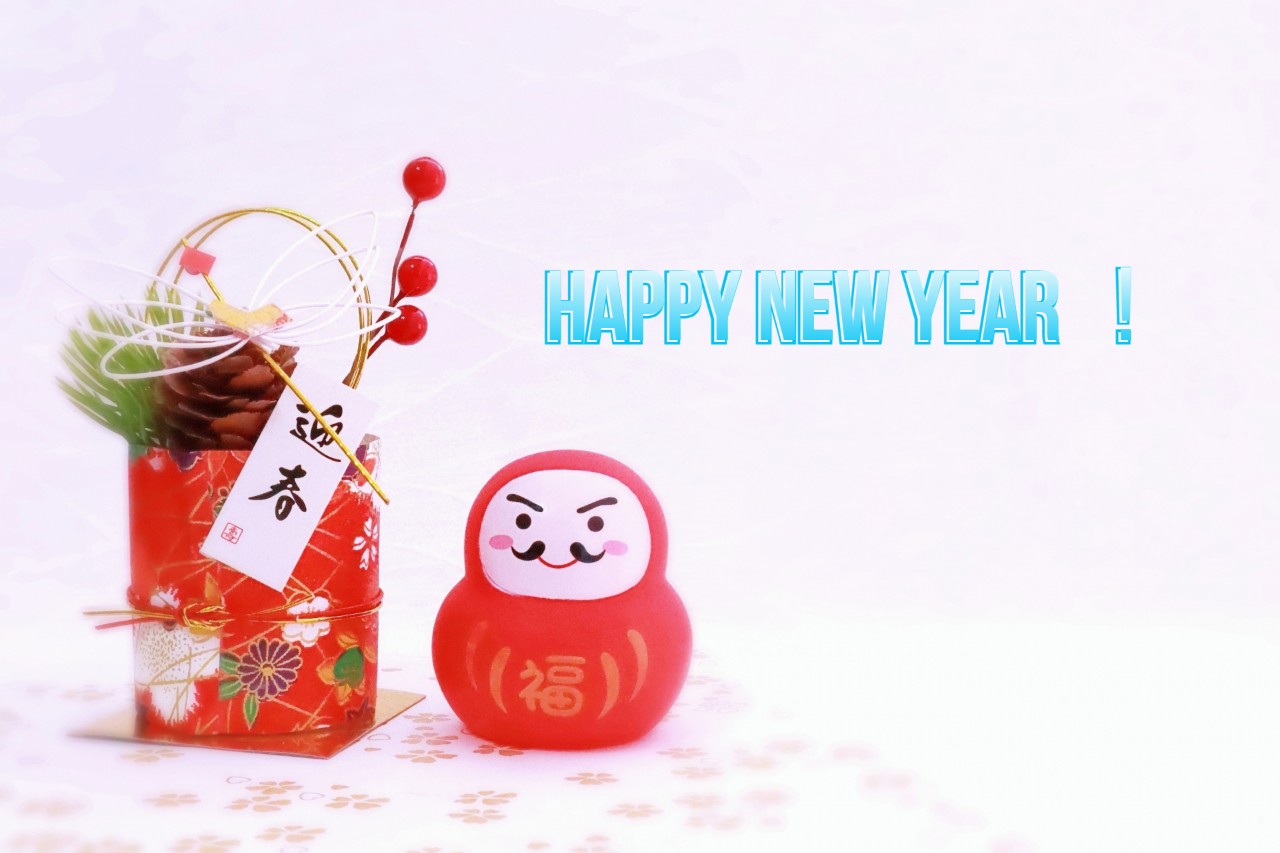
The year 2025 is coming to an end, and Japan is already filled with an end-of-year atmosphere. When 2026 arrives, what will you say to your friends and family?
If it were me, I would say “Happy New Year!”
However, in Japan, the phrase “Happy New Year” cannot be used casually. Do you know why?
There is a time limit in Japanese
In fact, just like the English expressions “Good morning,” “Good afternoon,” and “Good night,” many Japanese greetings are closely tied to specific times of day.
For example, if you meet someone before 10:00 a.m., it is generally accepted that you should say:
Good morning.
Japan Pocket Wifi Rental
Japan eSIM : Fast & Easy & UNLIMTED
Japan Travel eSIM
After 10:00 a.m., you would greet someone by saying:
Good day / Hello.
Then, once it is past 6:00 p.m., you should switch to:
Good evening.
If you use these greetings at the wrong time of day, Japanese people may feel that you lack basic social awareness.
How do you say Happy New Year correctly?
Now let’s return to the topic of “Happy New Year.” In Japanese, there are actually several different ways to express New Year’s greetings, and the correct phrase depends on the timing. In general, the expressions are divided by whether it is before or after New Year’s Day (January 1 in the Western calendar).
Before New Year’s Day

Before the New Year arrives, it is common for people to exchange New Year’s wishes the last time they part ways at the end of the year. The phrase commonly used by Japanese people at this time is:
よい おとし を おむかえ ください!
(yoi otoshi wo omukae kudasai)
A direct translation would be “I wish you a good New Year.” From the English meaning, you can sense the Japanese nuance: it is a wish for something that has not yet arrived, which is why it is used before the New Year.
When speaking with friends, you can omit the polite ending and simply say:
よい おとし を!
(yoi otoshi wo)
This is perfectly acceptable.
After the New Year

Once January 1 arrives, Japanese people switch to a different greeting:
あけまして おめでとう ございます!
(akemashite omedetō gozaimasu)
The word akemashite refers to the dawning of a new day, the renewal of all things, and the beginning of a new year. In Japanese, similar expressions are used to describe the sky brightening at dawn or the end of the rainy season, symbolizing a fresh start.
The phrase おめでとうございます is a very common expression meaning “congratulations.” It is used not only for the New Year, but also for occasions such as birthdays:
(otanjōbi omedetō gozaimasu)
Happy birthday to you.
Therefore, “明けましておめでとうございます” carries the meaning of “The New Year has arrived—congratulations and best wishes!” Because of this, it should only be used after the New Year has begun. Japanese people especially like to exchange this greeting with friends and relatives when the New Year’s bell rings on New Year’s Eve, and it is also commonly written on New Year’s cards.
Another phrase often used to say Happy New Year is:
しんねん おめでとう ございます。
(shinnen omedetō gozaimasu) Congratulations on the New Year.
This expression can also only be used after the New Year has arrived.
When greeting friends, just like with other New Year’s expressions, you can drop the polite ending and say:
新年おめでとう。 (shinnen omedetō)
This will be perfectly fine.
Read More: Japanese New Year: the Traditional Japanese Culture in Nenmatsu Nenshi
Short trip or long stay — we've got you covered
Best for Travelers
Japan eSIM
From ¥2,800 — activate before you land
- Cheaper than airport & convenience store SIMs
- 5-day to 135-day plans; unlimited or data-capped
- No SIM swap needed — ready in 2 minutes
Best for Long Stays
Monthly Pocket WiFi
From ¥5,500/mo — unlimited, no throttle
- Choose WiMAX 5G or SoftBank 4G coverage
- 3 to 12-month contracts — longer means cheaper
- Delivered to your hotel or airport post office


