
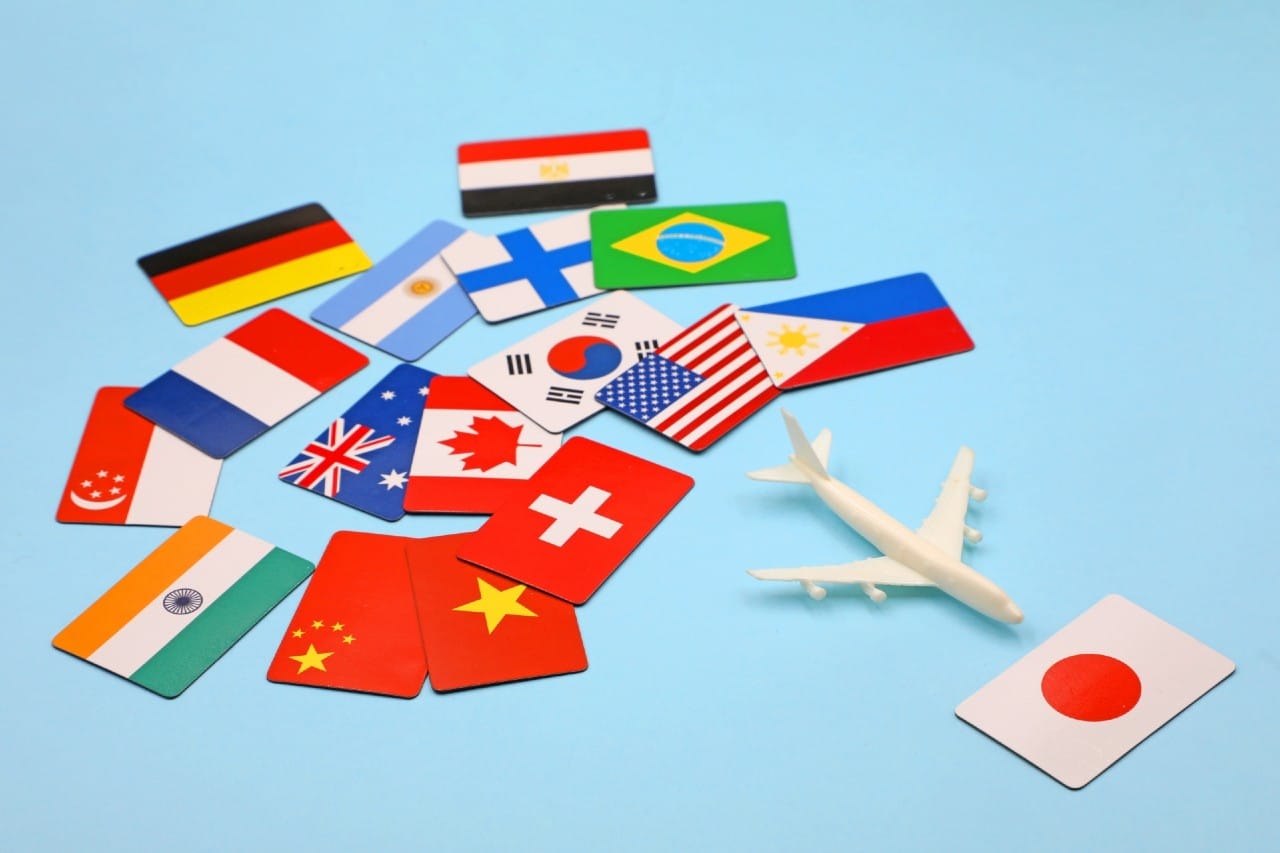
Soon, visa-free won’t mean paperwork-free.
For decades, going to Japan on a Western, Korean, Singaporean or Taiwanese passport has meant almost nothing in advance: book the flight, check your passport hasn’t expired, land, get stamped, go eat. Japan is now building a system that adds one step to the front of that — an online authorisation you’ll need to obtain before you’re allowed to board.
It’s called JESTA, and the law creating it passed the Diet in May 2026. Before you go looking for the application page: there isn’t one.
JESTA does not exist as a working system yet. The government is aiming for sometime in fiscal 2028 — that is, between April 2028 and March 2029. If you’re travelling to Japan this year or next, there is nothing extra for you to do, and nobody to pay.
If you’ve ever filled in a US ESTA, a Canadian eTA, a UK ETA, or you’ve been eyeing the EU’s ETIAS with mild dread, you already know the shape of this. Same idea, same fifteen minutes of typing your passport number, same slightly irritating fee. Japan is the last of the major visa-waiver destinations to build one, and it’s borrowing the American model closely enough that it borrowed the name too.

What JESTA actually is
Japan Pocket Wifi Rental
Japan eSIM : Fast & Easy & UNLIMTED
Japan Travel eSIM
JESTA stands for Japan Electronic System for Travel Authorization, and it is exactly what the acronym suggests: a pre-departure screening step for people who are allowed into Japan without a visa. You’ll submit your details online — passport information, purpose of travel, where you’re staying — and Japan’s Immigration Services Agency (出入国在留管理庁) will check them against its records before deciding whether to authorise you.
The enforcement mechanism is the part worth understanding, because it’s what makes JESTA different from a form you can shrug off. Under the amended law, when you check in for your flight, the airline reports your details to the Immigration Services Agency, which confirms whether you hold a valid authorisation. If you don’t, the carrier is legally prohibited from letting you board. Not “you’ll be questioned on arrival” — you don’t get on the plane.
The government has been open about the two things it wants out of this. One is catching people who intend to overstay before they arrive rather than after, at a point when the only cost is a declined application. The other is speed at the border: travellers who’ve already been cleared are expected to move through automated gates, with the landing-permission stamp in your passport dispensed with entirely. Japan received 42.7 million visitors in 2025 and is chasing 60 million a year by 2030, and the immigration halls at Narita and Kansai are already where a good trip goes to lose ninety minutes.
Do you need it? Almost certainly yes
Here’s the simplest test, and it’s a reliable one: if you enter Japan visa-free today, JESTA will apply to you. There is no separate JESTA eligibility list being drawn up — the system attaches to the existing visa-exemption arrangements, which currently cover 74 countries and regions.
That list is, awkwardly for anyone reading this in English, almost exactly the readership of this article: the United States, Canada, the United Kingdom, Ireland, Australia, New Zealand, nearly all of the EU, plus South Korea, Singapore, Malaysia, Hong Kong and Taiwan. You can check yourself on the Ministry of Foreign Affairs’ official visa exemption list, which is also the page to watch if your country’s status ever changes.
Anyone entering visa-free for a short stay — tourism, business trips, visiting family. Children and infants included; there’s no minimum age. Some passengers transiting through Japan are also expected to fall within scope.
Travellers from countries that already require a visa for Japan — India, the Philippines, mainland China, most of Africa. You stay on the visa track, which is a separate and more thorough process. Residents of Japan with a residence card are also outside the system.
The second card is the one people get wrong. JESTA is not a new hurdle stacked on top of a visa — it’s an alternative to one, for people who don’t need a visa in the first place. If you’re applying at a Japanese embassy today, nothing about your process changes.
JESTA vs. a visa vs. Visit Japan Web
Three things, three different moments in your trip, and a great deal of confusion online between them. The cleanest way to hold them apart is chronologically: JESTA is permission to board, a visa is permission to apply to enter, and Visit Japan Web is how you speed up the paperwork once you’ve landed.
| JESTA | Visa | Visit Japan Web | |
|---|---|---|---|
| Who it’s for | Visa-free travellers | Nationals of countries without visa exemption | Everyone arriving in Japan |
| When | Before departure | Weeks before departure | Before or during your flight |
| Mandatory? | Yes, once launched — no authorisation, no boarding | Yes, if your nationality requires it | No, but it saves real time |
| What it does | Pre-screens you and clears you to fly | Establishes eligibility to seek entry | Digitises immigration and customs declarations |
| Status now | Legislated; not yet operating | In force | In force |
Scroll sideways to see the full table
Visit Japan Web isn’t being replaced by JESTA, and there’s no indication it will be. The two solve different problems, and you’ll likely end up doing both — one at home a few days before you fly, one on the plane. If you haven’t used it yet, our guide to Visit Japan Web walks through the registration and the QR codes you’ll actually need at the airport.

When does it start?
The legal groundwork is done. The amendment to the Immigration Control and Refugee Recognition Act that creates JESTA was approved by cabinet in March 2026, passed the lower house on 28 April, and was enacted on 29 May 2026. What remains is everything that turns a law into a working website: cabinet and ministerial ordinances setting the fee and the rules, the system build itself, integration with every airline that flies to Japan, and a publicity campaign aimed at seventy-odd countries.
Cabinet approves the immigration law amendment creating JESTA.
The bill clears the House of Representatives.
The amended law is enacted. A development contractor for the system had already been selected by April.
Ordinances set the fee and conditions; the system is built and tested; carriers are brought online.
Launch, sometime between April 2028 and March 2029.
Treat that final date as a target rather than a promise. Officials have said repeatedly that the system has to be safe and stable before it goes live, which is the standard formulation for “we would rather be late than break check-in at every airport in the world.” Large government IT projects also have a way of slipping. Plan your 2027 trip without a thought for JESTA; start paying attention in the second half of 2027.
What’s still unconfirmed
This is where honesty matters more than completeness, because a lot of what’s circulating online is guesswork dressed up as fact. Four fairly important things have not been decided.
Not announced. It will be set by ministerial ordinance, and the government has said it will weigh actual processing costs and international practice.
No official portal or URL exists. It will be run by the Immigration Services Agency, with the form available in multiple languages.
Validity period undecided. Comparable systems run two to five years, usually capped by your passport’s expiry — but Japan hasn’t said.
Whether one authorisation covers multiple trips, and how far in advance you can apply, are both still open.
On price, the most useful thing available isn’t a leak — it’s the set of benchmarks Japanese officials themselves cited when lawmakers pressed them on cost during parliamentary deliberations in April 2026. These are what other countries charge, converted to yen at the time. None of them is Japan’s price. They simply describe the neighbourhood the eventual figure is likely to sit in.
| System | Approx. cost (yen, as cited) |
|---|---|
| Canada — eTA | About ¥770 |
| South Korea — K-ETA | About ¥1,100 |
| New Zealand — NZeTA | About ¥1,564–2,116, depending on how you apply |
| Australia — ETA | About ¥2,000 |
| United Kingdom — ETA | Just over ¥3,000 |
| European Union — ETIAS | Just over ¥3,000 |
| United States — ESTA | About ¥6,000 |
Figures cited by officials in the Diet, April 2026 — reference points only, not Japan’s fee
Whatever the number turns out to be, it lands on top of a departure cost that has already gone up: Japan’s international tourist tax rose from ¥1,000 to ¥3,000 in July 2026, collected quietly inside your airfare. If you haven’t caught up on that one, we’ve covered Japan’s departure tax and the other levies you’re now paying separately.
Websites already exist offering to “register” or “prepare” your JESTA, some of them charging for it. There is no application to submit and no official portal to submit it to. When the real one launches it will be run by the Immigration Services Agency, and that is the only place your money should ever go. Treat anything else — now or in 2028 — as a service you’re paying extra for at best.
What to do right now (basically nothing)
The genuinely correct answer for a 2026 or 2027 trip is: nothing. No application, no fee, no extra document. Your passport and, if your nationality requires one, your visa are still the whole list.
If you want to be marginally more prepared than that, two things are worth the ten minutes. Register for Visit Japan Web before you fly, because it saves you real queueing time today and will very likely sit alongside JESTA rather than be replaced by it. And check your passport’s expiry date with a bit more care than usual — authorisations of this type are tied to the passport you apply with, so renewing shortly after you’ve applied tends to mean applying again.
Beyond that, the useful habit is simply knowing where the announcement will come from. Fees, launch dates and the application URL will be published by the Immigration Services Agency, and reported everywhere else afterwards. We’ll update this article as each piece is confirmed.
JESTA will be an online form, Visit Japan Web already is, and the QR codes you show at immigration live on your phone. Then you land, and the phone becomes your map, your train timetable and your translator for the next two weeks. CDJapan Rental’s eSIM runs on the docomo network and activates by scanning a code before you leave home — no SIM swap, no airport counter, connected from the moment you switch off flight mode.

Frequently asked questions
Do I need JESTA for my trip to Japan right now?
No. JESTA is not operating and there is no application to submit. The government is targeting fiscal 2028, meaning April 2028 to March 2029 at the earliest. Trips in 2026 and 2027 are unaffected.
How much will JESTA cost?
Not announced. The fee will be set by ministerial ordinance closer to launch. For scale, officials cited comparable systems ranging from roughly ¥770 for Canada’s eTA to around ¥6,000 for the US ESTA — but Japan’s own figure has not been decided, and anyone quoting one is guessing.
Do American, British and Australian travellers need JESTA?
Yes, once it launches. All three countries are on Japan’s visa exemption list, and JESTA applies to exactly that group. The same goes for Canada, Ireland, New Zealand, most EU countries, South Korea, Singapore, Malaysia, Hong Kong and Taiwan.
Is JESTA the same as a visa?
No, and it doesn’t replace one. JESTA is for people who don’t need a visa; it’s a pre-screening step that clears you to board. If your nationality requires a visa for Japan — India, the Philippines and mainland China among them — you continue applying for a visa and JESTA doesn’t apply to you.
How is JESTA different from Visit Japan Web?
Different stages of the same journey. JESTA is authorisation obtained before you fly, and without it an airline can’t board you. Visit Japan Web is a free service that digitises your immigration and customs declarations so arrival is faster. Visit Japan Web exists today; JESTA doesn’t yet, and both are expected to run in parallel.
Will children need JESTA?
Yes. There’s no minimum age — every traveller entering visa-free needs their own authorisation, infants included, since it’s tied to an individual passport rather than a booking or a family group.
Sources: the amended Immigration Control and Refugee Recognition Act (enacted 29 May 2026), Immigration Services Agency and Ministry of Justice statements, Diet deliberations of April 2026, and the Ministry of Foreign Affairs visa exemption list. JESTA’s fee, validity, application platform and portal address remain unconfirmed as of 27 July 2026. This article is updated as details are announced.
Short trip or long stay — we've got you covered
Best for Travelers
Japan eSIM
From ¥2,800 — activate before you land
- Cheaper than airport & convenience store SIMs
- 5-day to 135-day plans; unlimited or data-capped
- No SIM swap needed — ready in 2 minutes
Best for Long Stays
Monthly Pocket WiFi
From ¥5,500/mo — unlimited, no throttle
- Choose WiMAX 5G or SoftBank 4G coverage
- 3 to 12-month contracts — longer means cheaper
- Delivered to your hotel or airport post office


