
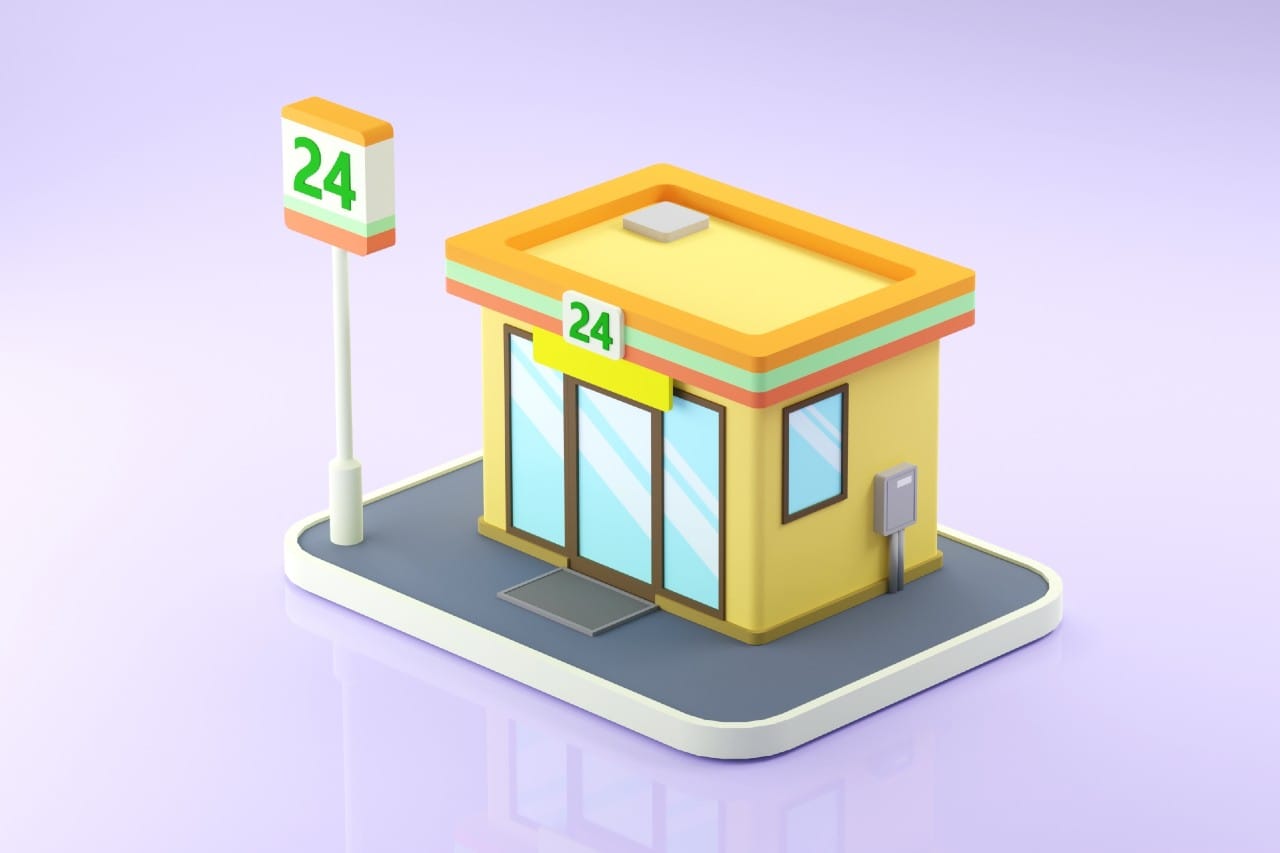
Your Third Kitchen in Japan
Ask a first-time visitor what surprised them most about Japan, and a strange number of them will bring up a convenience store before they mention a temple.
Not a restaurant. Not even a particularly nice-looking one — just a 7-Eleven on a street corner, open at 2 a.m., selling an egg sandwich so good it quietly rearranges what you thought a sandwich could do. Japan’s konbini (コンビニ) aren’t a backup plan for when the good restaurants are closed. For a lot of travelers, one of them becomes the best meal of the whole trip, entirely by accident, eaten standing up next to a parking lot.
There are more than 55,000 of them, roughly one every few hundred meters in any city, and the three biggest chains — 7-Eleven, Lawson, and FamilyMart — have spent decades in a genuinely fierce competition over fried chicken, egg salad, and dessert. That rivalry is why the food is this good. This guide treats the konbini the way a resident does: less a place to grab chips, more a piece of infrastructure you’ll lean on constantly — for breakfast, for cash, for shipping a suitcase ahead so you don’t have to haul it up three flights of station stairs.

21,000+ stores nationwide
16,000+ stores nationwide
13,000+ stores nationwide
Japan Pocket Wifi Rental
Japan eSIM : Fast & Easy & UNLIMTED
Japan Travel eSIM
Aisle 01 — The Lineup
The Big Three, at a Glance
Every chain has its own personality, and locals genuinely have opinions about which one they’ll walk an extra block for. None of them is a wrong choice — but knowing the reputation going in helps you decide where to stop when you only have room for one snack.
| Chain | Known For | Vibe | Best For |
|---|---|---|---|
| 7-Eleven | Onigiri, the viral egg salad sandwich, Seven Premium private label | The reliable default — most locations, most consistent quality | A dependable meal at any hour, and the easiest ATM for foreign cards |
| Lawson | Karaage-kun fried chicken, Uchi Café bakery and desserts | The bakery-and-dessert specialist | A proper coffee break or something sweet |
| FamilyMart | Famichiki fried chicken, frequent Studio Ghibli and pop-culture collabs | Younger, more design-forward branding | Famichiki, and whatever limited-edition collab is running that month |
Honest advice: try all three within your first two or three days. The differences are subtle enough that ranking them from a blog post is close to useless — your own taste will sort itself out fast.
Aisle 02 — Food
What to Actually Eat
Skip the instinct to treat this like a scavenger hunt for fifty different snacks. The konbini works best when you let the situation decide what you’re eating — rushed, exhausted, craving something sweet, or just curious what’s new this month.
The Rushed Breakfast
An onigiri (rice ball) is the fastest, cheapest real food in the country — around ¥150, wrapped so the seaweed stays crisp until you open it. The wrapper has a printed 1-2-3 opening sequence; follow it and the whole thing unwraps itself as you eat. Mentaiko (spicy cod roe) is the easiest first flavor for most travelers, or go straight for the egg salad sandwich if you want something more indulgent — crustless milk bread, a filling built almost entirely on Kewpie mayonnaise, and a cult following large enough that people have written entire essays about it.
Pair either with the self-serve coffee machine near the register. It’s fresh-ground, costs around ¥120–150, and is genuinely better than the price suggests.
The Late-Night Meal
This is where the hot counter by the register earns its reputation. Fried chicken is the headline act — more on that shortly — but from October through March, look for the steel oden pot: a simmering broth with skewered daikon, boiled eggs, and fish cakes floating inside. Point at what you want, the clerk fishes it out with tongs into a bowl, and you pay by the piece, usually ¥80–150 each. Nikuman, a steamed pork bun, is the other cold-weather standby, and a curry rice bento covers you if you want something closer to a full dinner.
Something Sweet
Lawson is the chain to beat here. Its Premium Roll Cake is dense, cream-filled, and good enough that it’s genuinely surprising to find it behind a convenience store fridge door rather than in a patisserie window. FamilyMart’s seasonal soufflé pudding has its own small internet following for its wobble alone. None of the three chains treats dessert as an afterthought — the sweets aisle rotates constantly, which is exactly why it’s worth checking each time you pass one.
Whatever’s in Season
Seasonal rotation is core to how konbini food works, not a marketing gimmick tacked on top. Roasted sweet potato (yakiimo), sold piping hot straight out of foil, shows up as the weather turns in autumn and winter. Sakura-themed pastries appear for a few short weeks in spring. Fried chicken becomes something close to a Christmas tradition in December, echoing the country’s unusual fast-food-and-Christmas association. If something limited-edition catches your eye, buy it that day — konbini items can disappear from shelves within a couple of weeks, never to return.

Aisle 03 — The Classics
The Signature Showdown
Three categories, three chains, and decades of genuine rivalry behind each one. Here’s the receipt.
Lawson’s Karaage-kun and FamilyMart’s Famichiki are the two most argued-about items on this entire list, and it isn’t a close comparison you can settle with a table — one is a handful of small, shareable nuggets, the other is a single large cutlet meant to be eaten on its own. Neither is “correct.” Buy both the first time you’re near a konbini at dinnertime and let your stomach decide.
Aisle 04 — Services
More Than Groceries
This is the part first-time visitors underestimate. A konbini in Japan functions closer to a mini post office, bank branch, and print shop than anything called “7-Eleven” back home. Several of these services will end up saving your trip at some point.
7-Bank ATM
The Seven Bank ATMs inside 7-Eleven are the most reliable place in Japan to withdraw cash on a foreign card — Visa, Mastercard, UnionPay, Amex, and JCB are all accepted, 24 hours a day. Always choose to be billed in yen, never your home currency.
Takkyubin luggage forwarding
Send a suitcase ahead to your next hotel instead of carrying it up station stairs. Look for the black cat (Yamato) logo, ask staff for a waybill, and expect next-day delivery for roughly ¥1,600–4,000 depending on size and distance. Bring cash — card payment isn’t always available at the counter.
Multi-copy terminal
The machine near the entrance prints, scans, and reserves tickets for concerts, theme parks, and events. The interface is mostly Japanese-only, so this is easier with a staff member’s help or a translation app on hand.
Utility and phone bills
Locals pay everyday bills over the counter with cash. Not something most travelers need, but it explains why the register line sometimes moves slower than you’d expect.
Clean restrooms
Free, usually clean, and a genuine lifesaver on a long day of sightseeing. It’s polite to pick up a small item if you’re stopping in just for the restroom.
Coffee and Wi-Fi
Fresh self-serve coffee runs ¥120–150. Free Wi-Fi technically exists at all three chains, but expect a Japanese-language login page and session time limits rather than something you’d want to rely on all day.
Aisle 05 — Checkout
How to Pay
Tapping an IC card like Welcome Suica or Pasmo is the fastest way to pay for anything under a few thousand yen — one tap, no PIN, no signature. All three chains also accept contactless Visa, Mastercard, and JCB with no extra fee added at the register, though your own bank may quietly charge a foreign transaction fee depending on your card. Cash works everywhere and never fails, which makes it worth keeping some on hand even if you plan to tap for almost everything else.
More stores are also shifting to self-checkout registers (セルフレジ), where you scan your own items on a small touchscreen. These generally accept the same cashless options — tap credit cards, Apple Pay, QUICPay, iD, and IC cards — but not every self-checkout lane takes cash, so if you’re paying with coins and bills, glance for a staffed register instead.
Half the fun of a konbini is not knowing what half the packaging says. A working data connection means you can point your camera at an unfamiliar snack, translate the label on the spot, and check for allergens before it’s too late — far more reliable than hunting for a Japanese-only Wi-Fi login page. CDJapan Rental’s eSIM runs on the docomo network, activates by QR code the moment you land, and needs no physical SIM swap.
Aisle 06 — House Rules
Konbini Etiquette, Briefly
None of it is complicated, but a few habits keep you on the right side of the unspoken rules — and save an awkward pause at the register.
Say this at the register
Staff asking “shall I heat it?” — just nod or say “hai.”
“Do you need a bag?” Bags cost a few yen — say yes or no.
Chopsticks — hold up fingers for how many you need.
“I’m fine, thanks” — to decline a bag or utensils.
Aisle 07 — FAQ
Quick Answers
What should I actually eat at a Japanese convenience store?
Can I use my foreign credit or debit card at 7-Eleven, Lawson, and FamilyMart?
Which is better, Famichiki or Karaage-kun?
Can I withdraw cash from a konbini ATM with a foreign card?
Is it rude to use the restroom or WiFi at a konbini without buying anything?
Short trip or long stay — we've got you covered
Best for Travelers
Japan eSIM
From ¥2,800 — activate before you land
- Cheaper than airport & convenience store SIMs
- 5-day to 135-day plans; unlimited or data-capped
- No SIM swap needed — ready in 2 minutes
Best for Long Stays
Monthly Pocket WiFi
From ¥5,500/mo — unlimited, no throttle
- Choose WiMAX 5G or SoftBank 4G coverage
- 3 to 12-month contracts — longer means cheaper
- Delivered to your hotel or airport post office


