
A Reader’s Guide to Tokyo
In a city that runs on neon and high-speed trains, the bookstores are the slow rooms. Here is where to find the best of them — from a 130-shop book district that has barely changed in a century, to a single-room shop in Ginza that sells only one book at a time.

Tokyo’s bookstore scene has two faces. There is the gleaming retail face — Kinokuniya in Shinjuku, Maruzen in Marunouchi, the kind of multi-floor megastores that anchor a neighborhood and stock everything from the latest manga release to imported English paperbacks. And then there is Jimbocho, a quiet grid of streets just north of the Imperial Palace where time slowed sometime around 1950 and never quite caught up. Independent antiquarian shops there specialize in everything from Edo-period ukiyo-e prints to vintage anime magazines to cat-themed books, and the local cuisine that evolved alongside them — curry that can be eaten with one hand while turning a page — is now its own draw.
| If you want… | Go to | Neighborhood |
|---|---|---|
| English books or imported titles | Kinokuniya Shinjuku Main, Maruzen Marunouchi | Shinjuku / Tokyo Station |
| Used & antiquarian books, ukiyo-e, vintage maps | The entire Jimbocho district | Kanda-Jimbocho |
| Cheap secondhand manga & paperbacks | Book Off (multiple branches) | Akihabara, Nishi-Gotanda, others |
| A design-forward concept bookstore | Tsutaya Daikanyama T-Site, Morioka Shoten | Daikanyama / Ginza |
| Niche specialties — photography, cat books, vintage magazines | Komiyama Shoten, Anegawa Nyankodo, Magnif | Jimbocho |
| Independent & secondhand shops in one walkable neighborhood | Shimokitazawa bookstores | Shimokitazawa |
Chapter I
Jimbocho — Tokyo’s Book Town
Japan Pocket Wifi Rental
Japan eSIM : Fast & Easy & UNLIMTED
Japan Travel eSIM
Roughly 130 bookstores in a few square blocks, plus the best curry in the city.
If you read one chapter of this guide, read this one. Kanda-Jimbocho — usually shortened to just Jimbocho — is one of the densest concentrations of bookshops in the world, with around 130 actively trading stores packed into a grid of streets between Yasukuni-dori and Hakusan-dori. The district took shape in the late nineteenth century, when several universities and law schools opened nearby and academic publishers followed; the publishing houses brought writers, the writers brought students, and the booksellers stayed. Today the shopfronts still wear their copper-sheet facades and hand-painted signs, and inside you’ll find rare Edo-period scrolls in one shop, vintage anime cels in the next.
A bookstore gives a neighborhood dignity.
What makes Jimbocho different from a typical book district is the specialization. Almost every shop has a niche — one deals only in cinema, another only in maps, another only in cat books — and proprietors usually know their inventory by heart. You can walk the whole district in an afternoon, but four to six hours is more realistic if you actually want to browse.
Sanseido Bookstore Kanda-Jimbocho Main Store
三省堂書店 神保町本店
New releaseMangaJump Shop
Sanseido has anchored the Jimbocho corner of Yasukuni-dori for over 140 years, and after closing for a full rebuild in 2022, the new flagship reopened in 2026. The interior is now a clean, multi-floor modern bookstore — and on the fourth floor sits THE Jump Shop Jimbocho, the official store for Weekly Shonen Jump merchandise, opened to coincide with the magazine’s 100th anniversary. If you’re using Jimbocho as a destination rather than just a curiosity, Sanseido is the natural starting point and orientation hub before you head into the smaller specialty shops.
Ohya Shobo
大屋書房 — for ukiyo-e and Edo-period prints
Ukiyo-eAntique mapsEdo books
Founded in 1882, Ohya Shobo specializes in ukiyo-e woodblock prints, antique Japanese maps, and Edo-period illustrated books. You don’t need to read Japanese to enjoy what’s here — the appeal is purely visual, and the staff will happily pull out portfolios of prints for you to leaf through. Prices range from a few thousand yen for small prints to many hundreds of thousands for museum-quality pieces; budget at minimum ¥3,000–¥10,000 if you want to leave with something genuine.
Isseido Booksellers
一誠堂書店 — for academic and rare antiquarian books
AntiquarianWestern books
Isseido has been in Jimbocho since 1903 and survived both the 1923 Kanto earthquake and the Tokyo air raids. The two-story shop carries a deep collection of academic books, rare Japanese literature, and a notably good selection of antiquarian Western titles — leather-bound philosophy, nineteenth-century travel writing, first editions of English-language classics. The atmosphere is hushed, scholarly, and exactly what you imagine when you imagine an old Tokyo bookshop.
Komiyama Shoten
小宮山書店 — for photography and art books
PhotographyArt books
Komiyama is the address for serious collectors of Japanese photography and art books — Daido Moriyama, Nobuyoshi Araki, Hiroshi Sugimoto first editions all turn up here regularly. The shop occupies several floors, with the upper levels dedicated to higher-priced rare material. Even if you’re not buying, browsing the photo monographs on the ground floor is one of the best free experiences in Jimbocho.
Anegawa Nyankodo
姉川にゃんこ堂 — the cat bookstore
Cat-themedSouvenir-friendly
A small annex of the Anegawa Shoten bookstore dedicated entirely to cats — photo books, manga, picture books, novels, essays, anything as long as it’s about cats. Even if you can’t read Japanese, the photography books make excellent gifts, and the shop itself has become a small viral phenomenon among English-language visitors on social media. Allow fifteen minutes; you will leave with something.
The book + curry ritual
Why Jimbocho is also Tokyo’s curry capital
Because Jimbocho readers historically wanted food they could eat with one hand while turning pages, the neighborhood developed an obsession with curry — and today it is widely considered the curry capital of Tokyo. The institution is Bondy, on the second floor of a small building just off Yasukuni-dori, whose European-style beef curry comes with a side of boiled potato and butter. Ethiopia is the spicier counterpoint, with a heat scale that goes well past anything most travelers will order. Kyoeido offers the old-school, classic Showa-era version. Expect a queue at any of them around 12:30 — go at 11:30 or after 14:00 to skip it.
If you can time your visit, come for the Kanda Used Book Festival (Kanda Furuhon Matsuri), held annually in late October. For about a week, the sidewalks of Yasukuni-dori turn into outdoor stalls of secondhand books — many priced from ¥100 — and individual shops run their best sales of the year. It is the single best week to visit Jimbocho if you love to browse.
Antiquarian shops in Jimbocho follow a nationwide condition-grading system. Small paper slips tucked into each book note the price along with any flaws, in Japanese shorthand. The ones worth recognizing: yake (ヤケ, sun-faded), shimi (シミ, spots or foxing), mushikui (虫食い, worm-eaten), kakikomi (書き込み, previous owner’s notes), kabā-ketsu (カバー欠, missing dust jacket). Knowing these keeps you from overpaying — and lets you deliberately hunt for the marked-down copies that read just fine.
How to get there: Jimbocho Station, served by the Toei Mita, Toei Shinjuku, and Tokyo Metro Hanzomon lines. From Tokyo Station it’s about 15 minutes by subway. Most shops open between 10:00 and 11:00 and close by 18:30 or 19:00; many are closed on Sundays, which is the one rule that surprises first-time visitors. Saturday is the best day to come if you only have one.
Chapter II
For English Books & Manga
Where to buy new — and where to buy for ¥110.

Kinokuniya Shinjuku Main Store
紀伊國屋書店 新宿本店
English booksMangaArt & design
The default first stop for English books in Tokyo. Kinokuniya’s Shinjuku flagship spans nine floors, and its foreign book selection is the most reliable in central Tokyo for Japan-related non-fiction, Japanese literature in translation, and contemporary fiction. The manga and entertainment floors also host frequent themed exhibits — recent runs have included large-scale JoJo’s Bizarre Adventure and Studio Ghibli displays.
Maruzen Marunouchi Main Store
丸善 丸の内本店
English booksConvenient for travelers
Maruzen Marunouchi is directly across from Tokyo Station inside the OAZO complex — the choice if you have a Shinkansen to catch or want to skip Shinjuku crowds. The foreign book section on the upper floors is well-stocked, particularly in Japan-themed and business titles.
Junkudo Ikebukuro Main Store
ジュンク堂書店 池袋本店
Largest selectionEnglish books
Junkudo Ikebukuro is the largest bookstore in Tokyo by floor area — nine floors of new books, with one of the deepest foreign-language sections in the city, particularly academic and technical titles. Chairs are scattered throughout so you can actually sit and read. If Kinokuniya doesn’t have the specific title you want, Junkudo probably does.
Book Off (Plus & standard branches)
ブックオフ — Japan’s largest used-book chain
SecondhandCheap mangaEnglish paperbacks
Book Off is the secondhand chain that has become a destination for foreign visitors hunting cheap manga and English paperbacks. Most volumes go for ¥110–¥220, and condition is generally good — most are barely-read inventory traded in by Japanese customers. For English books, the Nishi-Gotanda Plus branch has the deepest foreign-language section among all Tokyo branches. For manga, the Akihabara branches are the standard recommendation: deep stock of mainstream titles and a fair amount of out-of-print volumes that are hard to find new.
For sheer size, the largest Book Off in the Greater Tokyo area is Super Bazaar Kawasaki Minatocho — a 4,740㎡ mega-store carrying everything from books and manga to designer handbags, sneakers, and musical instruments. It’s technically in Kanagawa Prefecture, but only about 30 minutes from central Tokyo via the Keikyu Daishi Line to Suzukicho Station. Within Tokyo prefecture proper, the biggest branch is Super Bazaar Machida Chuo-dori Books & Hobby (2,360㎡), about 35 minutes from Shinjuku on the Odakyu Line and dedicated entirely to books, CDs, games, and collectibles.
For visitors staying central, what surprises most first-time Book Off shoppers is the sheer volume even at smaller branches: each carries tens of thousands of titles, and the foreign-book sections, where they exist, tend to be hidden on upper floors — look for “洋書” (yosho) on the floor directory. If you want the full breakdown of which branch to visit for what, see our guide to the biggest Book Off branches in Tokyo.
Chapter III
Concept & Atmosphere Bookstores
Shops that are destinations in themselves — for the design, the philosophy, or the single book on the shelf.

Tsutaya Books, Daikanyama T-Site
代官山 蔦屋書店
Design-ledCafe insideAll-day spot
Tsutaya has built dozens of bookstore-cafe hybrids across Japan, but the Daikanyama T-Site is the original and still the best — three white pavilions designed by Klein Dytham Architecture, joined by a covered walkway, surrounded by green space. The book selection leans toward travel, design, architecture, photography, and lifestyle, with an excellent foreign-language section and an in-store Starbucks at one end. The Anjin lounge upstairs serves cocktails and food in the evening. Visitors come for half a day and end up staying for the whole one.
Morioka Shoten Ginza
森岡書店 — one room, one book
Concept storeVisual destination
The most unusual bookstore in Tokyo, and arguably in the world. Morioka Shoten, founded by Yoshiyuki Morioka in 2015, sells a single book at a time — for an entire week, the shop carries only one title (in multiple copies), with a small exhibition built around it. The next week, a new book replaces it. The shop occupies the ground floor of the Suzuki Building, a 1929 structure designated as architectural heritage, and the whole space functions as a kind of weekly literary gallery. Even if you don’t buy, it is worth the detour for the concept alone. Check the Instagram before visiting to see what’s on; the shop is small and the visit takes ten minutes, so combine it with a Ginza walk.
Bunkitsu
文喫 — the paid-entry bookstore
Read-inCafe included
Bunkitsu opened in 2018 as a deliberate experiment in selling something other than just books. An entry fee (around ¥1,650 on weekdays) gets you unlimited free coffee and tea, free Wi-Fi, comfortable seating areas, and permission to read any book in the store for as long as you like. The selection is heavily curated toward art, design, philosophy, and Japan-related titles. It is, in effect, a paid library that also sells what you read — and it works surprisingly well as a half-day workspace if you happen to be in Roppongi.
Cat’s Meow Books
キャッツミャウブックス — books about cats, staffed by cats
Cat-themedRescue catsSNS favorite
Tucked into a quiet residential corner of Sangenjaya, Cat’s Meow Books opened on World Cat Day in 2017 with a simple concept: every book on the shelves is about cats, and the staff are actual rescue cats. Four or five resident felines live in the small, slipper-floored space — napping on the sofa, weaving between shelves while customers browse, occasionally supervising the register. The shop sells new and secondhand cat books (in Japanese), and offers a short menu of drinks: small draft beers from ¥300, coffee, and a few themed items you can enjoy while spending time with the cats. It is not a cat café; books are the main business, and the cats are simply part of the household. A portion of profits supports animal welfare. The shop has become one of Tokyo’s most-photographed independent bookstores — go for the cats, leave with a book.
→ For more independent and secondhand bookstores in one walkable neighborhood, see our full guide to bookstores in Shimokitazawa.
Chapter IV
What to Know Before You Go
Hours, payments, and one small piece of bookstore culture that makes a free souvenir.
The free souvenir: paper book covers
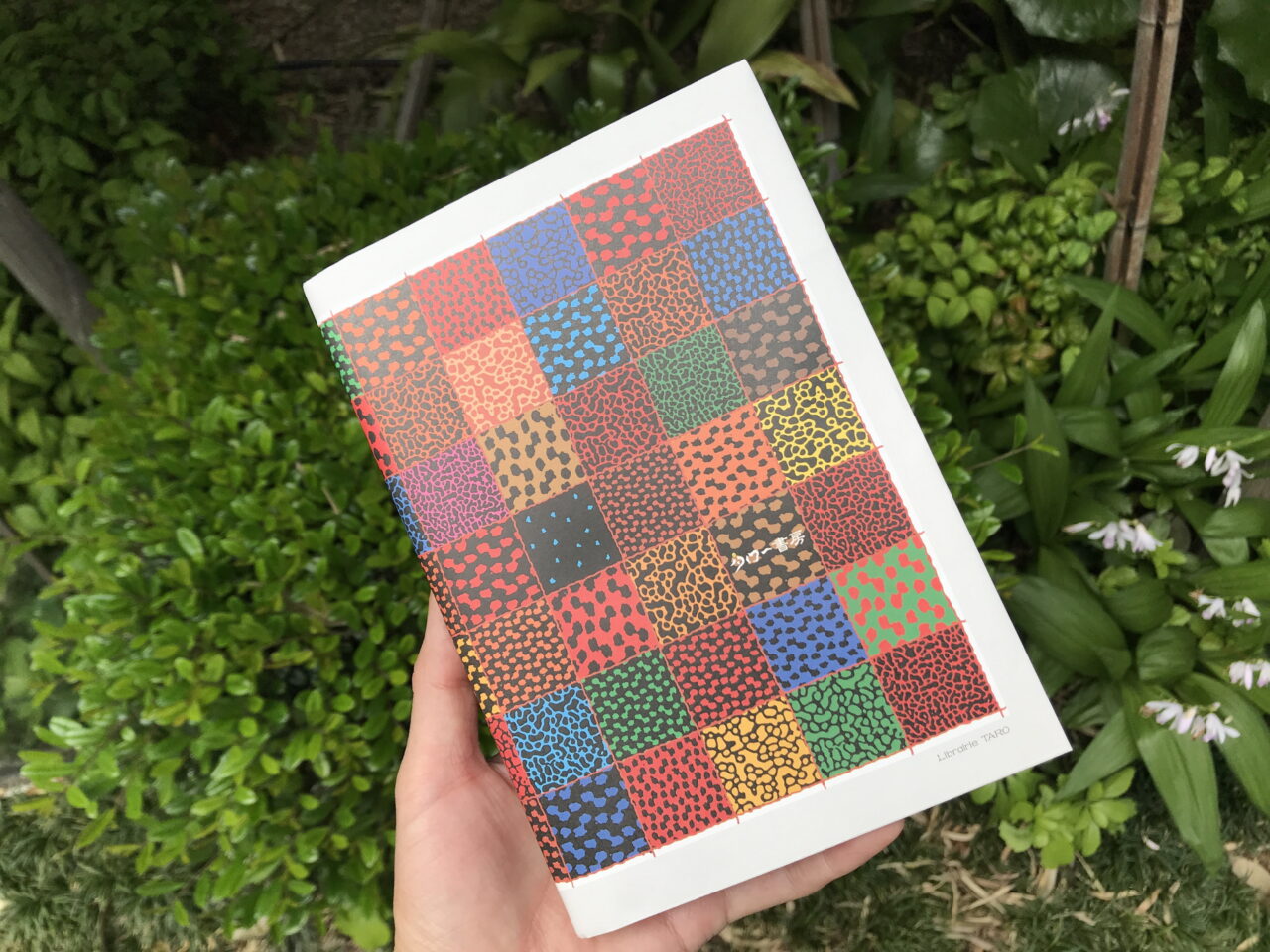
The book in this article’s banner photo is wearing one. If you ride a Tokyo train long enough you’ll notice readers with mismatched paper covers wrapped around the books in their hands. These are book covers (book cabā, ブックカバー), and most Japanese bookstores will offer you one for free at checkout — sometimes plain, sometimes printed with the shop’s name or logo, occasionally beautifully designed. The cover serves two practical purposes: it protects the book in your bag, and it keeps your reading private from the person next to you on the train. As a free souvenir, a stack of book covers from different shops is one of the more charming things you can take home from Tokyo. Just ask “kabā onegaishimasu” (covers please) at the register.
Hours, days, and crowds
The major chain stores (Kinokuniya, Maruzen, Junkudo, Book First) are open seven days a week, typically 10:00 to 21:00 or later. Independent shops and the antiquarian dealers of Jimbocho are a different matter: many close on Sundays, some close on Mondays (Morioka Shoten, for example), and most close by 18:30 or 19:00 in the evening. If you’re planning a Jimbocho day, make it a Saturday and start around 11:00. Weekday lunchtimes are the quietest at chain stores; weekend afternoons in Shinjuku Kinokuniya can be a crush.
Payment and language
All major chain bookstores accept credit cards, IC cards like Welcome Suica, and most major QR payments. Smaller independent shops in Jimbocho, especially the antiquarian dealers, often prefer cash — bring a few ten-thousand-yen notes if you’re planning serious browsing there. For a fuller breakdown of how much cash to carry, see our Japan cash guide. English signage is reliable in chain stores; in Jimbocho it varies, but staff at the larger shops (Sanseido, Shosen Grande) handle English well, and pointing or showing a photo on your phone works fine at the smaller ones.
Bookstore etiquette
Three small rules. First, photography is usually discouraged unless you ask first, particularly inside antiquarian shops — a polite “shashin daijobu desu ka?” (is photography okay?) will get you a clear answer. Second, don’t read a book end-to-end in the store unless seating is explicitly provided (Junkudo and Tsutaya, yes; everyone else, no). Third, the small paper slips tucked into Japanese books are price tags and reservation slips — leave them in place; the staff will remove them at checkout.
Stay connected across a bookstore dayA serious bookstore day in Tokyo means jumping between Jimbocho’s narrow streets, Shinjuku’s nine-floor Kinokuniya, and a hidden concept shop in Ginza — and you’ll want maps, store hours, and image search the whole way. CDJapan Rental’s eSIM runs on the docomo network for stable coverage across central Tokyo, with plans from 5 to 135 days. Buy online before you fly, scan the QR code on arrival, no physical SIM swap needed.
Chapter V
Frequently Asked Questions
Can I ship books back home from Tokyo bookstores?
How much should I budget for a bookstore day in Tokyo?
What makes a good bookstore souvenir if I don’t read Japanese?
Do Tokyo bookstores offer tax-free shopping for tourists?
Is there a way to search Jimbocho’s used bookstores online before visiting?
Short trip or long stay — we've got you covered
Best for Travelers
Japan eSIM
From ¥2,800 — activate before you land
- Cheaper than airport & convenience store SIMs
- 5-day to 135-day plans; unlimited or data-capped
- No SIM swap needed — ready in 2 minutes
Best for Long Stays
Monthly Pocket WiFi
From ¥5,500/mo — unlimited, no throttle
- Choose WiMAX 5G or SoftBank 4G coverage
- 3 to 12-month contracts — longer means cheaper
- Delivered to your hotel or airport post office


